
- A clear plan for your money
- A tool to achieve financial goals
- A safety net against surprise expenses
- A way to maximize what matters to you
- Flexibility to enjoy life guilt-free
- Cutting all enjoyment from your life
- Tracking every single penny obsessively
- Punishing yourself for normal spending
- A permanent, unchangeable restriction
- About deprivation or suffering
Start with what you actually receive, not what you hope to earn. This honesty prevents building unrealistic expectations that lead to budget failure.
Include all reliable income sources:
- Salary or wages (after taxes)
- Freelance or side business income (use average, not best month)
- Regular support from family or partners
- Investment dividends or interest payments
- Rental income or property profits
- Government benefits or assistance programs
For variable income: Calculate the average of the last 3-6 months. This prevents building a budget that collapses mid-month when income fluctuates. Consider creating a baseline budget from your lowest-earning month and treating higher months as opportunities for accelerated savings or debt reduction.
Fixed expenses form the foundation of your budget. These are non-negotiable payments you must make each month, regardless of your spending choices.
Common fixed expenses include:
- Housing costs (rent, mortgage, property taxes)
- Transportation (car payment, insurance, gas, public transit)
- Utilities (electricity, water, gas, internet, phone)
- Insurance (health, auto, home, life)
- Debt payments (student loans, credit cards, personal loans)
- Child care or education costs
- Subscriptions and memberships you actively use
Money-saving tip: Review these expenses quarterly. Call providers to negotiate better rates, bundle services for discounts, eliminate unused subscriptions, and consider cheaper alternatives for services you don't use frequently.
Variable expenses are where budgets typically fail. These costs accumulate through small, frequent purchases that seem insignificant individually but add up quickly over time.
Track everything for at least two weeks before setting limits:
- Groceries and household supplies
- Dining out, food delivery, takeout
- Coffee shops and convenience store purchases
- Shopping (clothing, electronics, home goods)
- Entertainment (movies, concerts, streaming services)
- Personal care (haircuts, gym memberships, beauty services)
- Hobbies and leisure activities
- Gifts for others
Use apps, bank statements, or a simple notebook. Most people are shocked to discover how much they spend on categories they considered "minor." This awareness is crucial for setting realistic limits.
This step is about clarity, not restriction. Understanding the difference helps you prioritize spending when necessary and make conscious trade-offs when resources are limited.
Essential Needs
- Nutritious food and basic groceries
- Adequate housing and utilities
- Healthcare and necessary medications
- Reliable transportation to work
- Basic clothing and personal care
- Insurance coverage
- Minimum debt payments
- Child care or education expenses
Optional Wants
- Premium dining experiences
- Entertainment beyond basics
- Brand-name products
- Convenience services
- Hobby-related expenses
- Travel and vacations
- Shopping beyond necessities
- Home decorations and upgrades
- Non-essential subscriptions
Important: Wants are not bad—they're human. The goal isn't elimination but awareness. When you consciously choose to spend on wants, you do so with intention rather than impulse, which dramatically reduces financial stress and guilt.
Consider the 50/30/20 rule as a starting point: 50% for needs, 30% for wants, 20% for savings. Adjust based on your income level, location, cost of living, and personal priorities.
There's no universal "best" budget—choose based on your personality, lifestyle, and comfort with numbers and tracking.
Percentage-Based Budget
- Needs: ~50%
- Wants: ~30%
- Savings/Debt: ~20%
Great for beginners who want flexibility and minimal tracking. Adjust percentages based on your income and goals.
Zero-Based Budget
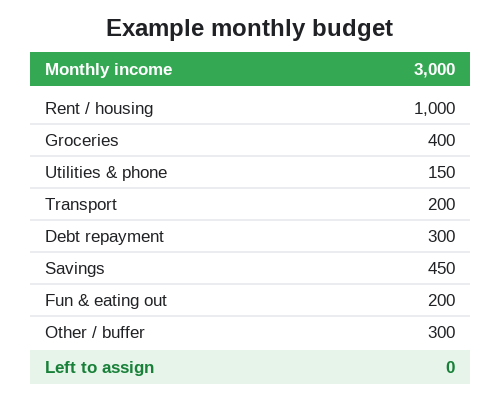
Every dollar has a purpose before the month begins. Excellent for detail-oriented people who want maximum control and accountability.
Envelope Method
Use physical or digital envelopes for variable spending categories. When an envelope is empty, spending stops for that category. Perfect for visual learners and those who struggle with specific overspending patterns.
Pay Yourself First
Automatically transfer savings to separate accounts before spending on anything else. Works well for people who struggle with consistency and need to remove temptation.
Don't be afraid to combine methods. Many successful budgeters use percentages for fixed expenses, envelopes for variable categories, and automation for savings.
Savings should never be "whatever is left." Treat savings like a non-negotiable bill that pays your future self first.
Set up automatic transfers on payday:
- Emergency fund (3-6 months of essential expenses)
- Retirement accounts (401k, IRA, Roth IRA)
- Short-term goals (vacation, large purchases, down payments)
- Irregular expense funds (car repairs, medical bills, insurance premiums)
- High-interest debt repayment (credit cards, personal loans)
Start small: Even $25-50 per paycheck builds significantly over time through compound interest and consistent habits. Increase amounts as your income grows or expenses decrease.
Keep emergency funds in a separate, easily accessible account. Don't invest this money—liquidity is more important than returns for emergency funds.
Many budgets fail because they don't account for expenses that don't occur monthly. Create "sinking funds" for irregular expenses:
- Annual subscriptions (Amazon Prime, software licenses, membership fees)
- Quarterly payments (estimated taxes, insurance premiums, property taxes)
- Annual expenses (car registration, professional dues, holiday gifts)
- Home maintenance and repairs (save 1-3% of home value annually)
- Medical expenses not covered by insurance
- Travel and vacation costs
- Large planned purchases
Divide annual expenses by 12 and save that amount monthly. This prevents budget shocks when large bills arrive and ensures you're prepared for predictable annual costs.
Budgets without fun money inevitably fail. Complete deprivation leads to burnout, binging, and eventual budget abandonment.
Allocate money for enjoyment:
- Dining out with friends and family
- Hobbies and entertainment you genuinely enjoy
- Personal care and wellness activities
- Small daily treats and rewards
- Travel and new experiences
- Shopping for things that bring you joy
Use fun money as a reward for meeting budget goals. When you stay under budget in a category, roll unused funds into fun money or additional savings. This creates positive reinforcement and makes budgeting feel rewarding rather than restrictive.
Consider a "no-spend challenge" for one week each month to accelerate savings, followed by a planned fun purchase to maintain balance and motivation.
A budget must exist somewhere you can reference it. Choose what works for your lifestyle:
- Physical notebook or planner
- Digital spreadsheet (Excel, Google Sheets)
- Budgeting apps (YNAB, Mint, Personal Capital)
- Notes app on phone or computer
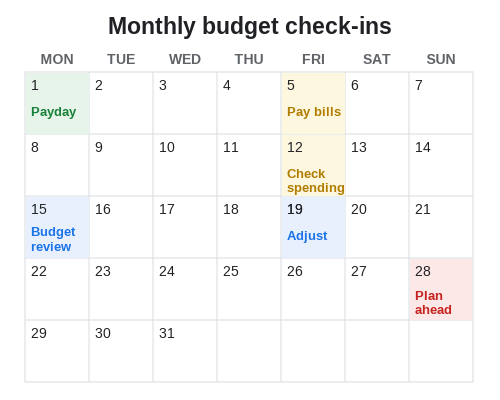
Review your budget weekly, not monthly. Weekly check-ins help you:
- Catch overspending early before it becomes problematic
- Adjust categories before damage is done
- Avoid end-of-month financial panic
- Celebrate progress and stay motivated
- Plan for upcoming expenses
Schedule a specific time each week for budget review—Sunday evening works well for most people to plan for the week ahead.
| Mistake | Why It Fails | How to Fix It |
|---|---|---|
| Unrealistic limits | Too restrictive, impossible to maintain | Be honest about actual spending habits |
| Ignoring small expenses | Small daily spending adds up quickly | Track all spending for 2 weeks first |
| No fun money allocated | Leads to burnout and binging | Include entertainment in your budget |
| Not planning for irregular expenses | Large bills break the budget | Create sinking funds for annual costs |
| Reviewing only monthly | Problems discovered too late | Weekly check-ins to adjust quickly |
| Not involving partner/family | Different priorities cause conflicts | Budget together with shared goals |
- Income changes by more than 10% (increase or decrease)
- Major life events (move, new job, marriage, divorce, retirement)
- New regular expenses (child, education, business)
- Large debts are paid off
- Financial goals change significantly
- You consistently overspend in categories
- Living costs increase (inflation, rent raises)
- Don't quit or feel guilty—it happens to everyone
- Analyze what triggered the overspending
- Adjust categories rather than restricting everything
- Consider if the category limit was unrealistic
- Plan for similar situations in the future
- Get back on track the following week
Variable Income
Freelancers, commission-based workers, and business owners face unique budgeting challenges:
- Base budget on lowest-earning month from past year
- Save 30-40% during high-income months for lean periods
- Maintain 6-12 months of expenses in emergency fund
- Consider separate business and personal accounts
- Use percentage-based budgeting rather than fixed amounts
- Create a "baseline" budget for minimum months and "bonus" budget for higher months
Family Budgeting
Family budgets require coordination and clear communication:
- Hold monthly family budget meetings
- Give children age-appropriate financial responsibilities
- Create shared financial goals everyone supports
- Be transparent about financial limitations
- Plan for irregular child-related expenses
- Include education funds in long-term planning
- Teach financial literacy through example and discussion
Student Budgeting
Students often have limited income and high expenses:
- Track all income sources (jobs, family support, loans)
- Differentiate clearly between needs and wants
- Seek student discounts and free resources whenever possible
- Consider cooking instead of eating out frequently
- Use budget apps designed for student finances
- Plan for irregular expenses like books and supplies
- Build credit responsibly while in school
- Look for part-time work that doesn't hurt studies
Retirement Budgeting
Retirement budgets focus on long-term security and sustainability:
- Maximize retirement account contributions
- Plan for healthcare costs in retirement
- Consider inflation's impact on fixed income
- Create a sustainable withdrawal strategy (4% rule is common)
- Review and adjust portfolio allocation annually
- Plan for Social Security and taxes in retirement
- Consider long-term care insurance needs
- Create a budget for hobbies and travel in retirement