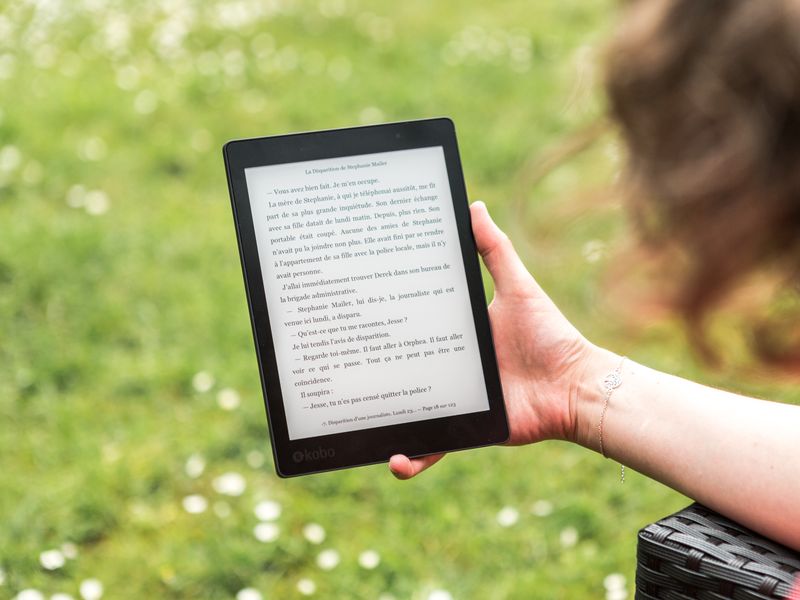
A person reads an eBook on a Kobo device while relaxing outdoors in a sunny park
Unfortunately, searching for "free eBooks" also turns up pirate websites that share copyrighted books without permission. These sites harm authors and often carry malware and misleading adverts. This guide shows you the reliable, legal places to find free eBooks, how to read them on any device, and how to tell a legitimate source from a risky one.
Source 1: Borrow From Your Public Library
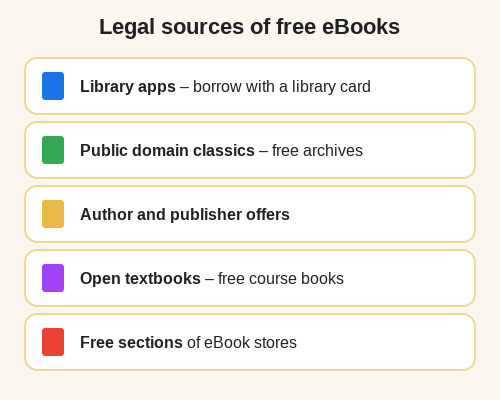
Millions of books are available free and legally
Your public library is the best source of free modern books. Many libraries around the world lend eBooks and audiobooks through apps, such as Libby (from OverDrive), Hoopla, BorrowBox, cloudLibrary, or the library's own platform, depending on your country and library.
- Get a library card: many libraries let you join online or in person, usually free for local residents.
- Install your library's app and sign in with your card number and PIN.
- Borrow and read: books are lent for a set period, often two or three weeks, and return themselves automatically, so there are no late fees.
- Place holds: popular titles may have a waiting list, just like printed books. You'll be notified when your copy is ready.
- Send to your device: in some countries, library eBooks can be sent to Kindle devices; elsewhere, read in the library app or a compatible e-reader.
Check more than one library
Some people are eligible for more than one library, for example through where they live, work, or study. Each may have a different digital collection, giving you access to more books with shorter waiting lists.
Source 2: Download Public Domain Classics
When a book's copyright expires, it enters the public domain and can be shared freely. Copyright terms vary by country, but many works by authors who died long ago, including classics by Jane Austen, Charles Dickens, Mark Twain, Leo Tolstoy, and many more, are in the public domain in most places.
- Project Gutenberg offers tens of thousands of public domain books in several formats, free to download.
- Standard Ebooks produces carefully formatted, modern-looking editions of public domain classics.
- The Internet Archive and national digital libraries provide scanned historic books and documents.
- eBook stores often list free public domain classics too, which download straight to their apps.
Because copyright terms differ between countries, a book that's public domain in one country may still be protected in another. Reputable sites explain which books are available in which regions.
Source 3: Open Textbooks and Educational Books
Students and lifelong learners can find free, legally shared textbooks through open education initiatives. Projects such as OpenStax and the Open Textbook Library offer free, peer-reviewed textbooks in subjects like mathematics, science, business, and humanities. Many universities and governments also publish free guides and reports. These are licensed for free use, often under Creative Commons licences that allow sharing and adaptation.
Source 4: Free Offers From Authors and Stores
- Free and promotional eBooks: major eBook stores have free sections, and authors often offer the first book in a series free or discounted for a limited time.
- Author newsletters: many authors give a free short story or novella to newsletter subscribers.
- Deal newsletters: services that email daily lists of free and discounted eBooks from legitimate stores.
- Subscription trials: eBook and audiobook subscription services sometimes offer free trials; set a reminder to cancel if you don't want to continue.
Step 5: Read on Any Device
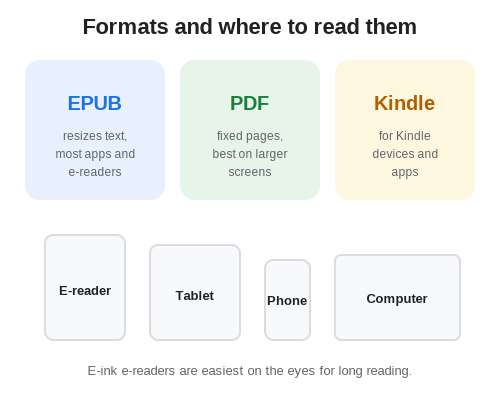
Choose the format that suits your device
- E-readers with e-ink screens are easiest on the eyes and have long battery life.
- Phones and tablets work well with free reading apps; use night mode or warm light in the evening.
- Computers are good for textbooks and PDFs.
Avoid Pirate eBook Sites
Sites offering new bestsellers as free downloads are almost always sharing books illegally. Beyond harming authors, who depend on sales to keep writing, these sites often hide malware in downloads, use fake "download" buttons, and ask for email addresses or card details that end up misused. Signs of a pirate site include brand-new titles for free, files offered as ".exe" or "installer" downloads, and pressure to install browser extensions.
Only open safe file types
Genuine eBooks are files like .epub, .pdf, .mobi, or .azw. Never run a program file to "unlock" a book. Download only from libraries, recognised archives, and official stores.
Once you have plenty of books, our guide on starting a reading habit can help you find time to enjoy them.
Organise Your Digital Library
As your collection grows, a little organisation helps. Most reading apps let you create shelves or collections, for example "to read", "reading now", and "favourites". Free eBook management software can organise files from different sources, convert between formats, and transfer books to your e-reader. Back up downloaded public domain and purchased DRM-free books to cloud storage so you never lose them.
Finally, remember to return library loans you have finished so others can borrow them sooner, leave reviews for free books you enjoyed, and consider buying books from authors whose free titles you loved. Supporting writers, libraries, and archives helps keep free and affordable reading available for everyone.
Final Thoughts
You can read a lifetime's worth of books for free without breaking the law. Start with your public library's eBook app for modern titles, use public domain archives for classics, explore open textbooks for learning, and watch for legitimate free offers from authors and stores. Avoid pirate sites, and you'll enjoy your reading with peace of mind while still supporting the writers you love.