
A warm, inviting workspace featuring coffee, handwritten notes, and a pen on the desk
That focus makes short stories a wonderful way to start writing fiction. You can finish one in days or weeks, learn from each attempt, and build your skills quickly. This guide walks through the process from finding an idea to polishing a final draft.
Step 1: Find an Idea
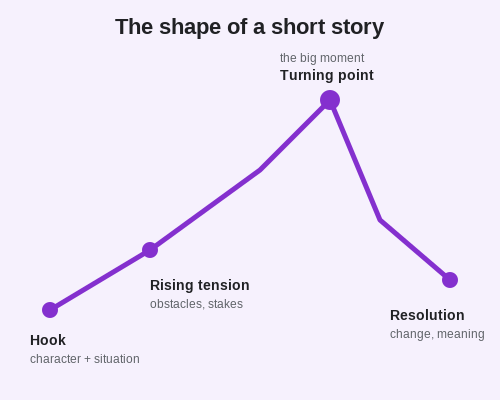
Most short stories follow a simple arc
Ideas are everywhere once you start looking. Strong short story ideas usually combine a character with a problem or a moment of tension.
- Ask "what if?": what if a shy teenager found a lost wallet full of cash? What if an elderly man received a letter he'd waited forty years for?
- Use real life: an overheard conversation, a memory, or a news story can spark a scene. Change names and details to make it your own.
- Start with a feeling: loneliness, guilt, hope, or jealousy, then imagine a situation that brings it out.
- Use prompts: writing prompts from books, websites, or writing groups give you a starting point when you're stuck.
- Keep an ideas notebook or a note on your phone, and jot down anything interesting as soon as you notice it.
Step 2: Build a Character With a Goal
At the heart of most good stories is a character who wants something and faces obstacles in getting it. Before you write, answer a few questions about your main character:
- What do they want, right now, in this story?
- What stands in their way: another person, circumstances, or something inside themselves?
- What do they stand to lose if they fail?
- How will they be different by the end?
You don't need a detailed biography. In a short story, a few vivid, specific details, such as a habit, a way of speaking, or an object they carry, can bring a character to life quickly.
Step 3: Plan a Simple Structure
- Opening hook: start close to the action. Introduce your character and hint at the problem within the first few paragraphs.
- Rising tension: obstacles grow and stakes increase. Each scene should push the story forward.
- Turning point or climax: the decisive moment, when the character makes a choice or faces the conflict directly.
- Resolution: show the result and how the character or situation has changed. Short stories often end with a resonant image or quiet realisation rather than tying up every detail.
Choose your point of view
First person ("I") feels intimate and immediate. Third person ("she", "he", "they") offers more flexibility. Choose one and keep it consistent throughout a short story to avoid confusing readers.
Step 4: Write the First Draft
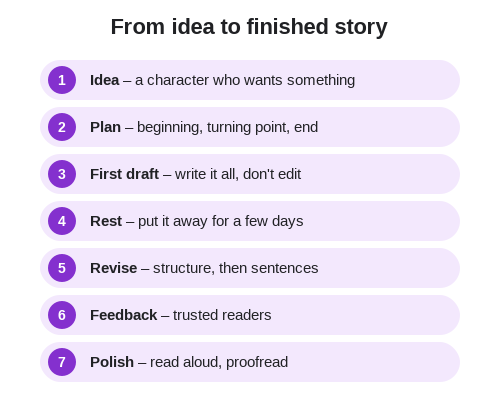
Drafting and revising are separate steps
- Set a regular writing time and a small target, such as 300 to 500 words a session.
- Show, don't just tell: instead of "She was nervous", describe her twisting her ring and checking the door.
- Use dialogue to reveal character and move the plot, keeping it natural and purposeful.
- Engage the senses: sounds, smells, textures, and light make scenes vivid.
- Keep going when you get stuck; leave a note like "[fix this scene later]" and move on.
Step 5: Revise and Get Feedback
Put your draft aside for a few days, then read it again with fresh eyes. Revise in layers, starting with the big picture:
- Structure: does the story start in the right place? Is the turning point strong? Does the ending feel earned?
- Character: is the main character's goal clear, and do they change?
- Scenes: cut anything that doesn't move the story forward or reveal character.
- Sentences: tighten wordy passages, vary sentence length, and choose precise words.
- Read aloud: it's the best way to catch awkward phrasing and unnatural dialogue.
Then share it with a few trusted readers or a writing group. Ask specific questions, such as "Where did you lose interest?" or "Was the ending clear?", and look for patterns in the feedback rather than trying to please everyone.
Polish and Share Your Story
Proofread carefully for spelling, grammar, and formatting. Choose a title that intrigues without giving everything away. When you're ready, you can share your story with friends, post it on a writing community, or submit it to literary magazines and competitions. Always read submission guidelines carefully, follow formatting requirements, and check whether a publication accepts stories already posted online.
Watch out for publishing scams
Be cautious of competitions with very high entry fees and vague prizes, or "publishers" who ask you to pay large sums to publish your story. Research magazines and contests before submitting, and look for ones with a good reputation among writers.
Reading widely is one of the best ways to improve your writing; our guide on starting a reading habit can help.
Build a Writing Habit
Like any skill, writing improves with regular practice. Set aside a small, consistent time to write, even 20 minutes a few times a week, and treat it as an appointment. Keep a notebook for ideas and observations, and read widely in the genres you want to write. Short exercises, such as describing a place in 200 words or writing a scene entirely in dialogue, build specific skills quickly.
Joining a writing group, in person or online, adds accountability, gives you regular feedback, and connects you with other writers who understand the challenges of finishing a story.
Final Thoughts
Writing a short story is a manageable creative project: start with an idea that pairs a character with a problem, plan a simple arc, write a messy first draft, then revise carefully and gather feedback. Each story you finish teaches you something new. Keep writing, keep reading, and your stories will grow stronger with every draft.