
Black and white photo of a guitarist's hands playing an acoustic guitar
The early stages can feel slow, but with the right instrument, good guidance, and a sensible practice routine, progress comes steadily. This guide covers choosing an instrument, getting one without overspending, finding lessons, practising effectively, and staying motivated.
Step 1: Choose the Right First Instrument
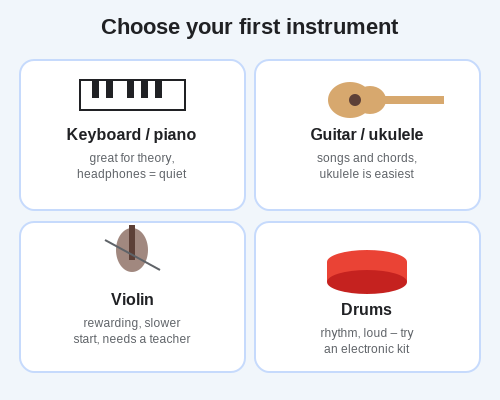
Each instrument has its own learning curve
Pick an instrument whose sound you love and that suits the music you want to play. Some practical considerations:
- Keyboard or piano: excellent for learning music theory, since you can see the notes laid out. Digital keyboards with headphones allow quiet practice.
- Guitar: great for playing songs and accompanying singing. Acoustic guitars are portable; nylon-string guitars are gentler on beginners' fingers.
- Ukulele: small, affordable, and one of the quickest instruments to play simple songs on.
- Violin and other strings: beautiful and rewarding, but slower to sound good; a teacher is especially valuable.
- Drums: fantastic for rhythm but loud; an electronic kit with headphones solves the noise issue.
- Wind instruments: such as flute, clarinet, saxophone, or trumpet, ideal for bands and orchestras.
- Voice: your built-in instrument, free and always with you.
Step 2: Get an Instrument Without Overspending
- Rent first: many music shops offer rental or rent-to-buy schemes, ideal while you discover whether you'll stick with it, especially for children who are still growing.
- Buy a decent beginner model: very cheap instruments can be hard to play and stay in tune, which is discouraging. A reputable entry-level brand is worth it.
- Consider second-hand: good value, but ask a teacher or experienced player to check it first.
- Get the right size: guitars, violins, and some wind instruments come in sizes for younger or smaller players.
- Budget for accessories: a tuner, music stand, case, spare strings or reeds, and a metronome app.
Ask for a setup
For stringed instruments, ask the shop to check the "setup", including string height and tuning stability. A well-set-up beginner guitar or violin is far easier and more pleasant to play.
Step 3: Find Lessons That Suit You
- Private teachers: give personal feedback and correct technique early, which prevents bad habits and injury.
- Group classes: more affordable and social, often run by music schools and community centres.
- Online lessons and apps: flexible and inexpensive, with video courses and interactive apps that listen to your playing. They work well alongside occasional lessons with a teacher.
- Community ensembles: bands, choirs, and orchestras for beginners are a motivating way to learn with others.
Choose a teacher with relevant training and experience, ask for a trial lesson, and look for someone who explains clearly and makes lessons enjoyable.
Step 4: Practise Effectively
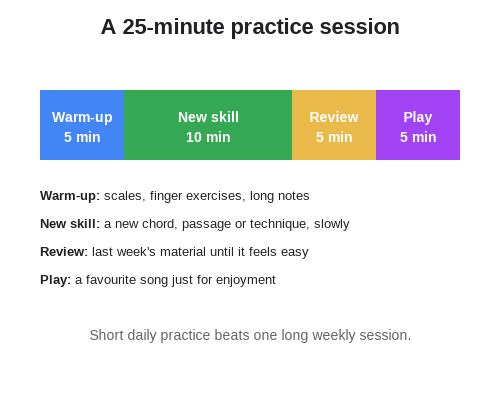
Structured practice gets better results
- Warm up with scales, simple exercises, or long notes.
- Work on one new skill slowly and accurately; speed comes later.
- Use a metronome to build steady rhythm, gradually increasing the tempo.
- Break hard passages into small sections and repeat them until they feel easy.
- Review older material so it stays fresh.
- End with something fun: a favourite song keeps practice enjoyable.
- Record yourself occasionally to hear your progress.
Step 5: Stay Motivated and Healthy
- Set small goals: learn one song this month, or play a simple piece for family.
- Play music you love, even simplified versions, alongside exercises.
- Play with others: duets, jam sessions, and ensembles are highly motivating.
- Accept plateaus: progress isn't always steady; keep going and it usually returns.
- Look after your body: keep good posture, relax your shoulders and hands, take breaks, and stop if you feel pain. Sore fingertips on string instruments are normal at first and toughen over time, but sharp or lasting pain is not.
Protect your hearing
Loud instruments such as drums, brass, and amplified guitars can damage hearing over time. Keep volumes reasonable, use musicians' earplugs when playing loud music or in bands, and take regular listening breaks.
Music pairs naturally with movement; if you enjoy rhythm, see our guide on learning to dance.
Learn to Read Music and Basic Theory
Reading music is not essential for every instrument or style, as many guitarists and pianists play from chord charts, tabs, or by ear. But learning the basics of notation and theory makes it much easier to learn new pieces, understand how music works, and communicate with other musicians.
Start with the notes on the staff, note lengths and rests, and simple time signatures. Free apps, websites, and workbooks offer short, interactive exercises. Alongside reading, practise listening: try to pick out simple melodies by ear and sing them back. Combining reading and listening skills will make you a more confident, flexible musician.
Learning a little theory, such as how major and minor scales and chords are built, also helps you understand why certain notes sound good together and makes improvising and writing your own music possible.
Many teachers and apps now combine theory with practical playing, so you learn concepts by using them in real songs. This makes theory far more interesting and easier to remember than studying it in isolation, and helps you see how each new idea fits into the music you love to play.
Celebrate each milestone, such as your first full song, your first performance for friends, or the day a difficult passage finally flows. These moments make the steady effort of practice feel worthwhile and keep you coming back to your instrument.
Final Thoughts
Learning a musical instrument starts with choosing one you love, renting or buying a decent beginner model, and finding lessons that suit your style and budget. Practise a little every day with structure, use a metronome, play music you enjoy, and look after your body and hearing. Be patient: every musician started with their first wobbly note.