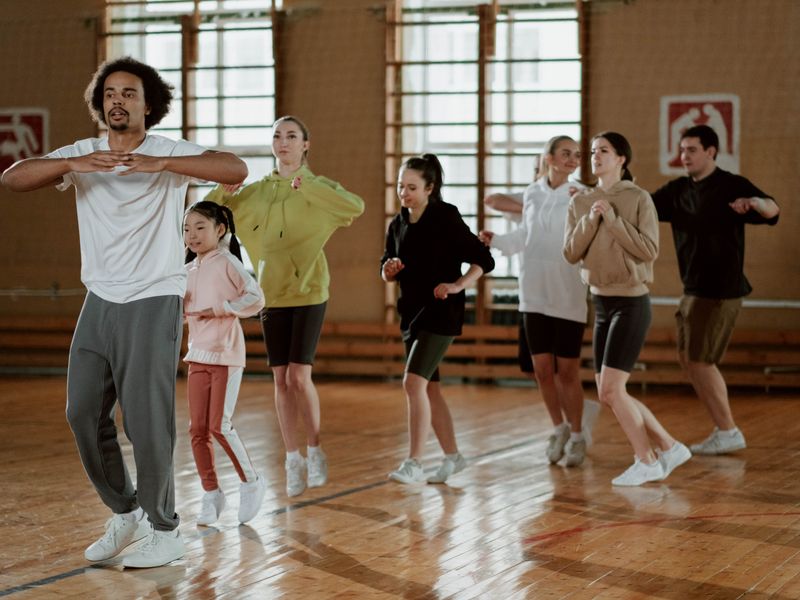
A diverse group engages in an energetic indoor fitness class
Many beginners feel self-conscious at first, but dancing is a skill like any other, learned step by step. This guide helps you choose a style, find the right way to learn, understand rhythm, practise effectively, and dance safely.
Step 1: Choose a Style You Enjoy
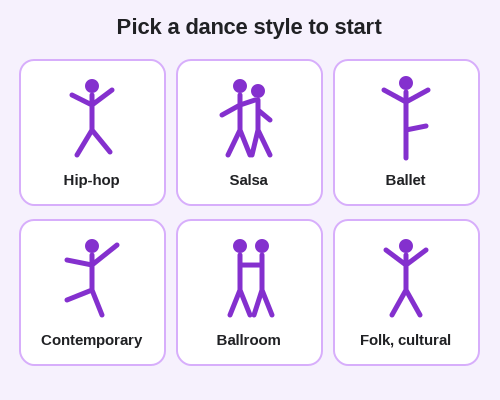
Every style has a different feel and community
The best style is one you're excited about, because enjoyment keeps you practising. Popular options for beginners include:
- Hip-hop and street dance: energetic, expressive, and great for fitness; often learned through choreography.
- Salsa, bachata, and other social partner dances: fun and social, with classes often followed by social dancing.
- Ballet: builds technique, posture, and strength; adult beginner classes are common.
- Contemporary: flowing and expressive, combining elements of ballet and modern dance.
- Ballroom and Latin: structured partner dances like the waltz, foxtrot, cha-cha, and tango.
- Folk and cultural dances: such as Bollywood, Irish, flamenco, or traditional dances from your own culture, often taught in community settings.
- Dance fitness classes: easy-to-follow routines focused on exercise and fun.
Watch videos of a few styles and try taster classes before committing. You may discover a style you'd never considered.
Step 2: Find Classes or Online Lessons
- Dance studios and schools: offer structured beginner courses with qualified teachers who can correct technique.
- Community centres and gyms: often run affordable drop-in classes.
- Social dance nights: many include a beginner lesson before the main event.
- Online lessons: video tutorials and apps let you learn at home at your own pace, useful between classes or if classes are hard to reach.
- Private lessons: more expensive but helpful for rapid progress or wedding dances.
Look for "absolute beginner" classes
Classes labelled "beginner" sometimes assume a little experience. Look for "absolute beginner" or "level zero" courses, which start from the very basics and move at a comfortable pace.
Step 3: Learn Rhythm and Counts
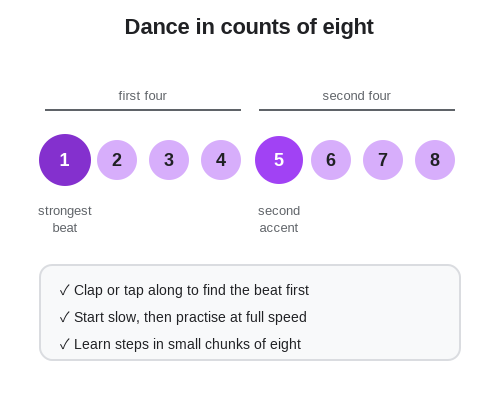
Most dance music is counted in eights
- Listen to songs and clap or tap your foot on every beat.
- Try to find the "1" by listening for strong drums or changes in the music.
- Practise basic steps slowly while counting out loud.
- Gradually increase the speed until you can dance at the song's real tempo.
Some styles count differently; for example, salsa uses eight counts with pauses on certain beats, and waltz uses groups of three. Your teacher will explain the counts for your style.
Step 4: Practise at Home
- Practise little and often: 10 to 20 minutes most days builds muscle memory faster than one long weekly session.
- Break routines into chunks: learn one set of eight counts at a time, then join them together.
- Use a mirror or record yourself to check posture and timing.
- Slow videos down: many video players let you reduce playback speed to learn complex steps.
- Practise on a suitable surface: wooden floors or smooth surfaces are best; avoid deep carpet for turns.
Step 5: Dance Safely
- Warm up for five to ten minutes with gentle movement before dancing.
- Wear suitable shoes: trainers for hip-hop and fitness classes, smooth-soled dance shoes for partner dances, and ballet slippers for ballet.
- Don't force flexibility or jumps before your body is ready.
- Drink water and take breaks.
- Respect partners: in partner dancing, use a gentle lead and follow, ask before dancing, and respect personal space.
Listen to your body
If you have joint, back, or heart problems, or haven't exercised for a long time, start with gentle classes and check with a doctor if unsure. Stop if you feel sharp pain or dizziness. Our guide on improving flexibility can help you move more freely.
Build Confidence and Have Fun
Everyone feels awkward at first. Remember that teachers and classmates were beginners once too, and most people are focused on their own steps rather than watching you. Stand near the back of the class at first if it helps, celebrate small improvements, and don't compare yourself to experienced dancers online. Going to classes with a friend makes the first few weeks easier. Over time, the music and movement start to feel natural, and that's when dancing becomes truly enjoyable.
Dancing Socially and Performing
Once you have learned some basics, putting them into practice outside class speeds up your progress. Many partner dance communities hold regular social nights where dancers of all levels mix. At socials, it is normal to dance with many different partners, and experienced dancers often enjoy dancing with beginners. Keep dances simple, smile, and focus on the music rather than complicated moves.
If you enjoy performing, look for studio showcases, community events, or cultural festivals where beginner groups can take part. Preparing a short routine with a group gives you a clear goal and a great sense of achievement.
Finally, keep variety in your dancing. Trying a workshop in a different style can improve your musicality, balance, and coordination, and may even become a second favourite.
Be patient with progress. Dance skills often seem to improve in sudden jumps after weeks of feeling stuck, as your body gradually absorbs new movements and timing.
Many dancers find it useful to keep a short practice journal, noting new steps, corrections from teachers, and songs that are good for practising. Looking back at it after a few months shows clear progress and reminds you which areas still need attention.
Final Thoughts
Learning to dance starts with choosing a style you love, finding beginner-friendly classes or online lessons, learning to hear and count the beat, and practising little and often. Warm up, wear the right shoes, and be patient with yourself. With time, you'll move with more confidence and joy, at any age.