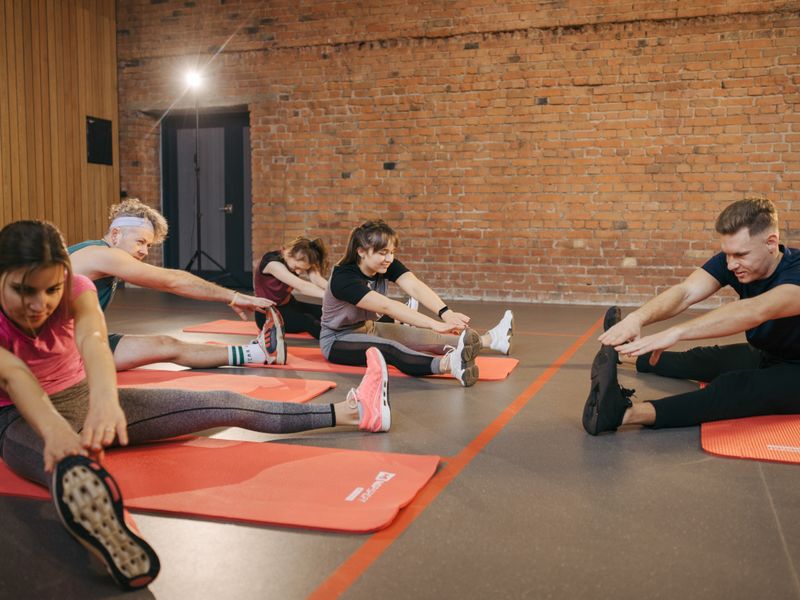
A group of diverse adults stretching on mats in a brick-walled fitness studio
The encouraging news is that flexibility improves with regular, gentle practice at any age. You don't need to aim for the splits. A short routine a few times a week, done correctly, can make a noticeable difference within weeks.
Step 1: Understand the Types of Stretching
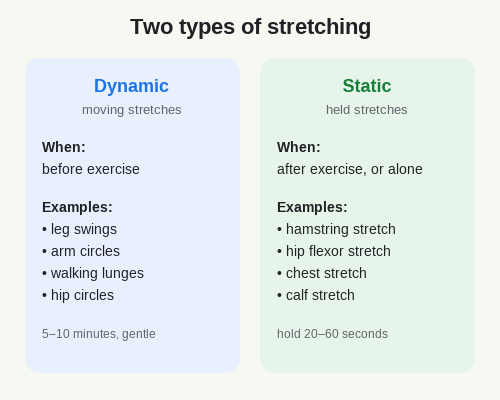
Use the right type of stretch at the right time
- Dynamic stretching: controlled movements through a range of motion, such as leg swings, arm circles, and walking lunges. Best as part of a warm-up before exercise.
- Static stretching: holding a stretch in one position, usually for 20 to 60 seconds. Best after exercise or as a separate flexibility session when muscles are warm.
- Yoga and Pilates: combine stretching, strength, and breathing, and are excellent ways to build flexibility steadily.
Long static stretches right before sprinting or heavy lifting may slightly reduce power for a short time, so save them for after your workout.
Step 2: Warm Up First
Muscles stretch more comfortably and safely when they're warm. Before a stretching session, do five minutes of light activity such as brisk walking, marching on the spot, cycling, or gentle dynamic movements. Stretching after a walk, run, or workout is ideal, since your muscles are already warm.
Step 3: Follow a Full-Body Stretching Routine
Hold each stretch for 20 to 60 seconds, breathing slowly, and repeat on both sides. The whole routine takes 10 to 15 minutes.
- Hamstring stretch: sit with one leg straight and the other bent, and hinge forward from your hips towards the straight leg, keeping your back long.
- Hip flexor stretch: kneel on one knee with the other foot in front, tuck your pelvis slightly, and shift your hips forward until you feel the front of the back hip stretch.
- Quad stretch: standing and holding a wall for balance, bend one knee and hold your ankle behind you, keeping knees close together.
- Calf stretch: step one foot back, press the heel into the floor, and lean towards a wall.
- Figure-four glute stretch: lying on your back, cross one ankle over the opposite knee and gently pull the supporting leg towards you.
- Chest stretch: place your forearm on a door frame and gently turn your body away.
- Upper back and shoulders: clasp your hands in front, round your upper back, and reach forward; then gently pull one arm across your chest.
- Neck: slowly tilt your ear towards your shoulder, keeping the opposite shoulder relaxed.
Use props
A towel, belt, or yoga strap helps you reach your feet in hamstring stretches without rounding your back. A cushion under your knees or hips makes kneeling and seated stretches more comfortable.
Step 4: Stretch the Right Amount
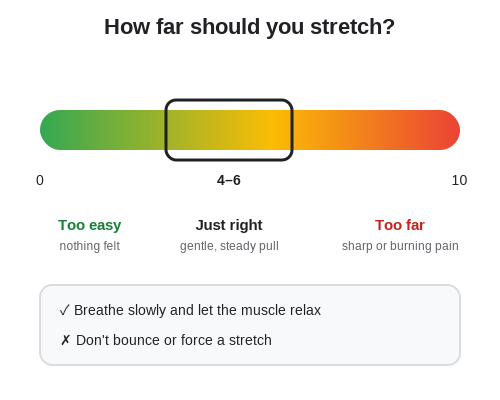
Aim for a gentle pull, never pain
- Don't bounce; bouncing can trigger muscles to tighten and may cause strain.
- Keep breathing steadily; holding your breath makes muscles tense.
- Expect differences between your left and right sides, and between days.
- As the pull eases during a hold, you can gently move a little further.
Step 5: Be Consistent and Track Progress
- Stretch at least two to three times a week; daily short sessions often bring faster results.
- Make it routine: stretch after workouts, during TV time, or before bed.
- Track progress: note how far you can reach in a sit-and-reach test, or take a photo of a stretch every few weeks.
- Combine with strength training: building strength through your full range of motion helps you control and keep new flexibility. Our guide on training at home includes a simple strength routine.
- Break up sitting: stand, walk, and move every 30 to 60 minutes to reduce stiffness.
Stretch Safely
Flexibility develops over weeks and months, not days. Trying to force progress is the most common cause of stretching injuries. People who are naturally very flexible or hypermobile should focus more on strength and control than on pushing further. If you have a recent injury, joint replacement, osteoporosis, or ongoing pain, ask a physiotherapist which stretches are suitable. Yoga is a great way to combine flexibility with balance and breathing; try our guide on morning yoga.
Add Mobility to Everyday Life
You don't need a full session to improve flexibility. Small habits throughout the day add up: stand up and stretch your arms overhead every hour, do a few gentle neck rolls and shoulder circles during work breaks, and take short walks. When watching TV, try sitting on the floor and doing a few gentle hip and hamstring stretches instead of staying on the sofa.
Desk workers often develop tight hip flexors, chest, and neck muscles from long periods of sitting. Setting up your workstation so your screen is at eye level and your feet rest flat on the floor, combined with regular movement breaks, can reduce stiffness. Over weeks, these small changes support the progress you make in your dedicated stretching sessions.
Older adults benefit particularly from regular mobility work, as it helps with everyday tasks like getting up from a chair, reaching shelves, and maintaining balance. Gentle classes such as chair yoga or tai chi are a safe way to start.
Be patient with yourself, too. Flexibility gains usually appear gradually over several weeks, and progress may feel slower on cold days or after poor sleep. Consistency over months is what brings lasting change.
Final Thoughts
Improving flexibility is a slow, steady process: use dynamic stretches before activity and static stretches afterwards, warm up first, hold each stretch for 20 to 60 seconds at a gentle intensity, and practise regularly. Combine stretching with strength and movement throughout the day, and you'll move more freely and comfortably over time.
Exercise Safety
This guide is general information, not medical advice. If you have a heart condition, high blood pressure, an injury, joint problems, are pregnant, or haven't exercised in a long time, check with a doctor or qualified professional before starting. Stop exercising and seek help if you feel chest pain, severe breathlessness, dizziness, or sharp pain.