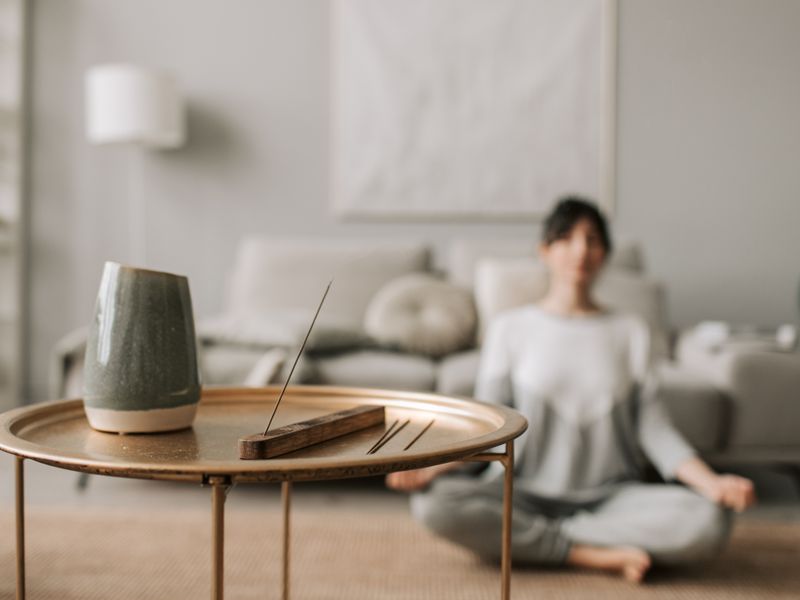
Calm living room scene with incense and a woman meditating
Home is one of the best places to meditate: it's free, private, and available whenever you need it. But home also has distractions, from phones to family to the pile of laundry in the corner. This guide focuses on building a practice that fits into everyday home life. If you're completely new to the technique itself, our guide on meditating for beginners explains the basics in more depth.
Step 1: Create a Meditation Spot
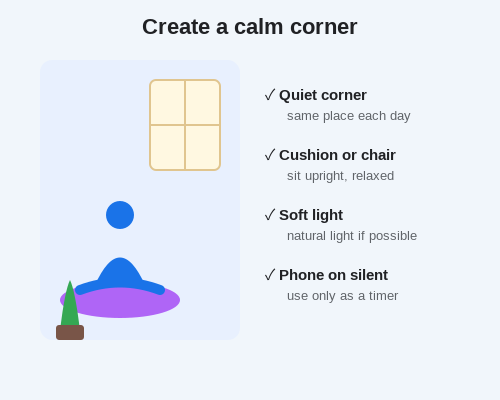
A consistent spot makes practice easier
- Choose a quiet corner you can use every day, even if it's just a chair by a window. Using the same place helps your mind associate it with calm.
- Sit comfortably: a cushion on the floor, a meditation stool, or an ordinary chair with your feet flat on the floor all work. The aim is an upright but relaxed posture.
- Keep it simple and tidy: a clear space feels calmer. Some people add a plant, a candle, or a soft blanket.
- Control distractions: put your phone on silent or airplane mode and use it only as a timer.
- Let others know: tell family or housemates you'll be meditating for a few minutes.
Step 2: Choose a Regular Time
Linking meditation to an existing habit makes it much easier to remember. Popular options include:
- Morning: after waking, brushing your teeth, or before breakfast, when the house is often quiet.
- Lunchtime: a short reset in the middle of a busy day, especially when working from home.
- Evening: after work to separate the working day from home time, or before bed to wind down.
There's no single best time. Choose the one you're most likely to stick with.
Step 3: Pick a Simple Technique
- Breath awareness: sit, close your eyes or lower your gaze, and notice the feeling of breath at your nose or belly. When your mind wanders, gently return to the breath.
- Body scan: slowly move your attention from your toes to the top of your head, noticing sensations without trying to change them. Good for relaxation and sleep.
- Counting breaths: count each out-breath from one to ten, then start again. Helpful when your mind is busy.
- Loving-kindness: silently repeat kind phrases like "May I be well, may I be at ease," then extend them to others.
- Guided meditation: follow an app, video, or recording from a qualified teacher. Ideal when starting out.
Walking meditation at home
If sitting still is hard, try walking slowly back and forth in a hallway or garden, paying attention to each step and the feeling of your feet touching the ground.
Step 4: Build the Habit Gradually
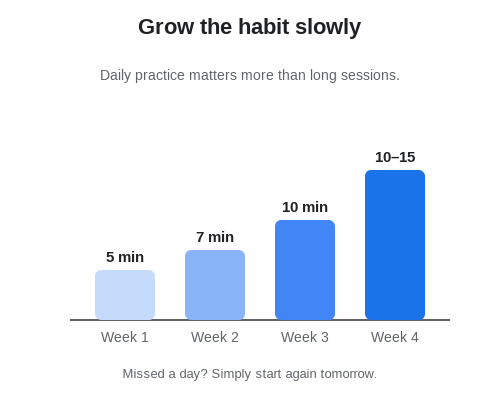
Start small and increase slowly
- Use a gentle timer sound so you're not checking the clock.
- Track your sessions on a calendar or app; a growing streak is motivating.
- If you miss a day, simply start again; there's no need to make up for it.
Step 5: Handle Common Challenges
- "My mind won't stop wandering": that's normal and is the practice itself. Each time you notice and return, you're strengthening your attention.
- Noise at home: include sounds in your awareness rather than fighting them, or use earplugs or calm background sound.
- Falling asleep: sit upright rather than lying down, open your eyes slightly, or meditate at a more alert time of day.
- Restlessness: try a few minutes of gentle movement or yoga first. Our guide on morning yoga pairs well with meditation.
- Lack of time: even one minute of slow breathing counts on busy days.
Meditating With Family
Meditating together can be a calming shared routine. Children often enjoy short, playful practices, such as breathing like a balloon, listening for sounds for one minute, or a short bedtime body scan. Keep sessions brief for children and make them fun rather than a chore. Partners or housemates can support each other by agreeing on a quiet time each day.
When to seek extra support
Meditation is helpful for many people, but it isn't a substitute for professional care. If you're experiencing persistent anxiety, depression, trauma symptoms, or find that meditation brings up distressing feelings, talk to a doctor or mental health professional, who can suggest approaches that suit you.
Deepen Your Practice Over Time
Once a daily routine feels natural, you might explore further. Try longer sessions on weekends, attend an online or local group class, or read a respected introductory book on mindfulness or meditation. Some people enjoy short silent retreats or day courses run by experienced teachers.
You can also bring meditation into everyday activities: paying full attention while drinking your morning tea, walking to the shops, or washing dishes. These informal practices help the calm and focus you develop on the cushion carry into the rest of your day.
Whatever direction you take, keep the foundations simple: a regular time, a comfortable place, and a kind, patient attitude towards your own mind. Meditation isn't about achieving a perfect state; it's about showing up and paying attention, again and again. Over months, many people notice they react more calmly to everyday stress, sleep a little better, and enjoy small moments more. Those quiet changes are the real rewards of a home practice.
Final Thoughts
Meditating at home works best when it's simple and regular: a consistent spot, a set time linked to an existing habit, an easy technique, and short sessions that grow gradually. Expect your mind to wander and treat each return as progress. With patience, a few minutes a day can bring more calm and focus into your home and your life.