
Find your peace
You are not trying to stop your thoughts or force your mind to be silent. Instead, you are learning how to observe your thoughts and gently guide your attention back to the present moment.
This guide will help you understand common beginner problems and give you clear, practical solutions you can follow immediately.
What Meditation Really Means
Meditation is the practice of focusing your attention on something simple, most commonly your breathing, while allowing thoughts, sensations, and emotions to come and go without reacting to them.
Key Distinction
It is not about control. It is about awareness. Over time, this practice helps you stay calm, focused, and less reactive in daily life.
Common Beginner Problems (And Why They Happen)
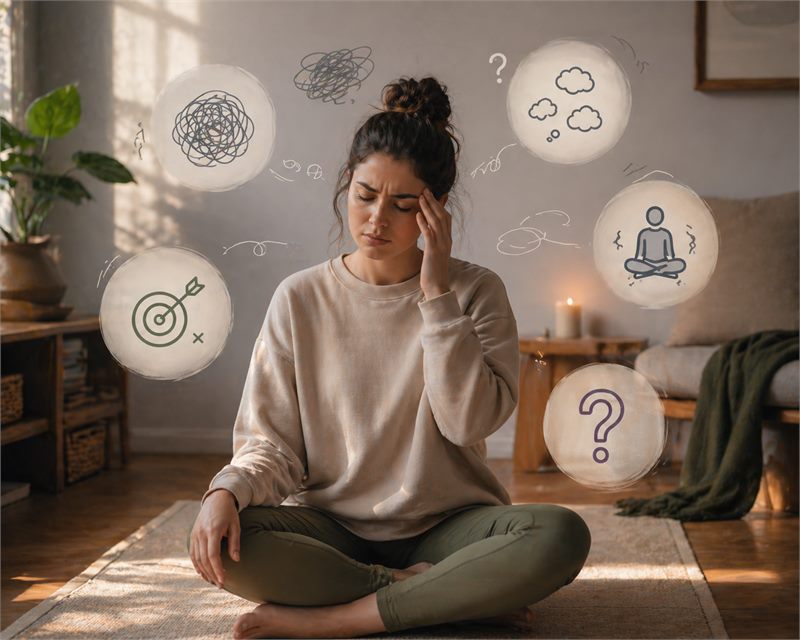
Normal struggles
- Your Mind Feels Too Busy: When you sit quietly, your thoughts seem louder than ever. This happens because you are finally paying attention to them instead of being distracted.
- You Can’t Stay Focused: Your attention keeps drifting away within seconds. This is normal because the brain is used to constant activity.
- You Feel Restless or Uncomfortable: Sitting still can feel unnatural at first, especially if you are not used to slowing down.
- You Think You’re Doing It Wrong: Many beginners expect instant calmness. When that doesn't happen, they assume they are failing.
Simple Solutions That Actually Work
You don't need complex techniques to start. Here are straightforward solutions to the common problems above.
- Start with Very Short Sessions: Instead of forcing long sessions, begin with 5 minutes. This keeps the practice manageable and easier to stick with.
- Focus on One Simple Thing: Use your breath as your anchor. Pay attention to how it feels as you inhale and exhale.
- Allow Thoughts Instead of Fighting Them: Thoughts will come. Let them pass without reacting, then return your focus gently.
- Keep Your Body Comfortable: Sit in a position that feels natural. You don’t need perfect posture, just stay upright and relaxed.
Step-by-Step Meditation Routine
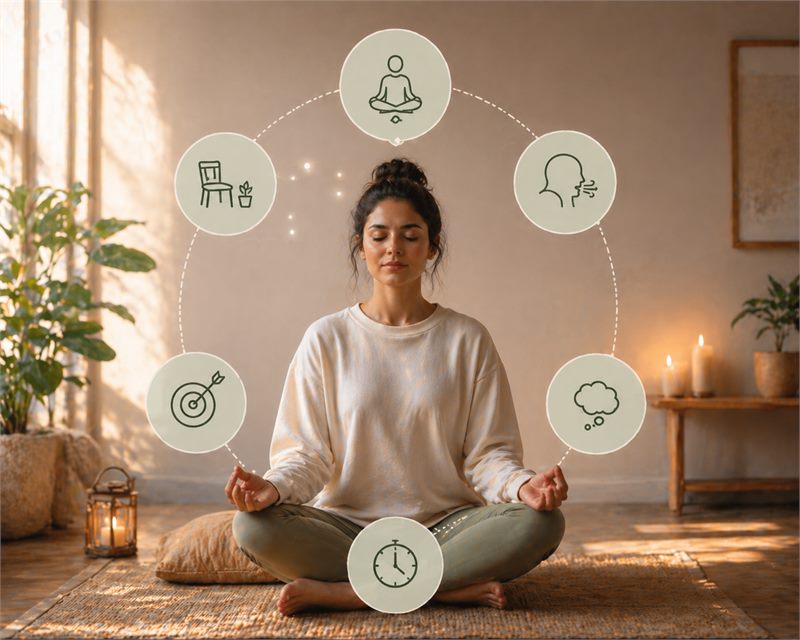
Consistency is key
1
Choose Your Time
Pick a time when you can sit quietly without interruptions. Morning or evening works well, but any time is fine.
2
Sit Comfortably
Sit on a chair or floor with your back straight and your body relaxed.
3
Set a Timer
Start with 5 to 10 minutes so you don’t worry about checking the clock.
4
Focus on Your Breath
Notice the natural flow of your breathing. Do not try to change it.
5
Handle Distractions Calmly
When your mind wanders, simply notice it and return your attention to your breath.
6
Finish Slowly
Before ending, take a moment to notice how you feel. Open your eyes gently.
What You Should Expect in the Beginning
Meditation does not feel perfect, especially at the start. You may experience:
- Frequent distractions
- Random thoughts
- Restlessness
- Moments of calm followed by distraction
All of this is part of the process. The goal is not to remove these experiences but to become aware of them.
Effective Meditation Techniques for Beginners
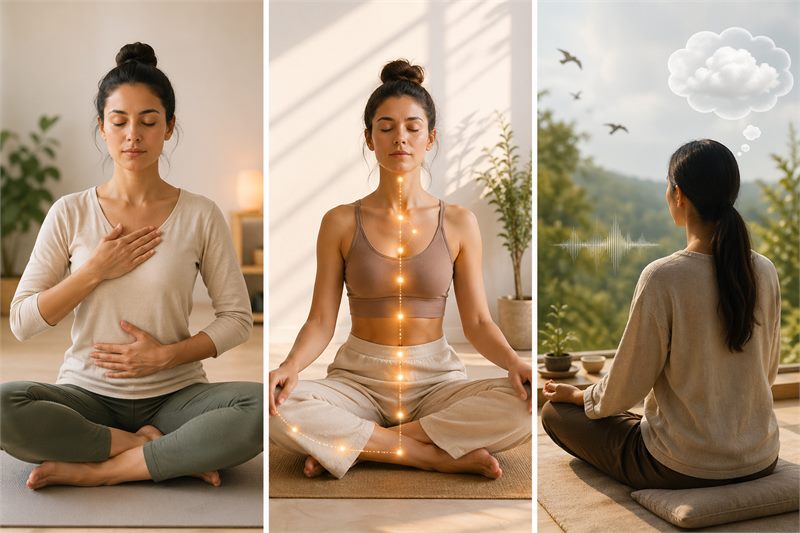
Try different methods
- Breath Awareness: Focus fully on your breathing. This is the easiest and most reliable method to start with.
- Body Awareness: Shift your attention slowly across your body and notice areas of tension or relaxation.
- Simple Observation: Sit quietly and observe whatever arises, including sounds, thoughts, or sensations, without reacting.
How to Build a Daily Meditation Habit
Consistency is more important than duration. Here is how to make it stick:
- Keep It Consistent: Meditate at the same time each day to build a routine.
- Attach It to an Existing Habit: For example, meditate after waking up or before going to bed.
- Keep It Flexible: If you miss a session, continue the next day without guilt.
- Stay Realistic: Even a few minutes daily is enough to build progress over time.
Mistakes Beginners Should Avoid
Avoiding these common errors makes meditation easier and more sustainable.
- Trying to completely stop thinking
- Sitting too long in the beginning
- Being too critical of yourself
- Expecting quick results
- Giving up too early
How Meditation Helps Over Time

Patience pays off
- A calmer response to stressful situations
- Better focus and attention
- Improved emotional balance
- Greater awareness of your thoughts
These benefits develop slowly but consistently.
Bring Mindfulness Into Everyday Life
Meditation doesn't have to happen only on a cushion. You can practise mindful attention during ordinary activities:
- Mindful walking: notice the feeling of each step, the air, and the sounds around you.
- Mindful eating: eat the first few bites of a meal slowly, noticing taste, texture, and smell.
- One-minute pauses: before opening email or starting a meeting, take three slow breaths.
- Everyday tasks: washing dishes, brushing your teeth, or making tea can all become moments of focused attention.
These small practices strengthen the same skills as formal meditation and make calm attention part of your whole day.
If you find it hard to practise alone, try a local meditation group, a class at a community centre, or a reputable guided meditation app. Practising with others can make it easier to stay consistent, and experienced teachers can answer questions that come up as you go. Remember, there is no "perfect" meditation; showing up regularly is what counts.
Final Thoughts
Meditation is not about perfection or achieving a special state. It is about showing up, paying attention, and gently bringing your focus back whenever it drifts.
Even if your mind wanders many times, you are still practicing correctly. What matters most is consistency and patience.
Disclaimer
This content is for educational purposes only and does not replace professional medical or mental health advice. If you experience severe, ongoing, or distressing symptoms, please consult a qualified healthcare or mental health professional.