Many people delay checking their credit score because they assume it's complicated, risky, or tied to loan applications. In reality, checking your credit score is a basic financial habit that helps you understand where you stand before making any money-related decisions.
This guide explains how credit scores work, where you can check them, what the numbers actually tell you, and how to use that information to make better decisions, all in a simple and practical way.
What a Credit Score Really Tells You
A credit score reflects your credit behavior
This number is commonly reviewed when you apply for things like:
- Loans or credit cards
- Financing for purchases
- Rental agreements
- Certain service contracts
The score itself doesn't judge income or savings. It focuses only on credit behavior.
How Credit Scores Are Created
Credit scores are calculated using information collected in your credit history. This data comes from lenders and financial institutions that report activity such as:
- Payment timing
- Account balances
- Credit limits
- Account age
- Public financial records
Different scoring systems may interpret this data slightly differently, which is why the score can vary depending on where you check it.
Where You Can Check Your Credit Score
There isn't just one place to see a credit score. People usually check it through one of the following sources.
Credit Reporting Services
Some services allow you to view your credit report and, in many cases, a score generated from that report. Reviewing the report helps you see the details behind the number, including open accounts and payment history.
Credit Score Platforms
Many online tools focus specifically on showing your credit score in a simplified format. These platforms often include current score, recent changes, and basic explanations of score movement.
Experian
One of the major credit bureaus providing credit reports and scores
Equifax
Major credit reporting agency with comprehensive credit data
TransUnion
Third major credit bureau offering credit monitoring services
Credit Karma
Free credit monitoring service with VantageScore scores
Credit Sesame
Free platform offering credit scores and financial tools
myFICO
Provides FICO scores, the most widely used credit scoring model
Banks and Financial Accounts
Some banks and card providers show a credit score inside your account dashboard. This score is typically updated monthly and meant for monitoring rather than decision approval.
Credit Counselors
Nonprofit credit counselors sometimes review credit scores as part of a broader financial review. This option is useful if you want explanation and guidance, not just numbers.
Checking Your Credit Score Does Not Harm It
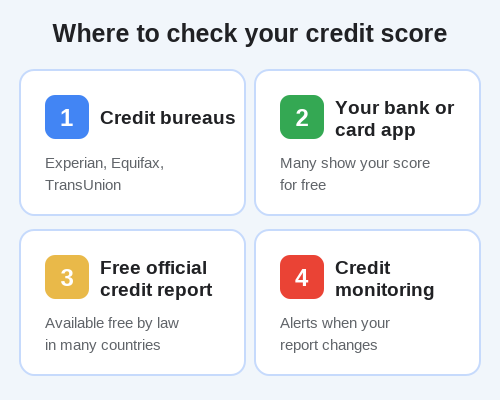
Various platforms allow you to check your score online
Only formal applications for credit usually trigger hard checks, which can have a temporary impact.
Key Point
Regular monitoring is a healthy financial habit, not a risk.
Understanding Credit Score Ranges Without Overthinking
Most credit scores fall within a broad range that moves from lower to higher risk. Higher scores generally indicate:
- Consistent payments
- Controlled use of credit
- Longer credit history
Lower scores often reflect missed payments, high balances, or limited history. Instead of focusing on labels like "good" or "bad," it's more useful to track whether your score is improving, stable, or declining.
Main Factors That Influence Your Credit Score
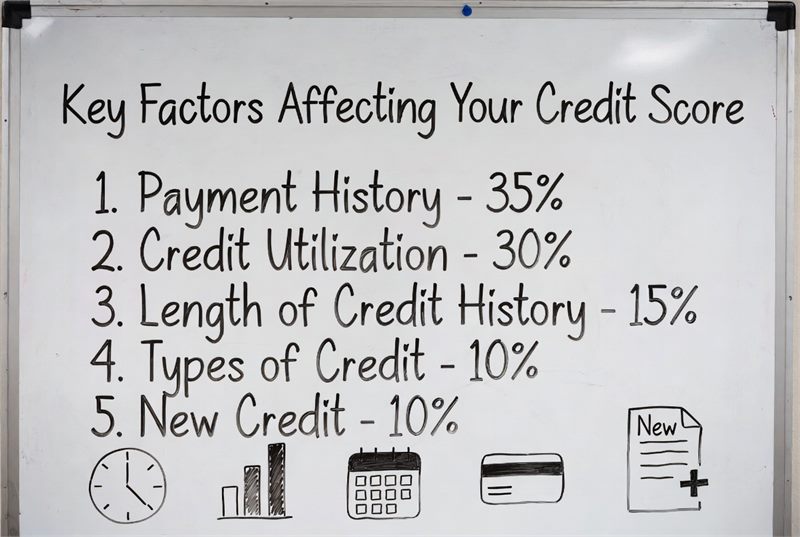
Key factors affecting your credit score
Although scoring models differ, most rely on similar fundamentals.
| Factor | Impact | What It Means |
|---|---|---|
| Payment behavior | High | Late or missed payments carry the most weight. Paying on time consistently has a strong positive effect. |
| Credit usage | High | Using too much of your available credit can lower your score. Lower balances relative to limits are generally healthier. |
| Credit history length | Medium | Older accounts help show long-term experience managing credit. |
| New credit activity | Medium | Opening many accounts in a short time can temporarily affect your score. |
| Credit variety | Low | Managing different types of credit responsibly may help, but it's not essential. |
Common Mistakes People Make When Checking Credit Scores
Many issues come from misunderstanding, not bad credit habits. Common mistakes include:
- Checking once and never again
- Panicking over small changes
- Ignoring errors in credit records
- Thinking one score defines their financial future
Important
Credit scores move over time. Small changes are normal.
How to Use Your Credit Score After You Check It
The real value comes from what you do next.
If your score looks strong, the focus should be on maintaining stability—paying on time, avoiding unnecessary debt, and monitoring periodically.
If your score is lower than expected, the goal is gradual improvement, not quick fixes. Simple steps like paying bills on time, lowering balances, and avoiding frequent applications often make the biggest difference.
If something looks incorrect, reviewing your credit records and addressing errors early can prevent long-term issues.
How Often You Should Check Your Credit Score
You don't need to check it daily. A practical approach is:
- Every few months for awareness
- Before applying for credit
- After resolving financial issues
Key Point
The goal is to stay informed without becoming anxious.
Simple Ways to Improve Your Score Over Time
If your score is lower than you'd like, steady habits make the biggest difference:
- Pay every bill on time; set up automatic minimum payments as a safety net
- Keep credit card balances well below their limits
- Avoid applying for lots of new credit in a short period
- Check your credit report for errors and dispute any you find with the credit bureau
- Keep older accounts open if they cost nothing and are in good standing
Improvements usually show within a few months, and grow steadily over a year or two.
Making Better Financial Decisions With Credit Awareness
Knowing your credit score helps you:
- Decide when to apply for financial products
- Avoid unnecessary rejections
- Plan future purchases more confidently
- Reduce financial stress
People who understand their credit position tend to make calmer, smarter financial decisions over time.