Managing business finances
A missed payment. A confusing tax notice. Or the moment you realize you don't actually know if you're making a profit.
The truth is, small business accounting doesn't need to be complicated. It just needs to be consistent, clear, and honest. This guide explains how to handle accounting in a way that fits real small businesses—not large corporations with finance teams.
What Small Business Accounting Really Is
At its core, accounting is simply tracking:
- What money comes in
- What money goes out
- What you own
- What you owe
That's it.
Key Point
Good accounting tells you whether your business is healthy or quietly bleeding money. Bad accounting leaves you guessing—and guessing is expensive.
Why Accounting Matters More Than Most Owners Realize
Many small business owners think accounting is only for taxes. That's a mistake.
Proper accounting helps you:
- Know if you're actually profitable
- Control unnecessary expenses
- Prepare for taxes without panic
- Avoid cash flow problems
- Make smarter decisions
Important
If you don't track numbers, you're running your business blind.
Step One: Separate Business and Personal Money
This is the most common mistake—and the most damaging one.
If your business money and personal money are mixed:
- Records become messy
- Expenses are hard to justify
- Tax filing becomes stressful
- Mistakes increase
Pro Tip
Open a separate business bank account as early as possible. Even small businesses benefit from this simple step.
Step Two: Choose a Simple Accounting Method
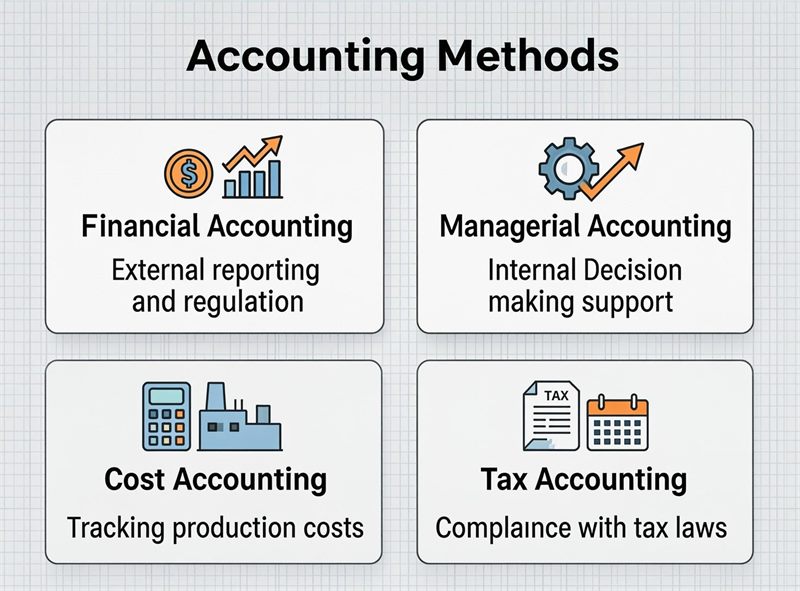
Choose your method
Cash Accounting
You record income when you receive money and expenses when you pay them.
This is simple and works well for small operations.
Accrual Accounting
You record income when it's earned and expenses when they happen—even if money hasn't moved yet.
This is more accurate but also more complex.
If you're unsure, start with cash accounting unless required otherwise.
Step Three: Track Every Income Source
Money doesn't always come from one place.
Track:
- Sales
- Online payments
- Cash transactions
- Service fees
- Extra or seasonal income
Important
Small amounts matter. Over a year, "small" leaks become big losses.
Step Four: Record Expenses Properly (Not From Memory)
Never rely on memory.
Record expenses as they happen, including:
- Rent
- Utilities
- Inventory
- Tools and equipment
- Internet and phone
- Marketing costs
Save receipts—physical or digital. If an expense isn't recorded, it might as well not exist.
Step Five: Use Tools That Match Your Business Size
You don't need enterprise software.
Many small businesses do well with:
- Simple accounting software
- Spreadsheet systems
- Mobile accounting apps
Key Point
The best tool is the one you'll actually use consistently.
Step Six: Understand Basic Financial Reports
You don't need to be an accountant—but you should understand these basics:
Profit and Loss Statement
Shows whether your business is making or losing money.
Cash Flow Summary
Shows how money moves in and out of your business.
Expense Breakdown
Shows where your money is really going.
These reports help you spot problems early.
Step Seven: Stay Ready for Taxes All Year
Tax stress usually comes from poor preparation.
Good accounting makes taxes easier because:
- Income is already tracked
- Expenses are documented
- Numbers are organized
Instead of rushing at the deadline, you're already prepared.
Common Accounting Mistakes Small Businesses Make
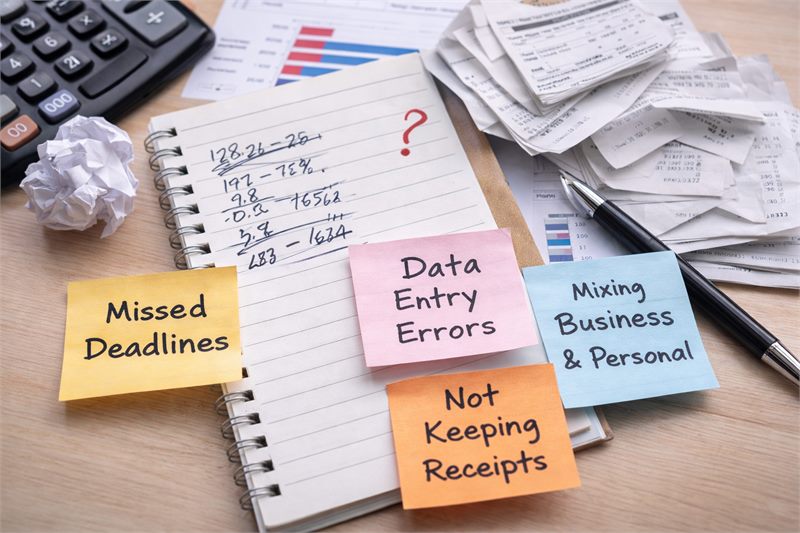
Avoid common errors
- Ignoring records until year-end
- Mixing business and personal spending
- Not saving receipts
- Guessing numbers
- Skip monthly reviews
Important
Accounting problems grow quietly. Fixing them early is always cheaper.
Do You Need an Accountant?
Not always—but sometimes.
You may benefit from professional help if:
- Your business grows quickly
- You have multiple income streams
- Taxes become complex
- You feel overwhelmed
Many owners handle daily accounting themselves and consult professionals occasionally. That balance works well.
A Simple Monthly Accounting Routine
You don't need daily stress. Try this instead:
Once a month:
- Review income
- Review expenses
- Check bank statements
- Fix missing records
- Save backups
Time Saver
One hour a month can prevent serious problems later.
Prepare for Year-End Without Panic
Year-end is when many small business owners discover missing receipts, unexplained transactions, and forgotten invoices. A little preparation in the final month of your financial year makes the process far easier and cheaper, especially if you pay an accountant by the hour.
- Reconcile every bank account: make sure each transaction in your records matches your bank statements up to the last day of the year.
- Chase unpaid invoices: follow up with customers who owe you money, and decide whether any debts are unlikely to be paid.
- Review unpaid bills: list what you owe suppliers so your accounts show the true position.
- Count stock: if you hold inventory, count and value it at year-end.
- List equipment purchases: larger items such as computers, tools, and vehicles may be treated differently for tax.
- Gather missing receipts: download copies from suppliers' websites or email accounts before they're hard to find.
- Note key dates: filing and payment deadlines for income tax, sales tax, and payroll returns.
Once the year is closed, store your records safely. Many tax authorities require businesses to keep records for several years, so check the rules in your country and keep digital backups.
Final Thoughts
Accounting isn't about perfection. It's about clarity.
A small business with simple, honest accounting is stronger than a larger one with messy records. When you understand your numbers, you control your business—instead of reacting to surprises.
Start small. Stay consistent. Improve over time.
That's how real businesses survive and grow.