You are not alone
But when anxiety becomes constant or starts controlling your decisions, sleep, or confidence, it can feel exhausting. The good news is that anxiety can be managed. You don't need to "get rid of it" completely to live well — you just need the right tools and understanding.
This guide explains anxiety in simple language and offers practical ways to reduce its impact on your daily life.
What Anxiety Really Is (And Why It Feels So Strong)
Anxiety is your body's natural warning system. When your brain thinks something might be wrong, it releases stress hormones like adrenaline. This prepares you to react quickly — a useful response in real danger.
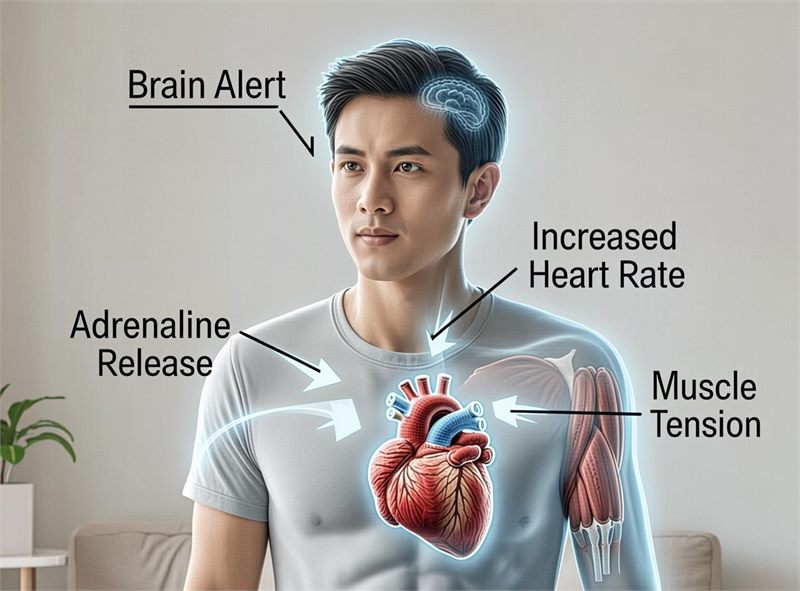
Understand your mind
Anxiety often affects:
- Your body
- Your thoughts
- Your behavior
Key Point
That's why it can feel so hard to control with willpower alone.
Common Signs of Anxiety
Anxiety doesn't look the same for everyone. You might notice physical symptoms, mental changes, or shifts in behavior — or all three.
Physical signs
- Fast or irregular heartbeat
- Dizziness or lightheadedness
- Tight chest or shortness of breath
- Sweating or shaking
- Feeling hot or nauseous
- Headaches or low appetite
Mental and emotional signs
- Constant worrying or overthinking
- Feeling tense or unable to relax
- Trouble sleeping
- Difficulty focusing
- Fear that something bad will happen
- Replaying past events or imagining worst-case outcomes
Behavioral changes
- Avoiding situations that feel uncomfortable
- Pulling away from people
- Losing interest in hobbies
- Constant checking or reassurance-seeking
- Struggling with self-care
Important
Recognizing these signs is an important first step toward change.
Panic Attacks: What's Happening in the Moment
A panic attack is a sudden surge of intense fear that can feel frightening and overwhelming. It often comes with strong physical sensations, such as a racing heart, dizziness, trembling, or difficulty breathing.
Although panic attacks feel dangerous, they are not harmful and usually pass within minutes. Understanding this can reduce fear during future episodes and help you regain a sense of control.
Steps to Overcome Anxiety
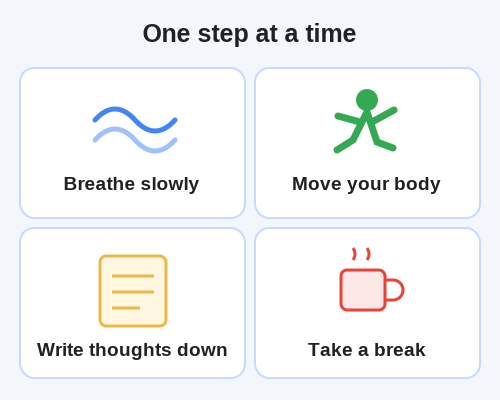
Take it one step at a time
1
Stop Treating Anxiety Like an Enemy
One of the biggest mistakes people make is trying to fight anxiety or push it away. This often makes it stronger.
Instead, try acknowledging it:
- "I notice I'm feeling anxious right now."
- "This feeling is uncomfortable, but it will pass."
2
Calm Your Body First
Because anxiety activates the body, calming your nervous system is often more effective than trying to "think your way out."
- Slow, deep breathing
- Gentle stretching
- Walking outdoors
3
Change How You Respond to Anxious Thoughts
Anxiety often creates thoughts that sound urgent and convincing. But thoughts are not facts.
- "My mind is predicting a problem."
- "This is anxiety talking, not reality."
4
Understand Your Triggers
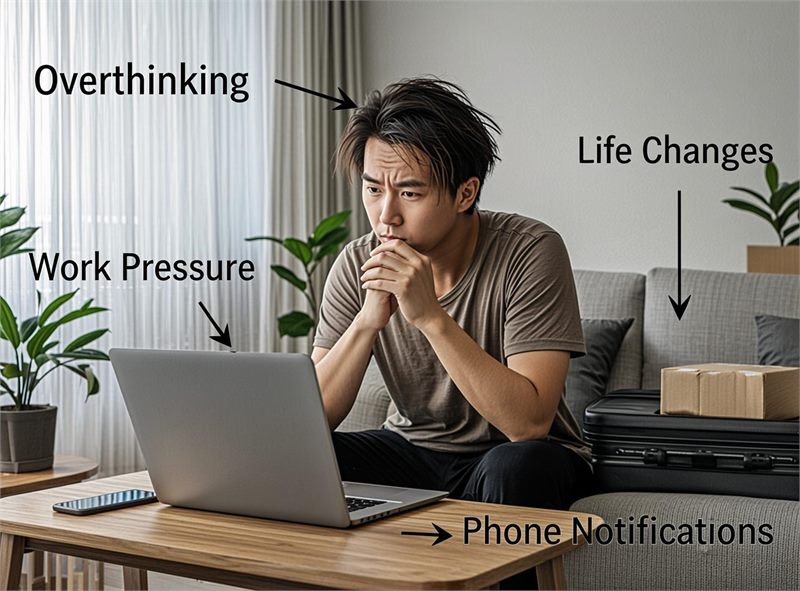
Know your triggers
5
Reduce Avoidance Gradually
Avoiding anxiety-provoking situations brings short-term relief but often strengthens anxiety long-term. Confidence grows through experience, not avoidance.
6
Support Anxiety Reduction Through Daily Habits
Your lifestyle plays a powerful role in how anxiety feels.
- Regular meals to keep energy stable
- Reducing excess caffeine and sugar
- Consistent sleep routines
7
Talk to Someone You Trust
Anxiety often becomes heavier when carried alone. Talking about it can reduce shame and bring relief. You don't need perfect words — honesty is enough.
When Professional Support Is Important
If anxiety is persistent, worsening, or interfering with daily life, professional support can be extremely helpful. Talking therapies are commonly used to help people understand and manage anxiety more effectively.
Remember
Seeking help is a strength, not a weakness.
Everyday Habits That Support a Calmer Mind
Alongside coping techniques and professional support, everyday habits can make anxiety easier to manage over time. They aren't a cure, but they help create a steadier foundation.
- Regular sleep: going to bed and waking at similar times helps regulate mood. Poor sleep often makes anxious thoughts louder.
- Movement: walking, cycling, swimming, or dancing help release built-up tension. Even short daily activity can help.
- Limit caffeine and alcohol: caffeine can mimic anxiety symptoms like a racing heart, and alcohol may disturb sleep and mood the next day.
- Balanced meals: eating regularly helps avoid energy crashes that can feel like anxiety.
- Time outdoors: daylight and green spaces can have a calming effect.
- Stay connected: talk to people you trust about how you feel. Isolation tends to make anxiety worse.
- Limit news and social media: set specific times to check updates rather than scrolling constantly.
Notice which habits help you most, and build them slowly. Small changes, kept up consistently, often make more difference than big changes that are hard to maintain.
If anxiety is affecting your daily life, please remember you don't have to manage it alone. Doctors, counsellors, and psychologists can offer proven treatments, and many communities have free helplines and support groups.
Final Thoughts: Progress, Not Perfection

Hope is real
Small steps, practiced consistently, can lead to meaningful change. Be kind to yourself — anxiety is a human experience, not a personal flaw.
Disclaimer
This content is for educational purposes only and does not replace professional medical or mental health advice. If anxiety symptoms are severe, long-lasting, or distressing, please consult a qualified healthcare or mental health professional.