
Build strength anywhere
The key is consistency and a balanced approach: training, nutrition, and rest all work together to help your muscles grow.
Understanding Muscle Growth
Before jumping into exercises, it helps to understand why muscles grow. When you challenge your muscles—whether by lifting weights or using your own body weight—you create tiny tears in the muscle fibers. During rest and recovery, your muscles repair themselves and grow stronger.
Three things make this happen effectively:
- Challenge your muscles: Push them just beyond what they're used to.
- Recovery: Muscles grow while you rest, not while you're exercising.
- Progression: Gradually increase difficulty—add reps, slow down your movements, or use household items as weights.
Key Concept
Think of it as a cycle: stress → repair → growth. Skip any part, and your progress slows down.
Setting Up Your Home Workout Space
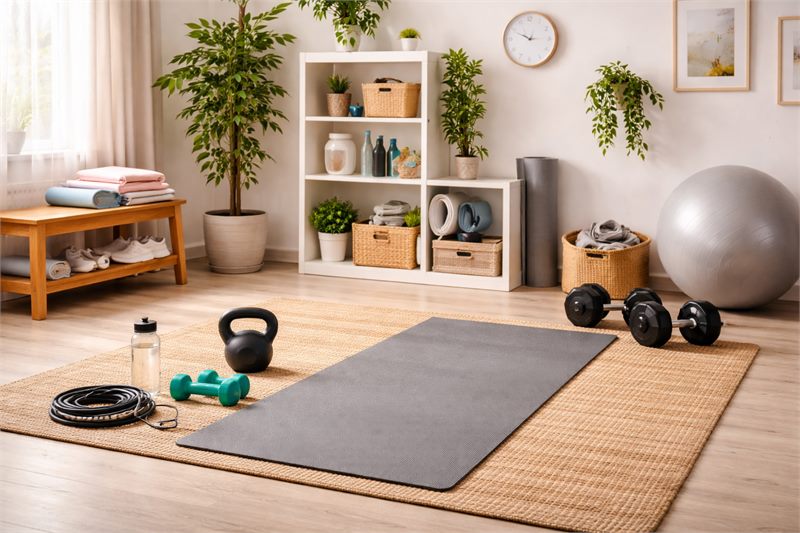
Create your workout zone
Essentials you can use at home:
- Yoga mat: Provides comfort and grip for floor exercises.
- Resistance bands: Optional, but versatile for adding intensity.
- Household items: Water bottles, backpacks, or books can act as weights.
- Chair or countertop: Perfect for dips or support during exercises.
Pro Tip
Even if your space is tiny, consistency is more important than equipment. You'll be surprised how effective a simple routine can be.
How Often Should You Train?
For beginners, 3 days a week is enough to see results. More advanced routines can be 4 days, but you must leave rest days in between. Muscles grow while you recover, so overdoing it can backfire.
Simple Weekly Schedule
Day 1:
Full body workout
Day 2:
Rest or light stretching/walk
Day 3:
Full body workout
Day 4:
Rest
Day 5:
Optional full body session
Days 6 & 7:
Active recovery like yoga, stretching, or walking
Home Exercises to Build Muscle
You can target all major muscle groups without weights using bodyweight exercises:
Upper Body
Push-Ups
3–4 sets of 10–15 reps
Works chest, shoulders, and triceps. If regular push-ups are too hard, drop to your knees or try an incline with your hands on a chair.
Plank-Ups
3 sets of 5–10 reps
Strengthens arms and core. Move slowly for better results.
Chair Dips
2–3 sets of 10–12 reps
Great for triceps and chest. Sit on the edge of a chair and lower yourself slowly.
Lower Body
Bodyweight Squats
3–5 sets of 12–15 reps
Targets quads, glutes, and hamstrings. You can hold a water bottle for extra resistance.
Lunges
3 sets of 12 reps per leg
Strengthens legs and improves balance.
Single-Leg Glute Bridges
3 sets of 12–15 reps per leg
Focuses on glutes and hamstrings, while engaging your core.
Core
Planks
3 sets of 30–60 seconds
Strengthens your core, shoulders, and back.
Side Planks
2–3 sets of 20–30 seconds per side
Works the obliques and improves stability.
Nutrition Tips for Muscle Growth

Fuel your body right
1
Protein
Muscles need protein to repair and grow. Include sources like:
- Eggs, chicken, fish
- Beans, lentils, tofu
- Greek yogurt
Aim for about 0.7–1 gram of protein per pound of body weight per day.
2
Carbs
Carbs give energy for workouts. Focus on:
- Oats, brown rice, quinoa, sweet potatoes
- Whole grains
3
Healthy Fats
Fats help with hormone production, including testosterone, which is essential for muscle growth. Include:
- Avocados, nuts, seeds, olive oil
4
Hydration
Water is crucial for muscle function. Drink 8–10 cups per day.
Meal timing: Eat a mix of protein and carbs 1–2 hours before exercise and again within 30–60 minutes post-workout for recovery.
Recovery Is Just as Important as Exercise
Muscles grow when you rest. Don't ignore recovery:
- Sleep: 7–9 hours per night
- Rest days: At least 1–2 per week
- Active recovery: Light yoga or walking promotes blood flow
- Stretching or foam rolling: Reduces soreness and increases flexibility
Important
Skipping recovery slows progress and increases injury risk.
Track Your Progress
Keeping track of your workouts helps you stay motivated:
- Note reps, sets, and any weights used
- Take progress photos every 2–3 weeks
- Adjust exercises by adding reps, slowing down, or increasing resistance
Motivation Tip
Seeing small improvements is motivating and keeps you consistent.
Common Mistakes to Avoid
Watch Out For These
- Skipping warm-ups: Increases injury risk.
- Overtraining: Too much work can cause fatigue or injury.
- Poor form: Always focus on technique over speed.
- Ignoring nutrition: Muscles need protein and calories to grow.
- No progression: Increase intensity gradually to avoid plateaus.
- Inconsistent routine: Sporadic workouts won't give lasting results.
Staying Motivated
Building muscle at home is a long-term journey. Here's how to stay on track:
- Set small, achievable goals (e.g., "I'll do 20 push-ups in one go").
- Celebrate small wins—every extra rep counts.
- Mix up exercises every 4–6 weeks to avoid boredom.
- Involve family or friends for accountability and fun.
- Treat your home workouts like appointments—you're more likely to stick with them.
Don't Forget Sleep
Muscles repair and grow during rest, and sleep is when much of that recovery happens. Most adults need around seven to nine hours a night. Keep regular sleep times, avoid heavy meals and screens late at night, and remember that training hard on poor sleep raises your risk of injury and slows progress.
Final Thoughts
Building muscle at home without a gym is completely achievable. With bodyweight exercises, a consistent routine, proper nutrition, and enough rest, you'll start seeing results in weeks. The process may take patience, but the benefits go beyond muscles—you'll gain strength, confidence, and better overall health.
Your body is your best tool. Use it wisely, stay consistent, and enjoy the process of getting stronger every day.