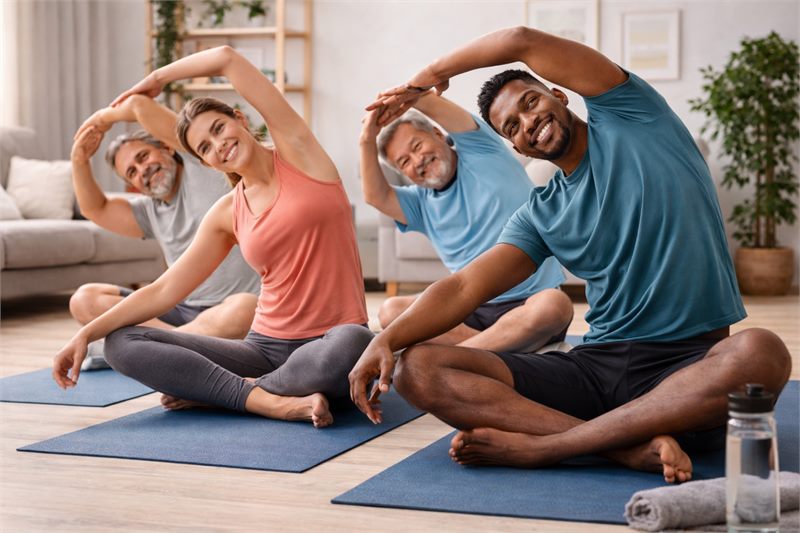
Flexibility for everyone
Even if you don't work out every day, stretching can help relieve tension from sitting at a desk, improve posture, and make daily tasks easier. In this guide, we'll break down why stretching matters, the best techniques, safe practices, and simple exercises you can do at home.
Why Stretching Deserves Your Attention
It's easy to skip stretching. Life gets busy—we rush to work, errands, family responsibilities, and by the time we think about fitness, our energy is gone. But stretching doesn't need to take long to be effective. Even five to ten minutes a day can make a difference.
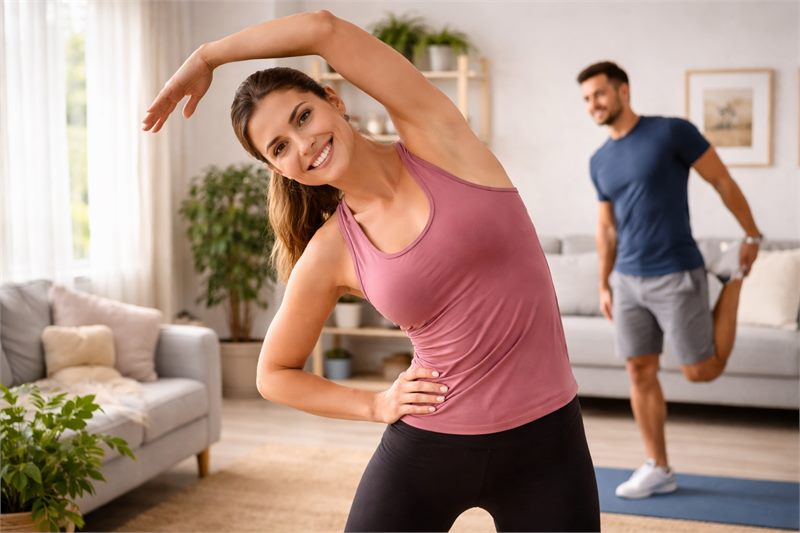
Move freely daily
- Keeps muscles flexible and joints mobile: Flexibility helps you move more easily and reduces stiffness in everyday activities like bending, climbing stairs, or lifting objects.
- Prevents injuries: Tight muscles are more likely to pull or strain. Stretching loosens them, so you're less prone to sprains or strains.
- Reduces tension and stress: Many of us hold tension in the neck, shoulders, or back. Gentle stretches can help release that stress.
- Improves circulation: Stretching increases blood flow, delivering oxygen and nutrients to muscles and joints.
- Supports better posture: Regular stretching counteracts slouching and tight muscles that pull your body out of alignment.
- Enhances performance: Flexible muscles move more efficiently, improving your range of motion and coordination.
- Maintains mobility with age: Stretching slows down the natural stiffness that comes with aging, keeping you active longer.
Key Point
In short, stretching is not just a warm-up or cool-down—it's a vital component of everyday health.
Understanding Stretching Techniques
Stretching can be done in different ways depending on your goals and the time of day. Here are the main types:
1 Static Stretching
This is the classic type—holding a position for 20–60 seconds without movement. It's best after a workout when muscles are warm. Examples include reaching for your toes or pulling your arm across your chest.
2 Dynamic Stretching
Dynamic stretches involve moving through a full range of motion. Think arm swings, leg swings, or walking lunges. They're ideal before exercise to warm up muscles and prepare joints for activity.
3 Active Stretching
Active stretches use your own muscle strength to hold a position. For example, lifting a leg straight in front of you and holding it engages your core and hip muscles while stretching.
4 PNF Stretching
This advanced technique combines stretching and muscle contraction to improve flexibility. It's highly effective but usually done with guidance.
Safe Stretching Practices
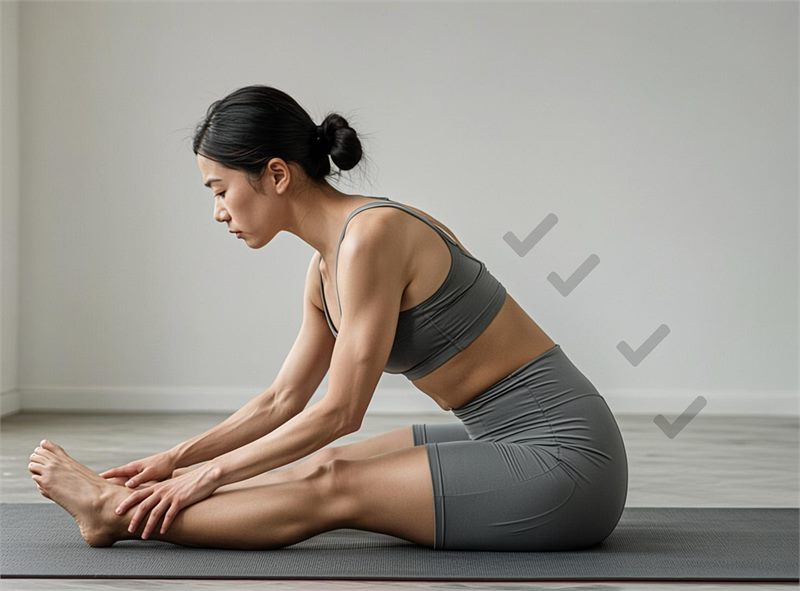
Practice safety first
- Warm up first: Stretching cold muscles can cause injury. Five to ten minutes of light activity is enough.
- Go slow: Move gradually into the stretch. Avoid bouncing or jerky movements.
- Breathe naturally: Don't hold your breath. Deep, steady breaths help your muscles relax.
- Pay attention to posture: Keep your back straight, shoulders relaxed, and joints aligned.
- Stretch both sides: Imbalances are common, so work each side equally.
- Start small: Even a few minutes a day builds flexibility over time.
Important
Remember, stretching should feel good and relieving, not painful. Mild tension is normal; sharp pain is a sign to ease off.
How Often and How Long Should You Stretch?
Aim for at least 2–3 sessions per week, but daily stretching is ideal. Hold each static stretch for 30–60 seconds. If you have time, holding stretches for 1–2 minutes can provide deeper flexibility benefits.
Dynamic stretches can be repeated 8–12 times per side. Focus on major muscle groups—neck, shoulders, back, hips, thighs, calves.
Simple Stretching Routine You Can Do at Home
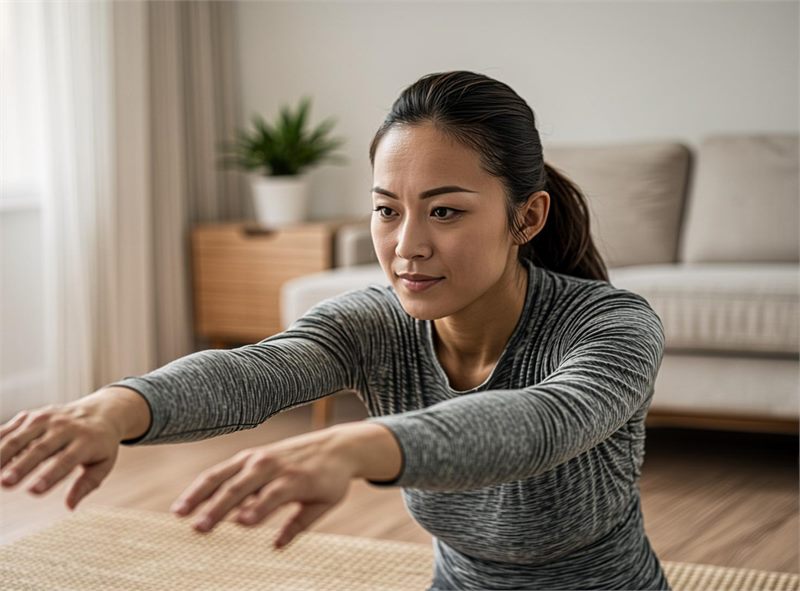
Consistency is key
Neck & Shoulders
Neck Tilt
Tilt your head gently to the right, hold, then switch sides.
Shoulder Stretch
Bring one arm across your chest and gently press with the other arm.
Upper Body
Chest Stretch
Clasp hands behind your back, straighten your arms, and lift your chest slightly.
Upper Back Stretch
Clasp hands in front, round your upper back, and push outward.
Lower Body
Hamstring Stretch
Sit on the floor, extend one leg, and reach for your toes.
Quadriceps Stretch
Stand, pull one ankle toward your glutes while keeping knees together.
Calf Stretch
Place one foot forward and one back, lean forward keeping both heels on the ground.
Hip Flexor Stretch
Lunge forward with one leg and press hips gently toward the floor.
Core & Spine
Child's Pose
Kneel, sit back on your heels, stretch your arms forward, and lower your chest.
Knee-to-Chest Stretch
Lie on your back, pull one knee toward your chest, switch sides.
Tips to Make Stretching a Habit
Building a Consistent Routine
- Schedule it: Treat stretching like an appointment—first thing in the morning or before bed works well.
- Start small: Five minutes a day is better than skipping entirely.
- Incorporate into downtime: Stretch while watching TV or waiting for dinner.
- Focus on tight areas: Neck, shoulders, and lower back often need the most attention.
- Pair with breathing: Deep breathing enhances relaxation and effectiveness.
- Track your progress: Note improvements in flexibility, reduced tension, and posture over time.
Common Mistakes to Avoid
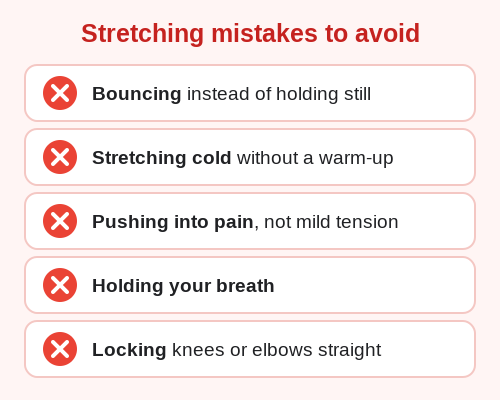
Common stretching mistakes to avoid
Watch Out For These
- Stretching cold muscles without warming up.
- Bouncing or jerking movements that strain muscles.
- Stretching to the point of pain.
- Holding your breath during stretches.
- Neglecting proper alignment and posture.
- Stretching only occasionally instead of consistently.
Long-Term Benefits of Consistent Stretching
Consistent stretching offers benefits that go beyond just flexibility. It contributes to overall well-being, helping you maintain an active and pain-free lifestyle as you age.
Reduced Risk of Injury
Flexible muscles handle daily movements and workouts better.
Improved Circulation
Nutrients and oxygen flow more efficiently to muscles and joints.
Enhanced Performance
Stretching increases range of motion and prepares muscles for activity.
Less Muscle Tightness
Long-term flexibility reduces discomfort from prolonged sitting.
Stress Relief
Stretching gives you a brief pause to focus on your body and relax.
Better Balance
Flexible muscles move more efficiently, improving posture and stability.
Final Thoughts
Stretching properly isn't just a nice-to-have—it's essential for a healthier, more mobile body. Whether you're exercising, working at a desk, or just going about daily life, a few minutes of stretching can prevent injuries, reduce tension, and improve your quality of movement.
Start with short, gentle sessions, focus on correct form, and gradually increase intensity. Over time, stretching will become a natural, enjoyable part of your routine—and your body will thank you for it.