If you are in crisis right now
If you are thinking about harming yourself or feel unsafe, please don't wait. Call your local emergency number, go to the nearest emergency department, or contact a crisis line. In the US you can call or text 988, and in the UK and Ireland you can call Samaritans on 116 123. Many other countries have free, confidential helplines too.

Person in a black hoodie gazing out a window at urban scenery
The encouraging part is that depression responds to help. Most people improve with the right mix of support, treatment, and daily habits, even if recovery is slower than they would like. This guide covers what depression is, how to tell it apart from ordinary sadness, and realistic steps you can start with today, including on days when your energy is close to zero.
Sadness vs. Depression: What's the Difference?
Depression is common, and it is treatable
Sadness is a normal reaction to loss, disappointment, or stress. It usually comes in waves, and you can still feel moments of relief or laughter in between. Depression tends to be heavier and more constant. Doctors usually start to consider it when low mood or loss of interest lasts most of the day, nearly every day, for two weeks or longer and starts to affect work, study, relationships, or self-care.
Mood and thinking
- Feeling empty, flat, or hopeless
- Losing interest in things you used to enjoy
- Feeling guilty or worthless
- Trouble concentrating or making decisions
- Thoughts of death or self-harm
Body and behaviour
- Sleeping much more or much less than usual
- Constant tiredness, even after rest
- Changes in appetite or weight
- Moving or speaking more slowly
- Pulling away from friends and family
Good to know
Depression can look different in different people. Some feel sad; others mostly feel irritable, numb, or physically unwell. Only a qualified professional can diagnose it, so use this list as a reason to talk to someone, not as a self-test.
Why Depression Keeps Itself Going
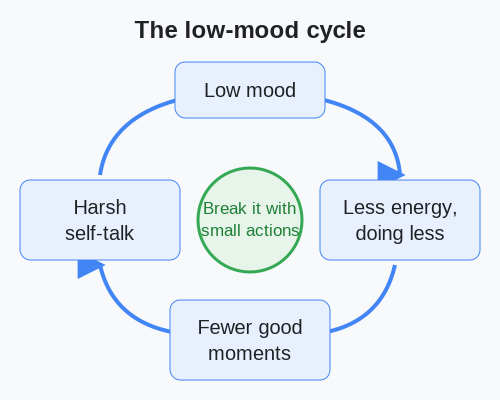
Low mood and inactivity feed each other
Low mood drains your energy, so you do less. Doing less means fewer moments of pleasure, achievement, or connection. With fewer good moments, your mind finds more evidence that things are bleak, and your mood drops further. That loop is why "just cheer up" never works, and also why small actions matter so much: each one is a crack in the cycle.
Practical Steps You Can Start Today
None of these steps replace treatment, but they are the same building blocks therapists often use. Pick one. Not all of them. One.
1
Make Your Goals Embarrassingly Small
Depression shrinks your capacity, so shrink your to-do list to match. "Clean the kitchen" becomes "wash three plates". "Exercise" becomes "walk to the end of the street". Finishing a tiny task gives your brain a small sense of progress, which is exactly what it has been missing.
2
Plan Activities Instead of Waiting for Motivation
When you're depressed, motivation usually comes after you start, not before. This idea is the heart of a well-studied approach called behavioural activation. Each evening, write down one or two things for tomorrow:
- Something practical, like paying one bill or taking a shower
- Something pleasant, like a favourite song, a short call, or sitting in the sun
Afterwards, rate your mood from 0 to 10. Over a few weeks, you'll often see that activity helps more than you expected.
3
Get Daylight and Gentle Movement
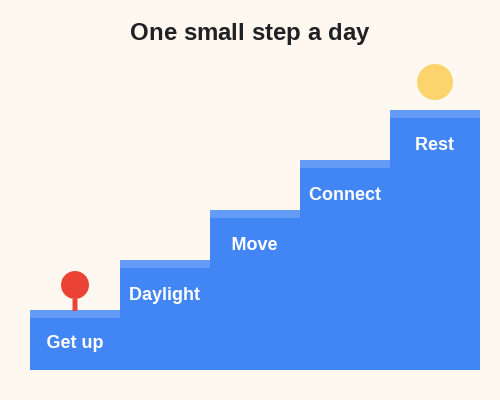
Small steps add up over weeks
4
Protect a Steady Sleep Routine
Try to get up at roughly the same time every day, even after a bad night. Keep long daytime naps short, avoid screens in bed, and cut back on caffeine after midday. Fixing your wake-up time usually helps more than forcing an early bedtime.
5
Stay Connected, Even Briefly
Depression tells you to hide. Gently do the opposite. Send one message, sit in a café, or let a friend know you're having a hard time. You don't have to explain everything; "I've been feeling low lately" is enough to start.
6
Question the Harsh Inner Voice
Thoughts like "I'm useless" or "it will always be like this" feel like facts, but they are symptoms. When one shows up, ask yourself:
- "Would I say this to a friend in my position?"
- "What evidence do I have against this thought?"
- "How would I see this on a better day?"
7
Go Easy on Alcohol and Other Drugs
Alcohol may numb things for an evening, but it is a depressant and tends to worsen mood, sleep, and anxiety over the following days. If you notice you're drinking to cope, mention it to your doctor. It's common and nothing to be ashamed of.
Treatment and When to Get Professional Help
Self-help works best alongside professional care, not instead of it. Book an appointment with a doctor or mental health professional if:
- Your low mood has lasted more than two weeks
- You're struggling to manage work, study, or daily tasks
- You've lost interest in almost everything
- You're using alcohol or other substances to cope
- You have any thoughts of self-harm or suicide (seek help immediately)
Common, effective treatments include talking therapies such as cognitive behavioural therapy (CBT), behavioural activation, and interpersonal therapy, as well as antidepressant medication when a doctor thinks it is appropriate. Many people use a combination. A doctor can also check for physical causes, such as thyroid problems or vitamin deficiencies, that can mimic or worsen depression.
Before your appointment
Write down how long you've felt this way, how you're sleeping and eating, and anything that has changed recently. It's hard to remember details in the moment, and notes help the conversation go further.
If You're Supporting Someone with Depression
- Listen more than you fix. "That sounds really hard" often helps more than advice.
- Offer specific help, like "Can I bring dinner on Thursday?" instead of "Let me know if you need anything."
- Encourage professional support and offer to help book or attend an appointment.
- Take any talk of suicide seriously and contact emergency services if they are in danger.
- Look after yourself too. Supporting someone is tiring, and you need rest and support as well.
A Gentle Plan for Very Low-Energy Days
On the hardest days, aim for the basics only. Ticking off even two or three of these counts as a good day:
- Morning: drink a glass of water, open the curtains, and get dressed, even into comfortable clothes.
- Midday: eat something simple, such as toast, fruit, yoghurt, or soup, and step outside for five minutes.
- Afternoon: do one tiny task, such as replying to one message or washing a few dishes.
- Evening: contact one person, even with a short text, and do something calming, like a shower or a favourite show.
- Night: go to bed at your usual time and put your phone away from your bed.
Final Thoughts
Recovery from depression is rarely a straight line. There will be better weeks and setbacks, and both are normal. What matters is the direction over time. Start with one small action, tell one person, and take one step toward professional help. That is enough for today.
Medical Disclaimer
Waysily is not a medical provider, and the people who write our guides are not doctors. This article is for general educational purposes only. It is not medical advice, a diagnosis, or a treatment plan, and it should not replace a conversation with a qualified doctor, pharmacist, dietitian, or mental health professional who knows your history. Always check with a professional before changing your diet, starting supplements, or using home remedies, especially if you are pregnant, breastfeeding, taking medication, or living with a health condition. If you think you are having a medical emergency, contact your local emergency number straight away.