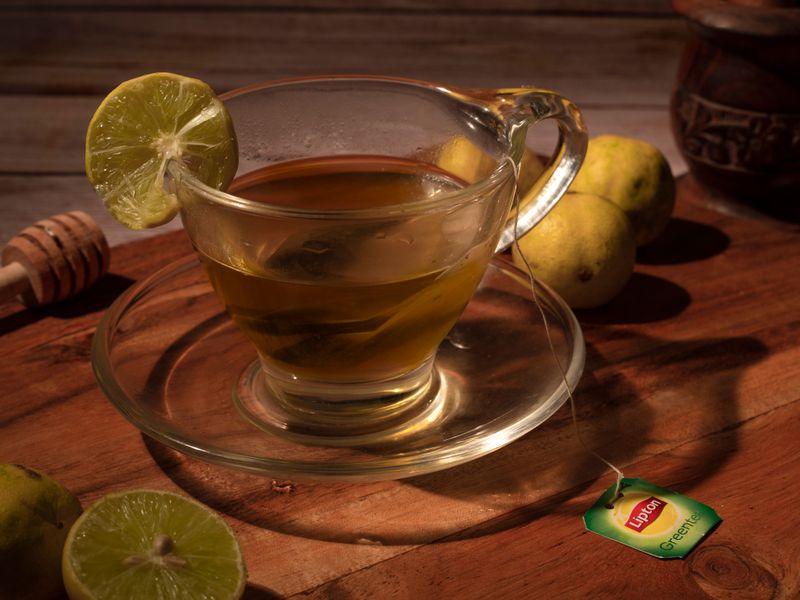
Close-up of lemon tea with honey on a wooden surface
Here is the honest answer first: there is no natural or medical cure that kills a cold virus, and antibiotics don't work on colds or flu because they are caused by viruses. Your immune system clears the infection itself. What home remedies can do is make you more comfortable, support your body while it recovers, and help you avoid spreading the illness. This guide covers what genuinely helps, what doesn't, and when to see a doctor.
Cold or Flu? How to Tell the Difference
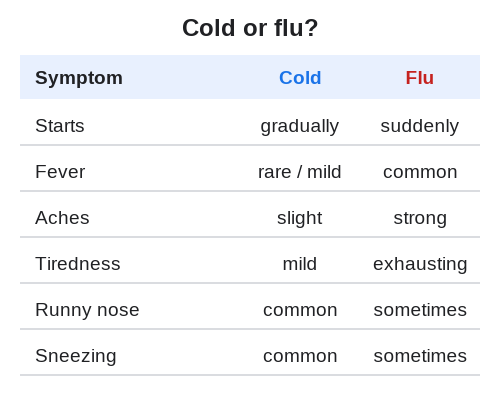
Colds and flu feel similar but differ in strength
Both are respiratory infections, but they are caused by different viruses and usually feel different. A cold tends to start gradually with a sore throat and runny nose, and you can often keep going with daily life. Flu usually hits suddenly with a fever, chills, body aches, and exhaustion that can keep you in bed for days.
Good to know
Other infections, including COVID-19, can look very similar. If you're unsure, especially if you are at higher risk, a test or a call to a doctor or pharmacist can help you decide what to do.
Home Remedies That Genuinely Help
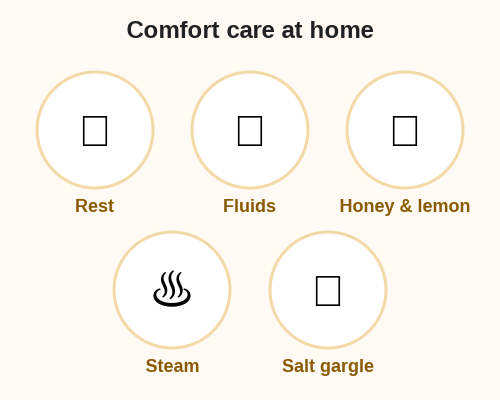
Simple comfort care works best
1
Rest Properly
Your body uses a lot of energy fighting an infection. Sleep more than usual, take time off if you can, and avoid hard exercise until you feel better. Pushing through flu often makes recovery longer.
2
Drink Plenty of Fluids
Fever and a runny nose make you lose fluids. Water, warm drinks, broths, and soups keep you hydrated and help loosen mucus. Pale yellow urine is a good sign you're drinking enough.
3
Try Honey for Coughs and Sore Throats
A spoonful of honey, or honey and lemon in warm water, can soothe a sore throat. Research suggests honey may ease coughs, especially at night.
Important
Never give honey to babies under 1 year old because of the risk of infant botulism.
4
Gargle with Salt Water
Dissolve half a teaspoon of salt in a glass of warm water, gargle, and spit it out. This can ease throat pain for a while. It isn't suitable for young children who may swallow it.
5
Use Steam and Moist Air
Breathing in steam from a hot shower, or using a humidifier, can make a blocked nose feel easier. Avoid leaning over bowls of very hot water, which can cause burns, especially for children. Saline nasal sprays or drops are a safe option for congestion too.
6
Eat Simple, Nourishing Food
You may not feel hungry, and that's okay for a day or two. Light meals like soups, rice, toast, fruit, and yoghurt give your body energy. Warm chicken or vegetable soup is comforting and adds fluids.
7
Use Pharmacy Medicines If Needed
Paracetamol (acetaminophen) or ibuprofen can lower fever and ease aches. Follow the label, and ask a pharmacist before combining cold remedies, as many already contain paracetamol and doubling up is easy. Many cough and cold medicines aren't suitable for young children. If you are at high risk from flu, a doctor may prescribe antiviral medicine, which works best when started early.
Popular Remedies: What the Evidence Says
- Vitamin C: Taking it regularly may slightly shorten colds, but starting it once you're sick shows little benefit for most people.
- Zinc lozenges: Some studies suggest they may shorten a cold if started within a day of symptoms, but they can cause nausea and a bad taste. Don't exceed the label dose.
- Ginger and turmeric drinks: Soothing and warming, and they add fluids, but there's limited proof that they speed recovery.
- Echinacea and other herbal products: Evidence is mixed. Check with a pharmacist first, as herbal products can interact with medicines.
- Antibiotics: These don't work against cold or flu viruses and can cause side effects. A doctor will only prescribe them if a bacterial complication develops.
How Long Recovery Takes
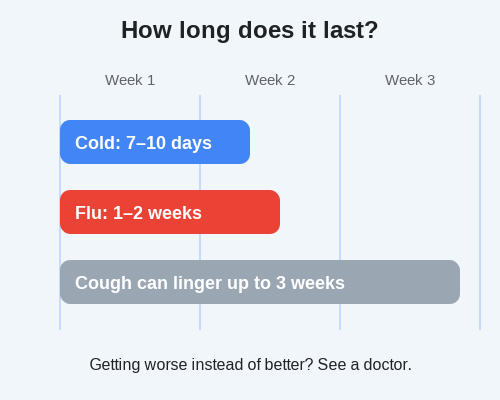
Typical recovery times
To avoid passing it on, wash your hands often, cough or sneeze into a tissue or your elbow, and stay home while you have a fever or feel very unwell.
When to See a Doctor
Seek urgent medical help if you or someone you're caring for has:
- Difficulty breathing, fast breathing, or chest pain
- Bluish lips or face
- Confusion, extreme drowsiness, or difficulty waking up
- Signs of dehydration, such as very little urine
- A fever with a rash that doesn't fade when you press a glass against it
Contact a doctor soon if:
- Symptoms last more than about three weeks or keep getting worse
- You get better and then suddenly get worse again, with a returning fever
- You have a high temperature that doesn't come down
- You are pregnant, over 65, have a long-term condition such as asthma, diabetes, or heart disease, or have a weakened immune system
- A baby under 3 months has a temperature of 38°C (100.4°F) or higher
A Day-by-Day Care Plan
- Days 1–2 (symptoms starting): rest as much as you can, drink plenty of fluids, and stay home if you have a fever. If you're at high risk from flu, contact a doctor early, as antiviral medicine works best when started soon.
- Days 3–5 (often the worst days): keep up fluids, warm drinks, honey for cough, salt-water gargles, and pain relief if needed. Watch for warning signs.
- Days 6–10 (recovery): energy slowly returns. Ease back into normal activities and light exercise once your fever has gone.
- After day 10: a lingering cough can be normal. See a doctor if you're getting worse or new symptoms appear.
Final Thoughts
You can't cure a cold or flu overnight, naturally or otherwise, but you can make the days much more bearable. Rest, fluids, warm drinks, honey, and simple pharmacy medicines do most of the work, while your immune system does the rest. For prevention next season, hand washing and a yearly flu vaccine are among the best tools available.
Medical Disclaimer
Waysily is not a medical provider, and the people who write our guides are not doctors. This article is for general educational purposes only. It is not medical advice, a diagnosis, or a treatment plan, and it should not replace a conversation with a qualified doctor, pharmacist, dietitian, or mental health professional who knows your history. Always check with a professional before changing your diet, starting supplements, or using home remedies, especially if you are pregnant, breastfeeding, taking medication, or living with a health condition. If you think you are having a medical emergency, contact your local emergency number straight away.