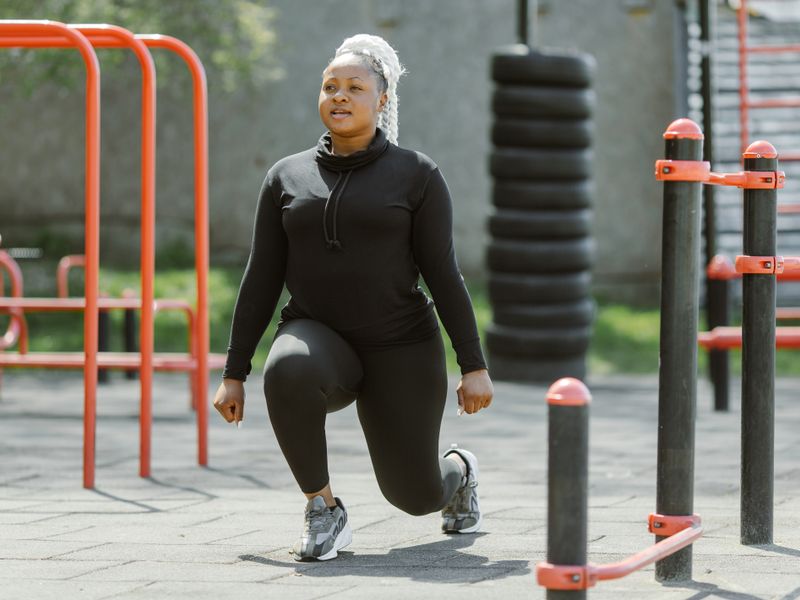
Fit woman performing lunges at an outdoor gym
Losing belly fat is possible, but it happens through steady changes to your whole lifestyle rather than one trick. This guide explains why belly fat matters for your health, why you can't target it with sit-ups alone, and the habits that make a measurable difference over time.
Two Types of Belly Fat
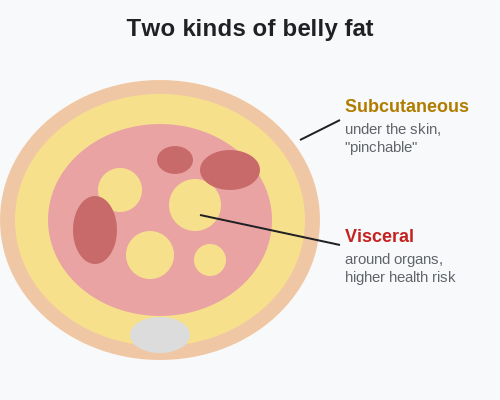
Visceral fat sits deeper, around the organs
Not all belly fat is the same. There are two main types:
Subcutaneous fat
- Sits just under the skin
- The soft fat you can pinch
- Mostly a cosmetic concern in moderate amounts
Visceral fat
- Sits deep inside, around the liver and intestines
- Makes the belly feel firm rather than soft
- Linked to type 2 diabetes, heart disease, and fatty liver
The good news
Visceral fat tends to respond well to lifestyle changes. It is often among the first fat to shrink when you start eating better and moving more, even before the scale shows much change.
Measure Your Starting Point
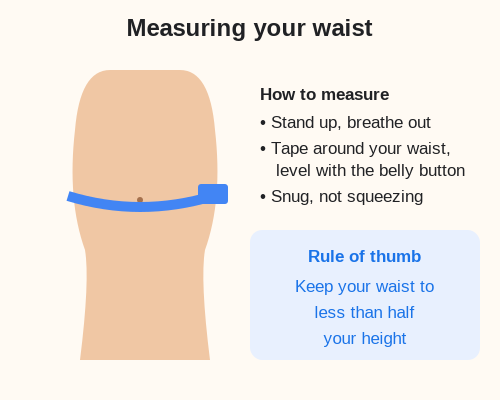
A tape measure tells you more than a scale
A simple rule used by health services such as the UK's NHS is to keep your waist measurement to less than half your height. For example, someone who is 170 cm tall should aim for a waist under 85 cm. Many guidelines also suggest a higher health risk above about 94 cm (37 in) for men and 80 cm (31.5 in) for women, though the exact numbers vary by ethnicity.
Measure once every two weeks at the same time of day. It's a more honest progress marker than daily weigh-ins.
Myths That Waste Your Time
- "Crunches burn belly fat." You can't choose where your body loses fat. Ab exercises strengthen the muscles underneath, but fat loss happens across your whole body.
- "Detox teas flatten your stomach." Most work as laxatives or diuretics. You lose water, not fat, and it returns quickly.
- "Waist trainers reshape your waist." They compress temporarily and can restrict breathing. They don't remove fat.
- "Certain foods melt fat." No food burns fat on its own, including lemon water, apple cider vinegar, or green tea.
What Actually Works: Step by Step
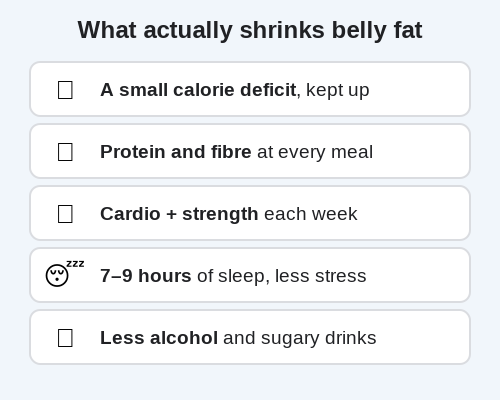
Five habits, practised together
1
Eat in a Small, Sustainable Calorie Deficit
To lose fat, you need to use a little more energy than you eat. Crash diets usually backfire. A modest reduction, for many people around 300–500 calories a day, is easier to keep up and protects muscle. A realistic rate of loss is about 0.5–1 kg (1–2 lb) per week.
2
Build Meals Around Protein and Fibre
Protein and fibre keep you full for longer, making it easier to eat less without constant hunger.
- Include eggs, fish, chicken, beans, lentils, tofu, or yoghurt at every meal
- Fill half your plate with vegetables
- Swap white bread and rice for whole-grain versions
- Snack on fruit, nuts, or yoghurt instead of biscuits and crisps
Our guide on planning a healthy meal shows how to put this together.
3
Cut Sugary Drinks and Limit Alcohol
Liquid calories are easy to overlook and don't fill you up. Soft drinks, sweetened coffee, energy drinks, and alcohol are closely linked to weight gain around the middle. Replacing them with water, sparkling water, or unsweetened tea is one of the easiest changes you can make.
4
Combine Cardio and Strength Training
Aerobic exercise, such as brisk walking, cycling, or swimming, is particularly effective against visceral fat. Aim for at least 150 minutes a week. Add strength training two or three times a week to keep and build muscle, which helps your metabolism. See our home workouts guide to get started without a gym.
5
Sleep Well and Manage Stress
Short sleep and long-term stress both raise cortisol and appetite, making it easier to store fat around the waist. Aim for seven to nine hours of sleep and build small stress breaks into your day.
6
Be Patient and Track Trends
Fat loss isn't linear. Water, salt, and hormones can change your weight from day to day. Judge your progress by your waist measurement, how your clothes fit, and your energy over four to eight weeks.
When to Talk to a Doctor
See a doctor if you notice any of the following:
- Your belly is swelling quickly, or feels hard and painful
- You are gaining weight without changing your habits
- You have bloating together with weight loss, changes in bowel habits, or blood in your stool
- You have diabetes, heart disease, or high blood pressure and want a safe plan
A doctor can also check for conditions such as thyroid problems or hormonal changes, and refer you to a dietitian if you'd like structured support.
A Sample Week of Activity
This beginner-friendly plan combines cardio, strength, and rest. Adjust it to your fitness level and check with a doctor first if you have health conditions.
- Monday: 30-minute brisk walk
- Tuesday: 20–30 minutes of bodyweight strength (squats, lunges, push-ups against a wall or bench, glute bridges, planks)
- Wednesday: 30 minutes of cycling, swimming, or dancing
- Thursday: strength session, as Tuesday
- Friday: 30-minute brisk walk, adding a few faster intervals
- Saturday: a longer, enjoyable activity like a hike or sport
- Sunday: rest or gentle stretching
Final Thoughts
There's no quick fix for belly fat, but there is a dependable formula: eat a little less and a little better, move more, sleep enough, and give it time. Focus on your health rather than a perfect stomach, and the waistline usually follows.
Medical Disclaimer
Waysily is not a medical provider, and the people who write our guides are not doctors. This article is for general educational purposes only. It is not medical advice, a diagnosis, or a treatment plan, and it should not replace a conversation with a qualified doctor, pharmacist, dietitian, or mental health professional who knows your history. Always check with a professional before changing your diet, starting supplements, or using home remedies, especially if you are pregnant, breastfeeding, taking medication, or living with a health condition. If you think you are having a medical emergency, contact your local emergency number straight away.