
Vibrant citrus fruits in a wicker basket with woven cloth, captured in warm natural light
This guide focuses on what research actually supports: eating well, sleeping enough, moving regularly, managing stress, and protecting yourself from infection in the first place.
How Your Immune System Works (Briefly)
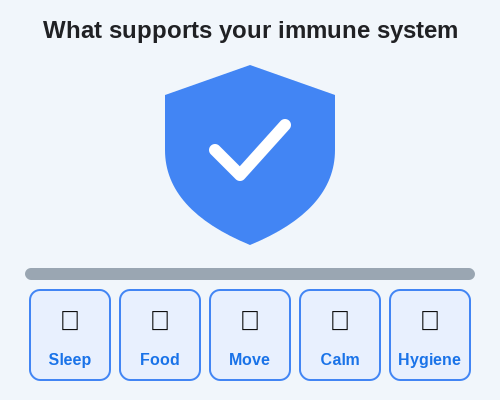
Everyday habits hold up your defences
Your immune system is a network of cells, tissues, and organs, including your skin, gut, bone marrow, and lymph nodes, that recognises and fights germs. It has two main parts: a fast, general defence that reacts within hours, and a slower, targeted defence that learns to recognise specific germs and remembers them. That memory is why you usually don't catch the same infection twice, and why vaccines work.
Why "boosting" is the wrong word
A healthy immune system is balanced, not maximised. An overactive immune system is behind allergies and autoimmune conditions. The goal is to give your body what it needs to respond well, not to push it into overdrive.
Habits That Support Your Immune System
1
Eat a Varied, Colourful Diet
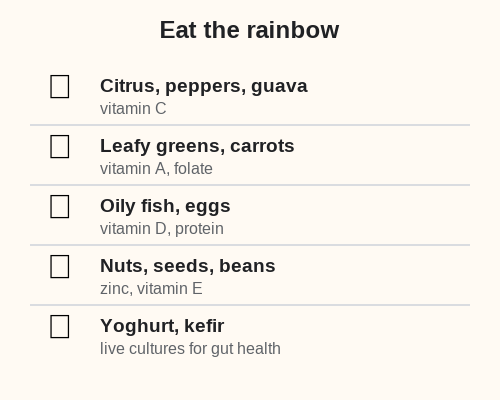
Different colours, different nutrients
- Five or more portions of fruit and vegetables a day, in different colours
- Protein at each meal from beans, lentils, eggs, fish, poultry, or dairy
- Whole grains, nuts, and seeds for zinc and vitamin E
- Yoghurt, kefir, or other fermented foods to support gut bacteria
2
Prioritise Sleep
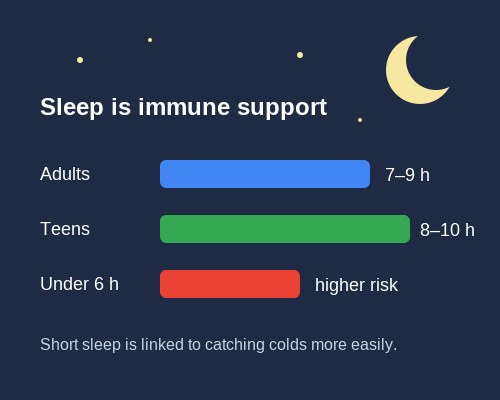
Most adults need 7–9 hours
3
Move Your Body Regularly
Moderate exercise, such as brisk walking, cycling, or swimming, helps immune cells circulate and is linked to fewer respiratory infections. Aim for around 150 minutes a week. You don't need extreme workouts, and very intense training without enough recovery can temporarily do the opposite.
4
Manage Long-Term Stress
Short bursts of stress are normal, but long-term stress keeps the hormone cortisol high, which can dampen immune responses. Regular breaks, time outdoors, breathing exercises, meditation, and talking to people you trust all help. Our stress management guide covers this in more detail.
5
Drink Water and Limit Alcohol
Staying hydrated keeps the mucous membranes in your nose and throat moist, which helps trap germs. Heavy drinking, on the other hand, is known to weaken immune defences, so keep alcohol within recommended limits or avoid it.
6
Don't Smoke
Smoking damages the lining of your airways and makes chest infections more likely and more severe. Stopping is one of the most powerful things you can do for your immune health, and support to quit is widely available.
7
Practise Good Hygiene and Stay Up to Date with Vaccines
The best way to avoid illness is not to catch it. Wash your hands with soap for 20 seconds, especially before eating and after travelling. Vaccines train your immune system safely, so ask your doctor which ones are recommended for you, such as the yearly flu vaccine.
What About Immune Supplements?
For most healthy people who eat a balanced diet, supplements add little. There are a few exceptions worth knowing about:
- Vitamin D: Many people are low, especially in winter or if they get little sun. A doctor can check your level and advise on a safe dose.
- Vitamin C: Regular use may slightly shorten colds, but taking it only after you get sick shows little benefit for most people.
- Zinc: Some studies suggest zinc lozenges started early may shorten colds, but too much zinc can cause nausea and other problems.
Be careful with supplements
"Natural" doesn't mean safe. High doses of some vitamins and herbal products can cause side effects or interact with medicines such as blood thinners. Always check with a doctor or pharmacist before starting a supplement, especially if you're pregnant, take regular medication, or have a long-term condition.
When to See a Doctor
Lifestyle habits help, but frequent or unusual infections deserve proper medical attention. Speak to a doctor if you:
- Get infections very often, or they take unusually long to clear
- Have infections that keep coming back despite treatment
- Feel constantly exhausted or are losing weight without trying
- Have a condition or take medication that affects your immune system
A Simple Daily Immune-Support Checklist
- At least five portions of fruit and vegetables
- Protein at each main meal
- About 30 minutes of movement, such as a brisk walk
- Some time outdoors in daylight
- Water as your main drink
- Washing hands before eating and after being out
- Ten minutes of something relaxing
- A consistent bedtime that allows 7–9 hours of sleep
You won't tick every box every day, and that's fine. Aim for most of them most days.
Final Thoughts
There's no shortcut to a strong immune system, but there is a reliable path: good food, enough sleep, regular movement, lower stress, clean hands, and up-to-date vaccines. None of these are flashy, and all of them work best when you do them consistently. Pick the habit you're weakest in and start there.
Medical Disclaimer
Waysily is not a medical provider, and the people who write our guides are not doctors. This article is for general educational purposes only. It is not medical advice, a diagnosis, or a treatment plan, and it should not replace a conversation with a qualified doctor, pharmacist, dietitian, or mental health professional who knows your history. Always check with a professional before changing your diet, starting supplements, or using home remedies, especially if you are pregnant, breastfeeding, taking medication, or living with a health condition. If you think you are having a medical emergency, contact your local emergency number straight away.