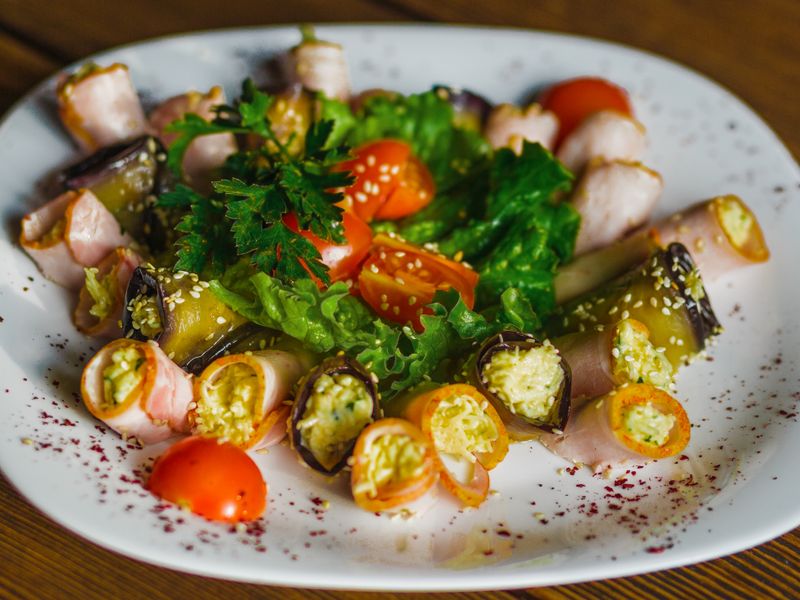
Colorful vegetable and ham rolls garnished with cherry tomatoes and lettuce
This guide gives you that structure: a plate model that works for almost any cuisine, an easy way to judge portions, and a weekly routine that makes healthy meals the default instead of a daily battle.
What Actually Makes a Meal "Healthy"?
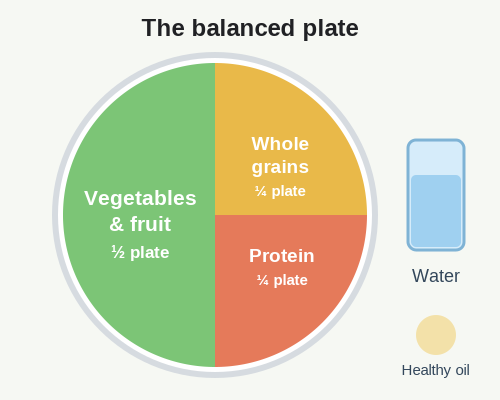
A simple model for most meals
A healthy meal isn't about one superfood. It's about balance. A well-built meal gives you steady energy, keeps you full for a few hours, and provides a wide range of nutrients. In practice, that usually means:
- Plenty of vegetables and fruit for fibre, vitamins, and minerals
- A source of protein to keep you full and support muscles
- Whole grains or starchy foods for lasting energy
- A small amount of healthy fat such as olive oil, nuts, or seeds
- Less of what you don't need: added sugar, excess salt, and heavily processed foods
Key Point
Health organisations such as the WHO recommend at least 400 g of fruit and vegetables a day, about five portions. Building half of each plate around them is the easiest way to get there.
The Balanced Plate Method
The plate method is popular with dietitians because it works without weighing or counting. Picture a standard dinner plate and divide it like this:
Half the plate
- Non-starchy vegetables: leafy greens, broccoli, peppers, tomatoes, carrots
- Some fruit, especially at breakfast
- Aim for different colours across the week
One quarter
- Whole grains: brown rice, oats, whole-wheat roti or bread
- Or starchy foods like potatoes with the skin on
- Quinoa, millet, barley, whole-wheat pasta
One quarter
- Beans, lentils, chickpeas, tofu
- Fish, eggs, chicken
- Lean red meat now and then, not daily
Add a little healthy fat for cooking or dressing, and choose water as your main drink. This model adapts to any food culture: a dal with rice and a big side of sabzi, a stir-fry with tofu and vegetables, or grilled fish with potatoes and salad all fit.
Easy Portion Sizes (No Scale Needed)
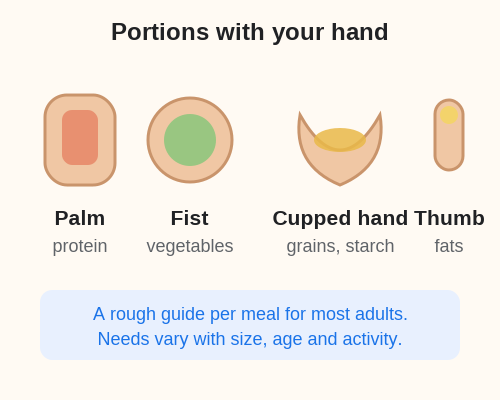
Your hand is a handy measuring tool
- Protein: about the size and thickness of your palm
- Vegetables: at least one to two fist-sized portions
- Grains or starch: about one cupped handful
- Fats: about one thumb-sized portion
These are starting points, not rules. Someone who is very active, pregnant, or trying to gain weight will need more, while someone with a smaller frame may need less. Your hunger and energy levels are useful feedback.
Step-by-Step: Planning Your Meals for the Week
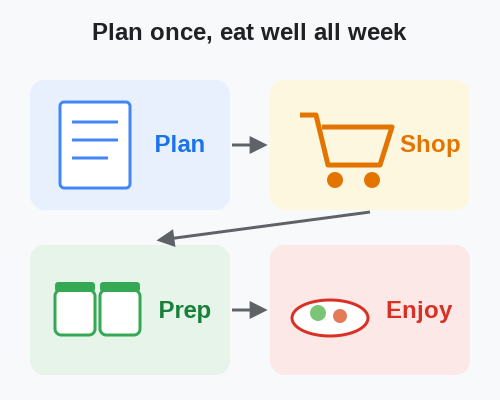
Plan, shop, prep, enjoy
1
Check What You Already Have
Look in your fridge, freezer, and cupboards first. Building meals around what's already there saves money and reduces food waste.
2
Choose 3–4 Main Meals and Repeat Them
You don't need seven different dinners. Pick three or four simple meals you like and rotate them, cooking double portions so leftovers become lunch. Variety can come from changing vegetables or spices.
3
Write a Shopping List by Plate Section
Group your list into vegetables and fruit, proteins, grains, and extras. It makes it obvious when one part of the plate is missing.
- Frozen vegetables and fruit are just as nutritious and last longer
- Canned beans, lentils, and fish are cheap, quick proteins
- Buy grains in bulk if you have space
4
Prep a Few Basics Ahead
Wash and chop vegetables, cook a pot of grains, and prepare a protein or two. Store them in clear containers so you can see them. Mixing ready parts takes minutes on a busy evening.
5
Keep Backup Meals for Busy Nights
Have two or three ten-minute options in reserve, like eggs with toast and a salad, a bean wrap, or lentil soup from the freezer. A backup plan beats ordering out when life gets in the way.
A Sample Day of Balanced Meals
- Breakfast: Oats cooked with milk or a fortified alternative, topped with banana, berries, and a spoon of nuts
- Lunch: Whole-wheat wrap with chickpeas, salad leaves, cucumber, tomato, and yoghurt dressing
- Snack: An apple and a small handful of peanuts
- Dinner: Grilled fish or tofu, brown rice, and a big serving of stir-fried mixed vegetables
Common Mistakes to Avoid
- Skipping meals and overeating later in the day
- Drinking your calories through sugary drinks, juices, and fancy coffees
- Relying on "health food" labels: granola bars and "low-fat" snacks can be high in sugar
- Making plans too ambitious, then giving up when life gets busy
- Cutting out whole food groups without a medical reason or professional advice
When to get personalised advice
If you have diabetes, kidney disease, food allergies, a history of eating disorders, or are pregnant, speak to a doctor or registered dietitian. They can adjust portions and food choices to your specific needs.
Easy Healthy Swaps
- White rice or bread → brown rice, whole-wheat bread, or half-and-half to start
- Sugary breakfast cereal → plain oats with fruit
- Fizzy drinks → sparkling water with lemon or a splash of juice
- Crisps → a small handful of nuts or roasted chickpeas
- Creamy sauces → tomato-based sauces or yoghurt-based dressings
- Frying everything → baking, grilling, steaming, or air-frying some meals
Eating Well on a Budget
- Build meals around low-cost staples: lentils, beans, eggs, oats, rice, potatoes, and seasonal vegetables.
- Buy frozen vegetables and fruit; they're nutritious and reduce waste.
- Cook once, eat twice: make larger batches and freeze portions.
- Compare unit prices (per kg) rather than package prices.
- Use leftovers creatively, such as roasted vegetables in tomorrow's wrap or soup.
Final Thoughts
Healthy eating is built on ordinary meals repeated well, not on perfect days. Start with one change: make half your dinner plate vegetables this week. Once that feels normal, add a planning session or a prep day. Small, steady upgrades are the ones that last.
Medical Disclaimer
Waysily is not a medical provider, and the people who write our guides are not doctors. This article is for general educational purposes only. It is not medical advice, a diagnosis, or a treatment plan, and it should not replace a conversation with a qualified doctor, pharmacist, dietitian, or mental health professional who knows your history. Always check with a professional before changing your diet, starting supplements, or using home remedies, especially if you are pregnant, breastfeeding, taking medication, or living with a health condition. If you think you are having a medical emergency, contact your local emergency number straight away.