A woman rests on a couch indoors, feeling unwell, with a cup of tea nearby
This guide covers simple things you can do at home to ease a headache, how to use pain relief sensibly, how to prevent headaches from coming back, and, most importantly, the warning signs that mean you should get medical help instead of waiting it out.
Common Types of Headache
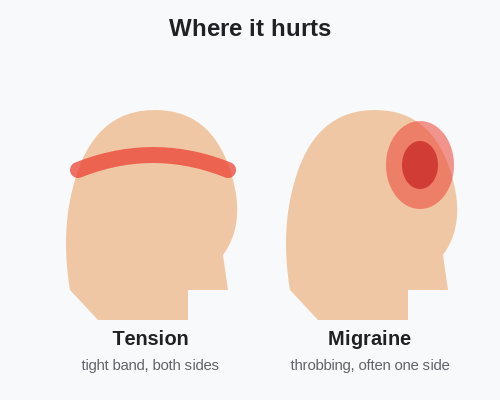
Tension headache vs. migraine
Tension-type headache
- The most common type
- Feels like a tight band or pressure on both sides
- Often linked to stress, posture, and tiredness
- Usually mild to moderate
Migraine
- Throbbing pain, often on one side
- Can come with nausea and sensitivity to light or sound
- Some people see flashing lights first (aura)
- Can last from hours to days
Other common triggers
- Dehydration or skipped meals
- Too much, or suddenly less, caffeine
- Colds and blocked sinuses
- Alcohol, especially the morning after
Step-by-Step Relief at Home
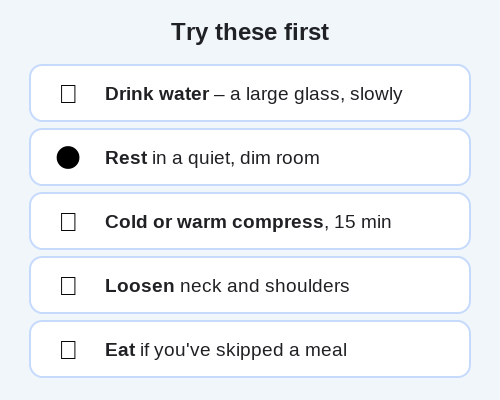
Simple first steps often help
1
Drink Water
Mild dehydration is a very common trigger. Slowly drink a large glass of water and keep sipping over the next hour. If you've been sweating or unwell, an oral rehydration drink can help.
2
Take a Break from Screens and Rest
Step away from your phone or computer. If light or noise bothers you, lie down in a quiet, dim room for 20 to 30 minutes. A short sleep can ease many headaches, including migraines.
3
Try a Cold or Warm Compress
- Cold: a cool cloth or wrapped ice pack on the forehead or temples often helps migraines.
- Warm: a warm towel or heat pad on the back of the neck can relax tight muscles behind tension headaches.
Use it for about 15 minutes at a time, and never put ice directly on skin.
4
Relax Your Neck, Shoulders, and Jaw
Gently roll your shoulders, tilt your head slowly from side to side, and massage your temples and the base of your skull with your fingertips. Unclench your jaw. Slow breathing, in for four counts and out for six, helps release tension too.
5
Eat Something If You've Missed a Meal
Low blood sugar can trigger headaches. A light snack with some protein and carbs, like toast with peanut butter or yoghurt with fruit, can help.
6
Use Over-the-Counter Pain Relief Carefully
Common options include paracetamol (acetaminophen) or ibuprofen. Taking them early in a headache tends to work better. Always:
- Follow the dose on the label and don't exceed the daily maximum
- Ask a pharmacist first if you're pregnant, have stomach, kidney, liver, or heart problems, or take other medication
- Don't give aspirin to anyone under 16
- Avoid taking pain relief on more than a few days a week, as frequent use can cause "medication overuse headaches"
How to Prevent Headaches
- Keep regular routines: similar sleep and meal times every day, including weekends
- Stay hydrated throughout the day, not just when you feel thirsty
- Keep caffeine steady, and cut back gradually if you want to reduce it
- Take screen breaks: every 20 minutes, look at something 20 feet away for 20 seconds
- Check your posture and set your screen at eye level
- Exercise regularly and manage stress
- Keep a headache diary noting the time, food, sleep, and stress, to spot your personal triggers
- Get your eyes tested if headaches come with reading or screen work
Warning Signs: When to Get Help
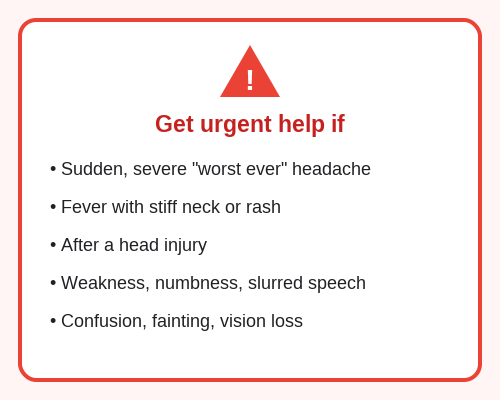
Don't ignore these signs
- Comes on suddenly and is extremely severe, like a "thunderclap"
- Comes with a high temperature, stiff neck, rash, or sensitivity to light
- Follows a blow to the head
- Comes with weakness, numbness, drooping face, slurred speech, confusion, or fainting
- Comes with sudden vision loss or a painful red eye
Book an appointment with a doctor if your headaches:
- Happen often, or are getting worse over time
- Wake you up, or are worst first thing in the morning
- Don't improve with pain relief
- Started after age 50, or you have a weakened immune system or a history of cancer
- Come with pregnancy, especially with swelling or vision changes
How to Keep a Headache Diary
If you get headaches often, two to four weeks of notes can reveal patterns and help your doctor. For each headache, record:
- Date, start time, and how long it lasted
- Where the pain was and what it felt like (pressing, throbbing, sharp)
- Pain level from 1 to 10
- What you'd eaten and drunk, including caffeine and alcohol
- Sleep the night before, screen time, and stress level
- For women, where you were in your menstrual cycle
- Any medicine taken and whether it helped
Final Thoughts
Most headaches respond to simple care: water, food, rest, a compress, and some gentle stretching. Pay attention to patterns so you can prevent the next one, and always take sudden or unusual headaches seriously. When in doubt, get checked.
Medical Disclaimer
Waysily is not a medical provider, and the people who write our guides are not doctors. This article is for general educational purposes only. It is not medical advice, a diagnosis, or a treatment plan, and it should not replace a conversation with a qualified doctor, pharmacist, dietitian, or mental health professional who knows your history. Always check with a professional before changing your diet, starting supplements, or using home remedies, especially if you are pregnant, breastfeeding, taking medication, or living with a health condition. If you think you are having a medical emergency, contact your local emergency number straight away.