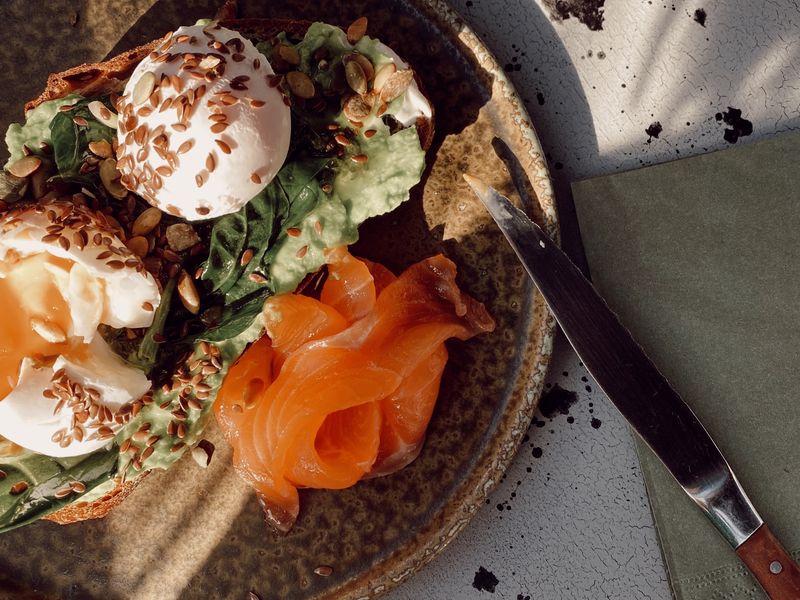
Delicious avocado toast with poached eggs and smoked salmon on a rustic plate
This guide explains how keto works in plain language, what you can and can't eat, how to get through the first difficult week, and the safety points many quick-start guides skip.
How the Keto Diet Works
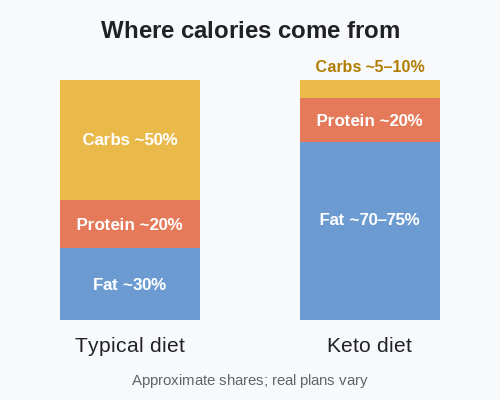
Keto flips the usual balance of carbs and fat
Normally, your body runs mainly on glucose from carbohydrates like bread, rice, fruit, and sugar. On a keto diet, you cut carbs so low, usually to around 20–50 grams of net carbs a day, that your body has to find another fuel. The liver starts turning fat into molecules called ketones, which your brain and muscles can use for energy. This state is called ketosis.
For comparison, a single medium banana has about 25 grams of carbs, and a cup of cooked rice has about 45 grams. That's why keto feels so different from normal eating: entire food groups are off the table.
Keto is not the same as "low carb"
A general low-carb diet might allow 100 grams of carbs a day or more. Keto is much stricter. If keto feels too restrictive, a moderate low-carb approach may give you many of the benefits with less effort.
Check This First: Who Should Avoid Keto
Talk to a doctor before starting keto if any of these apply to you:
- You have type 1 or type 2 diabetes, especially if you take insulin or medicines that lower blood sugar
- You take medication for blood pressure
- You have kidney, liver, pancreas, or gallbladder problems
- You are pregnant or breastfeeding
- You have a history of eating disorders
- You have high cholesterol or heart disease
Keto is generally not recommended for children or teenagers unless it is supervised by a medical team.
What to Eat and What to Limit
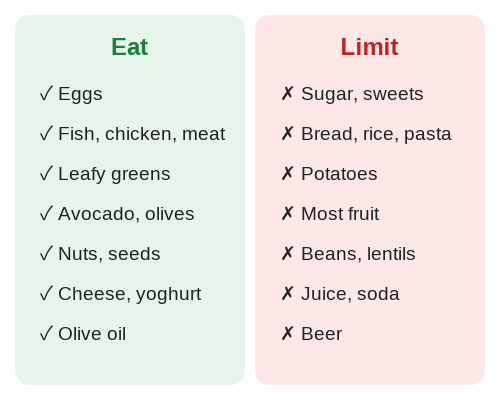
A quick keto food guide
Build meals around
- Eggs, fish, seafood, poultry, and some meat
- Leafy greens, broccoli, cauliflower, courgette, peppers
- Avocado, olives, olive oil
- Nuts and seeds in sensible amounts
- Plain yoghurt, cheese, paneer, tofu
- Berries in small portions
Cut back strongly on
- Sugar, sweets, desserts, and sweetened drinks
- Bread, rice, pasta, roti, and cereals
- Potatoes and other starchy vegetables
- Most fruit, especially bananas and mangoes
- Beans and lentils (high in carbs, despite being healthy)
- Beer and sweet alcoholic drinks
How to Start Keto Step by Step
1
Learn to Read Carbs on Labels
Check "total carbohydrates" on food labels. Many people track net carbs (total carbs minus fibre). A free tracking app can help in the first few weeks until you learn the numbers.
2
Clear Out Temptations
Move sweets, crisps, and sugary drinks out of easy reach and stock up on keto basics before day one. Decisions are hardest when you're hungry.
3
Plan Simple Meals
- Breakfast: Vegetable omelette cooked in olive oil
- Lunch: Big salad with chicken or tofu, avocado, seeds, and olive oil dressing
- Dinner: Salmon or paneer with roasted broccoli and cauliflower
- Snack: A small handful of almonds or Greek yoghurt with a few berries
4
Keep Vegetables High
Non-starchy vegetables provide fibre, potassium, and magnesium, which are easy to fall short on with keto. Aim for vegetables at every meal to help digestion and reduce side effects.
5
Drink Water and Keep Up Electrolytes
Cutting carbs makes your body lose water and sodium. Drinking enough water, salting your food a little, and eating leafy greens and avocado helps. Check with your doctor before taking electrolyte supplements, especially if you have heart or kidney issues.
Getting Through the "Keto Flu"
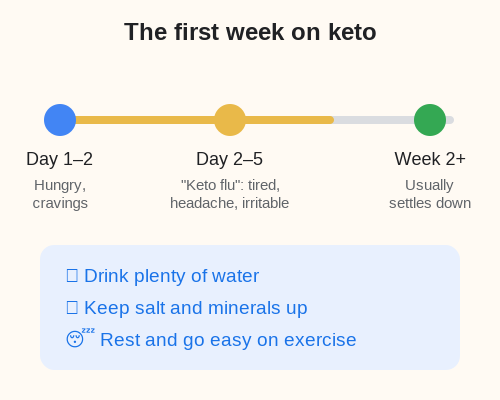
Side effects usually ease after the first week
It usually eases within a week or two. Staying hydrated, getting enough salt, sleeping well, and keeping exercise light for the first week all help. If symptoms are severe or you feel faint, stop and speak to a doctor.
Benefits, Risks, and Long-Term Reality
Some people find keto helps them lose weight in the short term, often because protein and fat are filling and cutting sugar reduces snacking. There is also medical evidence for keto in specific conditions, such as certain types of epilepsy, under supervision.
Possible downsides include:
- Constipation from low fibre
- Higher LDL ("bad") cholesterol in some people
- Kidney stones in some cases
- Missing vitamins and minerals from fruit, whole grains, and legumes
- Difficulty sticking with it, followed by weight regain
Honest takeaway
Long-term studies don't show that keto is better for weight loss than other balanced diets that people can stick with. The best diet is one you can follow safely for years, not weeks.
How to Count Net Carbs: A Quick Example
Net carbs are usually calculated as total carbohydrates minus fibre. For example, if a serving of a food lists 9 g of carbohydrates and 6 g of fibre, its net carbs are 3 g. Note that food labels in some countries already list carbohydrates without fibre, so check how your local labels work.
- A medium avocado: very low in net carbs because most of its carbs are fibre
- A cup of broccoli: just a few grams of net carbs
- A medium apple: around 20 g net carbs, which uses up most of a strict daily limit
Sample 3-Day Keto Menu
Day 1
- Scrambled eggs with spinach
- Tuna salad with olives and olive oil
- Grilled chicken, cauliflower mash, green beans
Day 2
- Greek yoghurt with a few raspberries and walnuts
- Leftover chicken in lettuce wraps
- Salmon with roasted courgette and pesto
Day 3
- Omelette with mushrooms and cheese
- Paneer or tofu stir-fry with peppers and cabbage
- Beef or lentil-free chilli over cauliflower rice
Portion sizes depend on your needs. Choose unsweetened versions of yoghurt and dressings, and check labels for hidden sugars.
Final Thoughts
Keto can be a useful tool if you do it carefully: plenty of vegetables, quality fats, enough water, and medical guidance if you have any health conditions. Try it with clear goals, listen to how your body responds, and remember that you can still eat healthily without going fully keto.
Medical Disclaimer
Waysily is not a medical provider, and the people who write our guides are not doctors. This article is for general educational purposes only. It is not medical advice, a diagnosis, or a treatment plan, and it should not replace a conversation with a qualified doctor, pharmacist, dietitian, or mental health professional who knows your history. Always check with a professional before changing your diet, starting supplements, or using home remedies, especially if you are pregnant, breastfeeding, taking medication, or living with a health condition. If you think you are having a medical emergency, contact your local emergency number straight away.