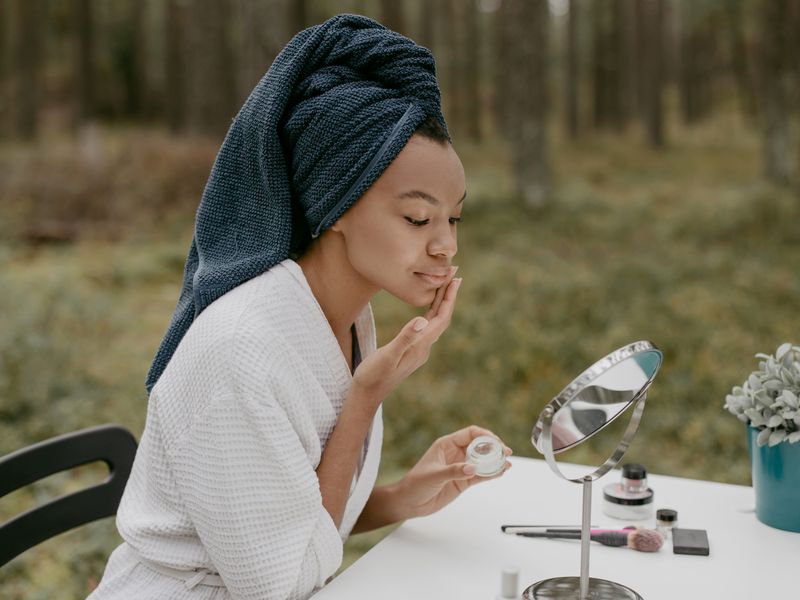
A woman in a bathrobe applies face cream in a serene outdoor environment
This guide focuses on what actually works for most skin types and tones, which natural options are safe to try, and which popular DIY "hacks" can do more harm than good.
What Makes Skin Look Dull?
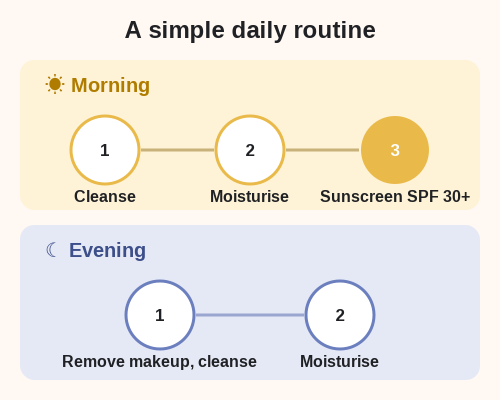
Three steps in the morning, two at night
Skin often loses its glow because of a mix of everyday factors:
- Dehydration and dryness, which make skin look flat and rough
- A build-up of dead skin cells on the surface
- Sun damage, which causes uneven tone, dark spots, and early ageing
- Lack of sleep and stress, which show up as dullness and dark circles
- Smoking, which reduces blood flow to the skin
- Harsh products or over-scrubbing that damage the skin's natural barrier
A Simple Daily Skincare Routine
Dermatologists generally agree that a short routine you follow every day beats a complicated one you do occasionally.
1
Cleanse Gently
Wash your face with lukewarm water and a mild, fragrance-free cleanser in the evening, and in the morning if your skin feels oily. Hot water and strong soaps strip away natural oils and can leave skin tight and irritated. Pat dry with a clean towel rather than rubbing.
2
Moisturise While Skin Is Slightly Damp
Moisturiser helps seal in water and support your skin barrier. Oily or acne-prone skin usually does well with a light, "non-comedogenic" lotion or gel; dry skin may prefer a richer cream. Ingredients like glycerin, ceramides, and hyaluronic acid are gentle and effective.
3
Wear Sunscreen Every Day
Sun exposure is the biggest cause of uneven tone, dark spots, and wrinkles, and UV rays reach you even on cloudy days and through windows. Use a broad-spectrum sunscreen of SPF 30 or higher every morning on your face, neck, and ears, and reapply every two hours if you're outdoors. This applies to every skin tone.
4
Exfoliate Gently, and Not Too Often
Removing dead skin can brighten your complexion, but overdoing it causes redness and sensitivity. Once or twice a week is plenty for most people. A soft washcloth or a mild exfoliating product works better than rough scrubs with crushed shells or sugar.
5
Always Remove Makeup Before Bed
Sleeping in makeup can clog pores and lead to breakouts. Use a gentle remover or cleanser, and wash makeup brushes regularly.
Lifestyle Habits That Show on Your Skin
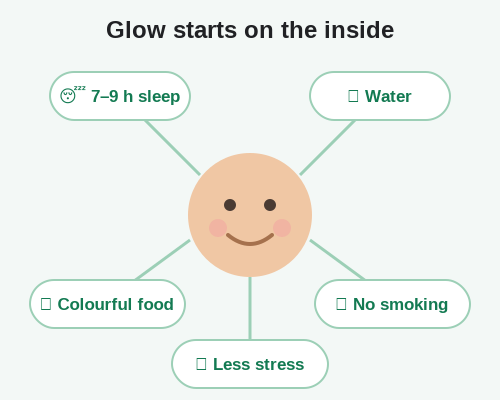
What you do every day shows on your face
- Sleep 7–9 hours. Skin repairs itself overnight, and lack of sleep shows quickly as dullness and puffiness.
- Eat plenty of colourful fruit and vegetables. They provide vitamins A, C, and E and antioxidants that support healthy skin. Oily fish, nuts, and seeds add healthy fats.
- Drink enough water. It won't erase wrinkles, but being dehydrated can make skin look tired.
- Don't smoke. Smoking speeds up skin ageing and slows healing.
- Limit alcohol and very sugary foods, which some people find worsen redness or breakouts.
- Exercise regularly to boost circulation, and wash your face afterwards.
- Manage stress, which can trigger flare-ups of acne, eczema, and psoriasis.
- Keep pillowcases and phone screens clean, as they touch your face daily.
Natural Remedies: What's Safe and What to Avoid
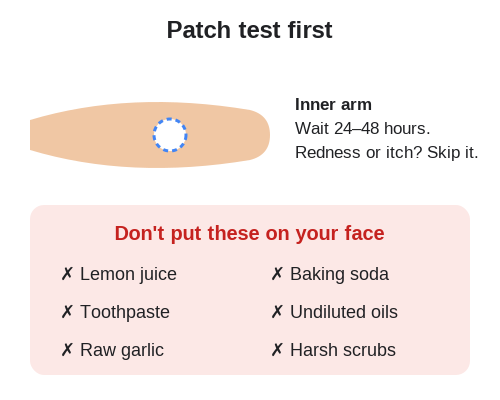
Natural doesn't always mean gentle
Generally gentle options
- Pure aloe vera gel to soothe and hydrate
- Plain yoghurt or honey as a short face mask
- Colloidal oatmeal for dry, itchy skin
- Cool green tea compresses for puffiness
Best avoided on the face
- Lemon or lime juice, which can burn and cause dark patches in sunlight
- Baking soda, which disrupts the skin's natural acidity
- Toothpaste on spots, which irritates the skin
- Raw garlic and undiluted essential oils, which can cause burns or allergies
Be patient
Skin renews itself roughly every four to six weeks, and longer as we age. Give any new routine at least a month before deciding whether it's working, and change only one product at a time so you know what's helping.
When to See a Doctor or Dermatologist
Home care isn't enough for every skin concern. Get professional advice if you have:
- Acne that is painful, deep, leaving scars, or affecting your confidence
- Persistent redness, itching, flaking, or rashes
- Dark patches that are spreading or not fading
- A mole or spot that is new, changing in size, shape, or colour, itchy, or bleeding (check this promptly)
- A reaction to a product that causes swelling, blistering, or doesn't settle
Adjust Your Routine to Your Skin Type
- Oily skin: gentle foaming or gel cleanser, light oil-free moisturiser, and a non-greasy sunscreen. Don't over-wash; it can make oiliness worse.
- Dry skin: creamy, non-foaming cleanser, richer moisturiser with ceramides or glycerin, and short, lukewarm showers.
- Combination skin: a light moisturiser overall, with a little extra on dry areas.
- Sensitive skin: fragrance-free products with few ingredients; introduce one new product at a time.
- Acne-prone skin: look for "non-comedogenic" products and avoid picking. Ask a pharmacist about gentle over-the-counter options.
Final Thoughts
The most reliable path to glowing skin isn't a secret ingredient. It's gentle cleansing, steady moisture, daily sunscreen, good sleep, and colourful food, repeated week after week. Keep it simple, be kind to your skin, and give it time to show the results.
Medical Disclaimer
Waysily is not a medical provider, and the people who write our guides are not doctors. This article is for general educational purposes only. It is not medical advice, a diagnosis, or a treatment plan, and it should not replace a conversation with a qualified doctor, pharmacist, dietitian, or mental health professional who knows your history. Always check with a professional before changing your diet, starting supplements, or using home remedies, especially if you are pregnant, breastfeeding, taking medication, or living with a health condition. If you think you are having a medical emergency, contact your local emergency number straight away.