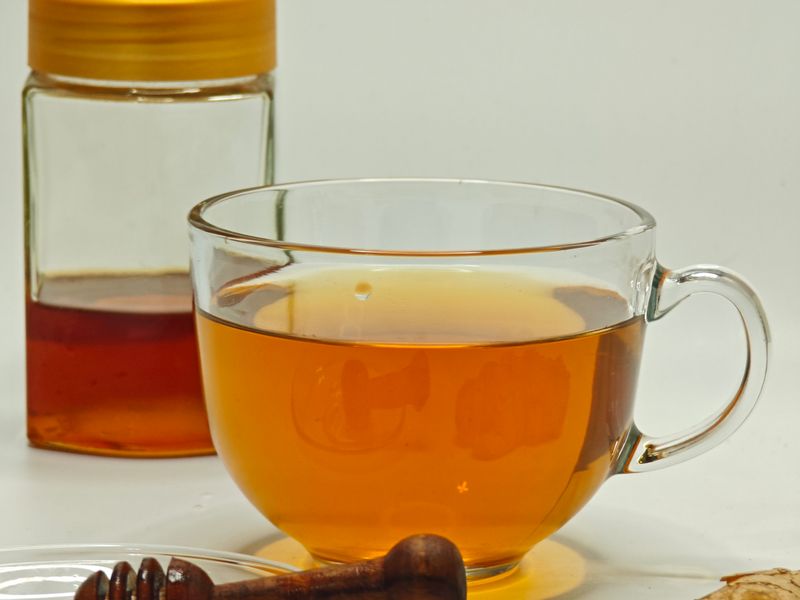
A warm cup of herbal tea accompanied by honey and fresh ginger root
This guide walks through the most common digestive issues one by one, with practical relief steps for each, followed by everyday habits that keep your gut working smoothly and the symptoms you should never ignore.
Why Digestive Problems Happen
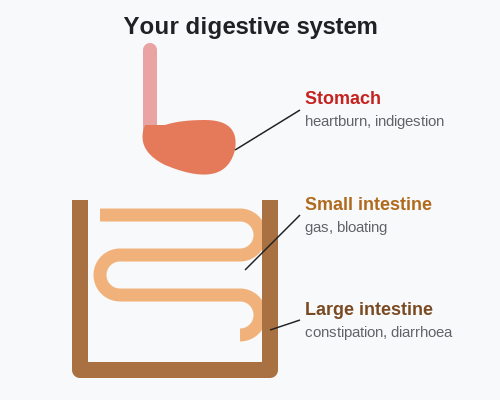
Different problems start in different places
Most everyday digestive upsets are linked to daily habits rather than disease. Common triggers include:
- Eating large meals, eating quickly, or eating late at night
- Too little fibre or water
- Fatty, fried, or very spicy foods
- Fizzy drinks, alcohol, and too much caffeine
- Stress and poor sleep, which directly affect how your gut moves
- Food intolerances, such as lactose
- Some medicines, including certain painkillers and iron tablets
- Stomach bugs and food poisoning
Home Relief, Problem by Problem
1
Bloating and Gas
- Eat slowly and chew well, so you swallow less air
- Cut down on fizzy drinks, chewing gum, and drinking through straws
- Take a gentle 10 to 15 minute walk after meals
- Notice whether beans, onions, cabbage, or dairy make it worse, and reduce them for a while if so
- Peppermint tea may help some people relax the gut
2
Indigestion and Heartburn
- Eat smaller meals and finish eating at least 3 hours before bed
- Raise the head of your bed slightly if heartburn happens at night
- Limit trigger foods like fried food, chocolate, coffee, alcohol, citrus, and tomatoes
- Avoid tight belts or waistbands after meals
- Stopping smoking and losing excess weight can reduce reflux
- Pharmacy antacids can give short-term relief; ask a pharmacist which suits you
Note: peppermint can make heartburn worse for some people, so skip it if reflux is your main problem.
3
Constipation
- Increase fibre gradually with fruit, vegetables, oats, whole grains, beans, and lentils
- Drink more water, especially when adding fibre
- Soaked prunes, kiwi fruit, or a spoon of ground flaxseed can help
- Stay active; walking helps your bowels move
- Don't ignore the urge to go, and try resting your feet on a low stool while on the toilet
4
Diarrhoea
The main risk with diarrhoea is dehydration, so fluids come first.
- Sip water often; oral rehydration solution (ORS) from a pharmacy replaces lost salts best
- Eat small, plain meals when you feel able, such as rice, bananas, toast, or plain potatoes
- Avoid alcohol, caffeine, very fatty food, and sugary drinks for a few days
- Wash your hands thoroughly to avoid passing on a stomach bug
Ask a pharmacist before using anti-diarrhoea medicine, especially if you have a fever or blood in your stool.
5
Mild Nausea
Sip cold water or clear fluids slowly, get fresh air, and eat small amounts of plain food like crackers. Ginger tea or ginger biscuits may help settle mild nausea for some people. Avoid strong smells and lying flat right after eating.
Everyday Habits for a Healthier Gut
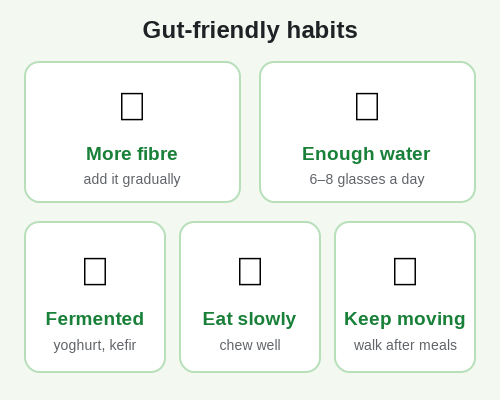
Small habits, steady digestion
- Eat a variety of plant foods. Different fibres feed different gut bacteria. Aim for many types of vegetables, fruits, grains, nuts, and legumes each week.
- Include fermented foods such as plain yoghurt, kefir, or traditional fermented vegetables.
- Keep regular meal times and avoid very large, late meals.
- Move every day. Physical activity helps food move through your system.
- Manage stress. The gut and brain are closely connected, which is why nerves can cause "butterflies" or a rush to the bathroom.
- Keep a symptom diary for two weeks if problems keep coming back. Writing down foods, timing, and symptoms helps you and your doctor spot patterns.
About probiotics
Probiotic supplements may help some people with specific problems, but results vary by strain and condition. They aren't necessary for everyone. Ask a pharmacist or doctor before taking them if you have a weakened immune system.
When to See a Doctor
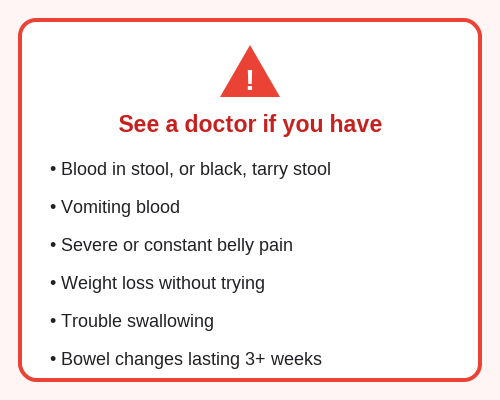
Red flags not to ignore
Book an appointment with a doctor if you have:
- A change in bowel habits lasting more than three weeks
- Unexplained weight loss or loss of appetite
- Difficulty or pain when swallowing
- Heartburn most days, or symptoms that don't improve with pharmacy medicine
- Diarrhoea lasting more than a week, or more than two days in young children or older adults
- Persistent bloating, especially if you're over 50 or have a family history of bowel or ovarian cancer
Long-term symptoms can have treatable causes, such as irritable bowel syndrome (IBS), coeliac disease, ulcers, or infections, and a doctor can help find out what's going on.
Gentle Foods When Your Stomach Is Upset
Usually easy to tolerate
- Plain rice, toast, crackers
- Bananas, apple sauce
- Boiled potatoes
- Clear soups and broths
- Plain yoghurt, if dairy suits you
Best avoided for a few days
- Fried and very fatty food
- Spicy dishes
- Alcohol and fizzy drinks
- Strong coffee
- Large meals
Return to your normal varied diet gradually as you feel better; staying on very plain food for too long means missing out on fibre and nutrients.
Final Thoughts
Most digestive troubles settle with simple care: slower, smaller meals, more fibre and water, regular movement, and less stress. Listen to your body and look for patterns, but don't dismiss symptoms that are severe, unusual, or long-lasting. Your gut is good at telling you when something needs attention.
Medical Disclaimer
Waysily is not a medical provider, and the people who write our guides are not doctors. This article is for general educational purposes only. It is not medical advice, a diagnosis, or a treatment plan, and it should not replace a conversation with a qualified doctor, pharmacist, dietitian, or mental health professional who knows your history. Always check with a professional before changing your diet, starting supplements, or using home remedies, especially if you are pregnant, breastfeeding, taking medication, or living with a health condition. If you think you are having a medical emergency, contact your local emergency number straight away.