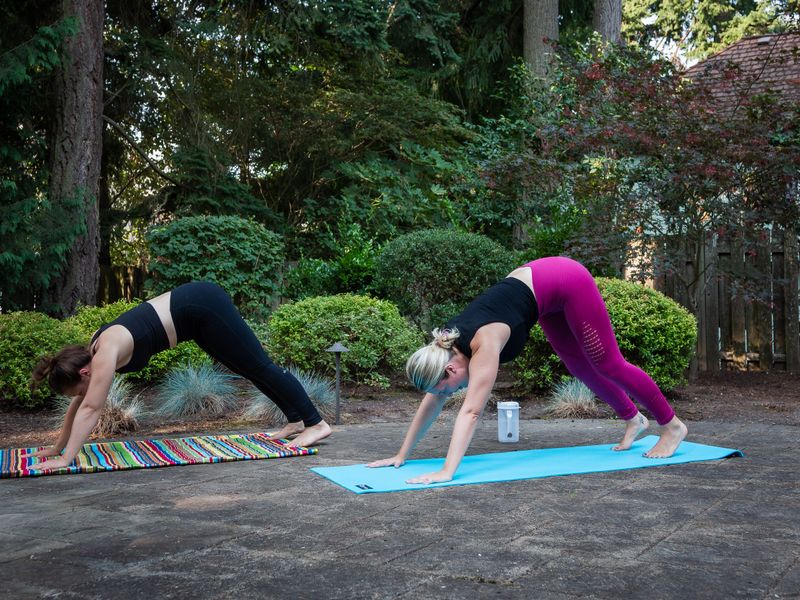
Two women perform yoga exercises on mats in a serene outdoor setting
This guide gives you a simple beginner-friendly routine, explains how to breathe and move safely, and offers ways to adapt each pose so it works for your body. Yoga is a practice, not a performance; the goal is to feel better, not to look a certain way.
Step 1: Prepare Your Space
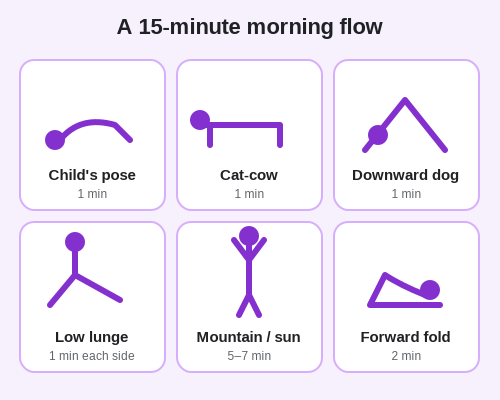
Six poses, about 15 minutes
- A small, clear space with room to stretch your arms and legs.
- A yoga mat or a non-slip rug. Practise barefoot for better grip.
- Comfortable clothes that let you move freely.
- Props (optional): a cushion, folded blanket, or firm pillow for support, and a belt or towel for stretches.
- Timing: practise before breakfast or at least an hour after a large meal. Drink a glass of water first if you like.
Step 2: Start With Your Breath
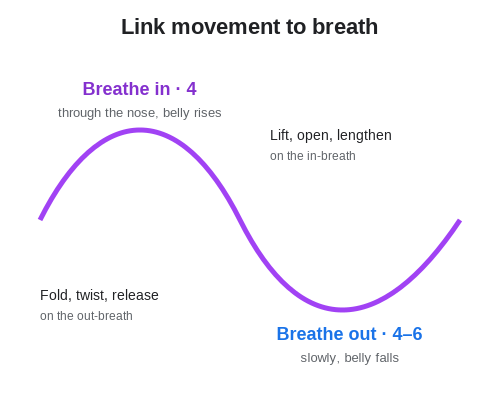
Slow, steady breathing guides each movement
Throughout the routine, try to link movement to breath: lift, open, and lengthen as you breathe in; fold, twist, and release as you breathe out. If you lose the rhythm, simply pause and return to slow breathing. Never hold your breath during poses.
Step 3: Follow the 15-Minute Routine
- Child's pose (1 minute): kneel, sit back towards your heels, and fold forward with arms stretched ahead or by your sides. Widen your knees for comfort, and rest your forehead on the mat or a cushion.
- Cat-cow (1 minute): on hands and knees, breathe in as you drop your belly and lift your chest (cow), and breathe out as you round your back and tuck your chin (cat). Move slowly with your breath.
- Downward-facing dog (1 minute): from hands and knees, tuck your toes and lift your hips up and back. Keep your knees bent as much as you need; a long spine matters more than straight legs. Pedal your feet gently.
- Low lunge (1 minute each side): step one foot forward between your hands, lower the back knee onto a cushion, and gently sink your hips forward to stretch the front of the back hip. Lift your arms if it feels good.
- Sun salutations (5–7 minutes): a flowing sequence from standing: reach arms up, fold forward, step back to a plank or knees, lower down, lift into a gentle cobra, return to downward dog, step forward, and rise up. Repeat slowly three to five times.
- Seated forward fold and rest (2 minutes): sit with legs extended, knees softly bent, and fold forward from the hips. Then lie on your back for a minute of stillness.
Short on time?
Even five minutes of cat-cow, a few downward dogs, and some deep breaths can loosen your body and lift your mood. Consistency matters more than duration.
Step 4: Adapt Poses to Your Body
- Tight hamstrings: bend your knees in forward folds and downward dog.
- Sensitive knees: place a folded blanket under them in kneeling poses.
- Wrist discomfort: spread your fingers wide, press through your whole hand, or come down to your forearms.
- Limited mobility: many poses can be done seated on a chair, such as seated cat-cow, side stretches, and gentle twists.
- Balance: keep a wall or chair nearby for standing poses.
A good rule is to stay in the range where you can breathe smoothly. If your breath becomes strained, ease off.
Step 5: Make It a Daily Habit
- Practise at the same time each morning, for example right after brushing your teeth.
- Lay out your mat the night before so it's ready when you wake.
- Start small: commit to five minutes for a week, then build up.
- Use a beginner video or app from a qualified teacher if you prefer guidance.
- Notice the benefits: keep a quick note of how you feel afterwards; it helps motivation on harder mornings.
You can pair morning yoga with a short meditation; our guide on meditating at home shows how. For deeper stretching, see our guide on improving flexibility.
Practise Safely
Move slowly, especially first thing in the morning when muscles are cooler and stiffer. Never force a stretch or push into pain; a gentle stretching sensation is fine, but sharp or pinching pain is a signal to stop. Avoid fast, deep forward folds if you have back problems, and avoid inversions where your head is below your heart if you have high blood pressure, glaucoma, or are pregnant, unless a qualified teacher has advised otherwise. A beginner class with a qualified teacher is a great way to learn alignment.
Progress Your Practice
After a few weeks, you may find the routine feels easier. You can progress by holding poses a little longer, adding a few more sun salutations, or including standing poses such as warrior I and II, triangle, and tree pose for strength and balance. Beginner classes, whether in person or online with a qualified teacher, can help you learn new poses safely and refine your alignment.
Many people also enjoy a short evening practice of gentle stretches and slow breathing to wind down before sleep. Keep morning sessions energising and evening sessions calming.
Above all, keep your practice kind and curious. Some mornings you'll feel flexible and energetic; others, stiff and tired. Adjust the routine to how you feel that day rather than pushing through.
Final Thoughts
Morning yoga doesn't need to be long or complicated. Prepare a small space, begin with slow breathing, flow through a few gentle poses, adapt them to your body, and finish with a moment of stillness. Practised regularly, even 15 minutes can leave you feeling looser, calmer, and ready for the day.
Exercise Safety
This guide is general information, not medical advice. If you have a heart condition, high blood pressure, an injury, joint problems, are pregnant, or haven't exercised in a long time, check with a doctor or qualified professional before starting. Stop exercising and seek help if you feel chest pain, severe breathlessness, dizziness, or sharp pain.