
A man jogging along a path in a green park
The biggest mistake new runners make is doing too much, too soon. Going out fast, running too often, and ignoring aches lead to injuries and discouragement. The key to starting well is patience: begin with short run-walk intervals, keep the pace easy, and build up gradually. This guide shows you how.
Step 1: Get the Basics Right
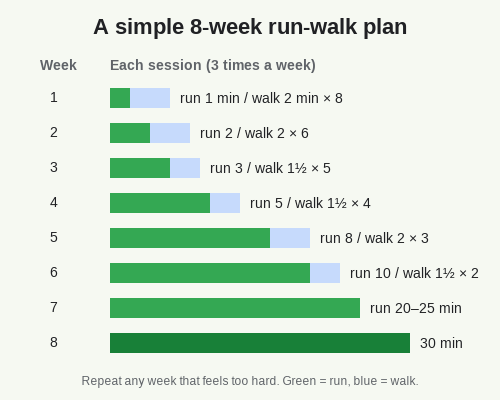
Build up gradually with run-walk intervals
- Running shoes: the most important purchase. Choose comfortable shoes designed for running, with room for your toes. A specialist running shop can help you try different types. Comfort matters more than brand or price.
- Clothing: lightweight, breathable layers that wick sweat. Avoid heavy cotton that stays wet. Women should wear a supportive sports bra.
- Visibility: wear bright or reflective clothing and lights if you run in the early morning or evening.
- Optional extras: a running app or watch to track time and distance, and a small bottle for longer or hot runs.
Step 2: Start With a Run-Walk Plan
Alternating short periods of running with walking lets your heart, lungs, muscles, tendons, and joints adapt gradually. Many popular beginner programmes, often called "couch to 5K" plans, follow this approach over eight to nine weeks.
- Run three times a week on non-consecutive days, such as Monday, Wednesday, and Saturday.
- Start with short running intervals, such as one minute running and two minutes walking, repeated for about 20 to 25 minutes.
- Increase running time slowly each week, while reducing the walking breaks.
- Repeat a week if it felt too hard; there's no rush.
- Aim for 30 minutes of continuous easy running by around week eight or nine.
Always warm up and cool down
Begin every run with five minutes of brisk walking and a few gentle movements like leg swings, and finish with five minutes of walking. This prepares your body and helps it recover.
Step 3: Run at an Easy Pace
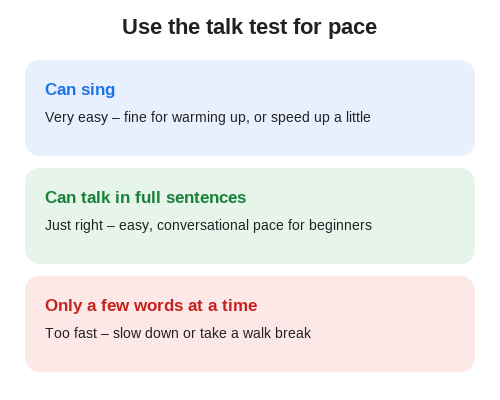
If you can't talk, slow down
Running slowly can feel strange at first, but easy running builds your aerobic base, the foundation of endurance, while reducing injury risk. Speed comes later, naturally, as your fitness improves. Don't compare your pace to friends or people online.
Step 4: Use Relaxed Running Form
- Stand tall with a slight forward lean from the ankles, not the waist.
- Relax your shoulders, hands, and face; tension wastes energy.
- Swing your arms forward and back, not across your body, with elbows bent at about 90 degrees.
- Take short, quick steps and land with your foot roughly under your body rather than far ahead of it.
- Breathe naturally through your nose and mouth.
Step 5: Avoid Common Injuries
Most running injuries come from increasing distance or frequency too quickly. Common ones include shin pain, knee pain, and Achilles or foot problems.
- Increase your total weekly running time or distance gradually, roughly 10% at a time, as a general guideline.
- Take rest days between runs at first.
- Add two short strength sessions a week, such as squats, lunges, calf raises, and planks, to support your joints.
- Replace worn-out shoes, often after several hundred kilometres of use.
- Run on softer surfaces like park paths or tracks when you can.
Mild muscle soreness is normal. Sharp pain, pain that gets worse during a run, or pain that changes how you move is a signal to stop and rest. If it doesn't improve within a few days, see a doctor or physiotherapist.
Stay Motivated
- Set a clear goal, such as running 5 km without stopping or completing a local fun run.
- Schedule runs in your calendar like appointments.
- Run with a friend or join a beginner-friendly running group; many local parkrun-style events are free.
- Track your progress in a notebook or app and celebrate milestones.
- Vary your routes to keep it interesting.
Stay safe outdoors: run facing traffic where there's no pavement, keep music low enough to hear your surroundings, let someone know your route, and choose well-lit, busy areas in the dark. For more strength work to support your running, see our guide on training at home.
What to Do After Your First 5K
Once you can run for 30 minutes comfortably, you have several options. You might keep running three times a week to maintain fitness, gradually extend one run per week to build towards 10 kilometres, or add one session with short, faster intervals to improve speed. Keep most of your running easy, and increase only one thing at a time, whether distance, frequency, or speed.
Entering a local fun run or community 5K event is a great motivator and a chance to meet other runners. Many beginners find that having a race date in the calendar keeps them consistent through busy weeks.
Most importantly, keep running enjoyable. Explore new routes, run with friends, and celebrate how far you've come since your first one-minute intervals.
Running groups and clubs welcome runners of all abilities, and many have dedicated beginner sessions. Training alongside others offers encouragement, advice, and a sense of community that makes it easier to keep going on cold or tired days. Some groups also organise social runs and events, which can turn a solo habit into a rewarding shared hobby.
Keep a simple log of every run, noting the date, time, and how you felt. Looking back after a few months shows how much progress you've made.
Final Thoughts
Starting running is about patience more than toughness. Get comfortable shoes, follow a run-walk plan three times a week, keep the pace conversational, build up gradually, and listen to your body. Within a couple of months, running for 30 minutes can go from impossible to enjoyable.
Exercise Safety
This guide is general information, not medical advice. If you have a heart condition, high blood pressure, an injury, joint problems, are pregnant, or haven't exercised in a long time, check with a doctor or qualified professional before starting. Stop exercising and seek help if you feel chest pain, severe breathlessness, dizziness, or sharp pain.