Female gym-goer in action with dumbbells on wooden floor
Health organisations such as the World Health Organization recommend that adults do at least 150 minutes of moderate activity a week, plus muscle-strengthening activities on two or more days. A home routine is one of the easiest ways to meet these guidelines. This guide shows you how to set up, what to do, and how to keep improving.
Step 1: Set Up Your Space
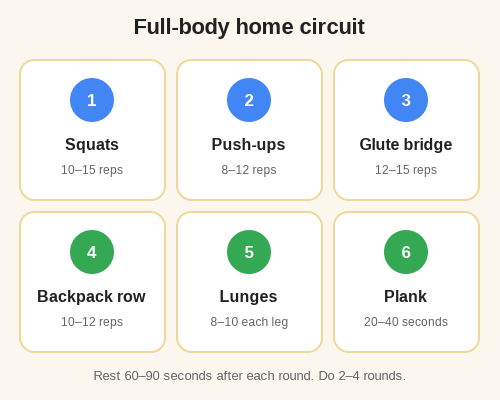
Six exercises cover the whole body
- Clear an area about the size of a yoga mat plus room to stretch your arms and legs in every direction.
- Use a non-slip surface: a mat or carpet for floor work. Avoid slippery socks on hard floors.
- Keep it ventilated and have water nearby.
- Optional equipment: resistance bands, a pair of dumbbells or kettlebells, and a sturdy chair or step add variety. A backpack filled with books makes a useful weight.
Step 2: Warm Up Every Time
Spend five to eight minutes warming up to raise your heart rate and prepare your joints. Try marching or jogging on the spot, arm circles, hip circles, bodyweight squats to a comfortable depth, leg swings, and gentle torso twists. A warm-up makes the workout feel easier and reduces injury risk.
Step 3: Follow a Full-Body Circuit
This circuit works all the major muscle groups. Do each exercise in order with little rest between them, then rest 60 to 90 seconds and repeat for two to four rounds.
- Squats (10–15 reps): feet shoulder-width apart, sit your hips back and down, keep your chest up, and stand back up. Use a chair behind you as a target if you're new.
- Push-ups (8–12 reps): on the floor, knees, or hands on a bench. See our guide on doing push-ups correctly.
- Glute bridges (12–15 reps): lie on your back with knees bent, push through your heels, and lift your hips until your body forms a straight line from shoulders to knees.
- Rows (10–12 reps): hinge forward and pull a loaded backpack or resistance band towards your ribs, squeezing your shoulder blades together.
- Reverse lunges (8–10 each leg): step back, lower both knees to around 90 degrees, then return. Hold a wall for balance if needed.
- Plank (20–40 seconds): on forearms and toes, body straight, core tight. Drop to your knees if needed.
Short on time?
Even 10 to 15 minutes counts. Do two rounds of the circuit on busy days. Regular short workouts often beat occasional long ones.
Step 4: Plan a Balanced Week
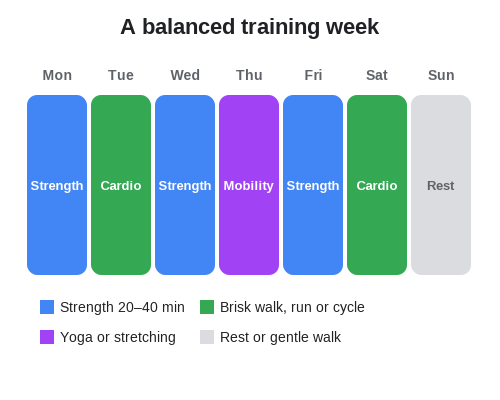
Mix strength, cardio, mobility and rest
- Strength: the full-body circuit two or three times a week on non-consecutive days.
- Cardio: brisk walking, running, cycling, dancing, or a skipping rope on two or three other days.
- Mobility: yoga or stretching once or twice a week. Our guide on improving flexibility has a simple routine.
- Rest: at least one full rest day for recovery.
Step 5: Keep Progressing
Your body adapts to the same workout over time, so gradually make it more challenging. This principle is called progressive overload.
- Add one or two reps per exercise each week.
- Add an extra round.
- Slow down the lowering part of each movement, for example three seconds down.
- Move to harder variations: incline to floor push-ups, squats to split squats, or bridges to single-leg bridges.
- Add resistance with bands, dumbbells, or a heavier backpack.
Keep a simple training log of what you did and how it felt. Seeing progress on paper is a powerful motivator.
Stay Consistent and Recover Well
- Schedule workouts at the same time each day, such as before breakfast or after work.
- Start small: committing to three short sessions a week is better than planning six and giving up.
- Use follow-along videos or apps from qualified trainers if you prefer guidance.
- Sleep and eat well: muscles recover and grow with good sleep, enough protein, and plenty of fluids.
- Cool down and stretch for a few minutes after each session.
Train safely at home
Keep children and pets clear of your exercise space, check that chairs or steps are sturdy before using them, and stop if any movement causes sharp pain. Good form always matters more than extra reps or speed.
Affordable Equipment Worth Buying
As you progress, a few inexpensive items can add variety. Resistance bands are cheap, light, and versatile for rows, presses, and leg exercises. A pair of adjustable dumbbells or a single kettlebell lets you add load to squats, lunges, and presses. A doorway pull-up bar is useful if your door frame is suitable, and a skipping rope is an excellent tool for cardio in a small space.
Buy equipment gradually, choosing items you'll actually use, and check reviews and weight limits. Second-hand equipment can be great value, but check it carefully for damage before use.
Many free, reputable workout videos and apps from qualified trainers can also guide you through new routines, especially if you want variety or need help with technique.
Remember that consistency beats equipment. A person who trains three times a week with only their body weight will usually make more progress than someone with a full home gym who rarely uses it. Focus on showing up, and add equipment only when it helps you keep progressing.
Track your workouts and celebrate milestones, such as your first full push-up or first 40-second plank. Seeing these wins builds motivation and turns training into a lasting habit.
Final Thoughts
Training at home works when you keep it simple and consistent: a safe space, a proper warm-up, a full-body circuit two or three times a week, some cardio and mobility, and gradual progression. You don't need fancy equipment, just a plan you can stick with. Start this week, and your future self will thank you.
Exercise Safety
This guide is general information, not medical advice. If you have a heart condition, high blood pressure, an injury, joint problems, are pregnant, or haven't exercised in a long time, check with a doctor or qualified professional before starting. Stop exercising and seek help if you feel chest pain, severe breathlessness, dizziness, or sharp pain.