
Male amateur football team in uniform practicing on a sunny day at a local field
Many people hesitate because they worry about their ability, don't know anyone, or simply don't know where to look. This guide walks you through choosing the right level, finding options near you, what to ask before signing up, and how to settle in quickly.
Step 1: Decide What You're Looking For
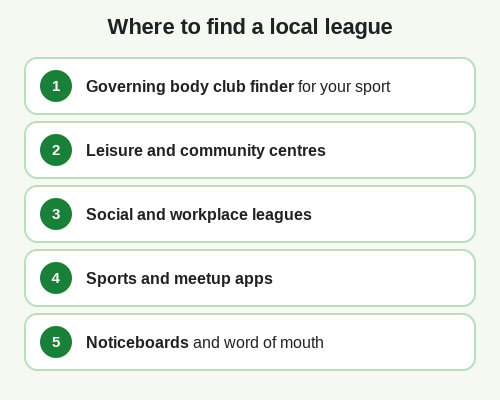
Most areas have more options than you'd expect
- Sport and format: for example, eleven-a-side or five-a-side football, indoor or outdoor netball, tape-ball or hard-ball cricket, basketball, volleyball, badminton, or running clubs.
- Level: beginner, social or recreational, intermediate, or competitive. Be honest about your current fitness and skill.
- Commitment: weekly matches, training sessions, or occasional drop-in games.
- Group: mixed, women's, men's, age-specific (such as junior, veterans, or walking sports for older adults), or inclusive and disability sport sessions.
- Joining alone or with friends: many leagues accept individual players and place them in teams.
Step 2: Find Leagues and Clubs Near You
- Governing bodies: most sports have a national or regional governing body whose website includes a "find a club" or "get involved" search.
- Leisure and community centres: they often run or host leagues, beginner courses, and drop-in sessions.
- Social and adult recreational leagues: organisations that run casual leagues for adults in many cities, often for mixed teams and beginners.
- Workplaces, universities, and religious or community groups: many have their own teams and inter-group leagues.
- Apps and online groups: sports booking apps, meetup platforms, and local community groups list pick-up games and teams looking for players.
- Noticeboards and word of mouth: ask at local parks, sports shops, gyms, and schools.
New season timing
Clubs and leagues often recruit most actively before a new season or term starts. But many welcome new players at any time, especially if they're short of numbers, so it's worth asking whenever you're ready.
Step 3: Ask the Right Questions
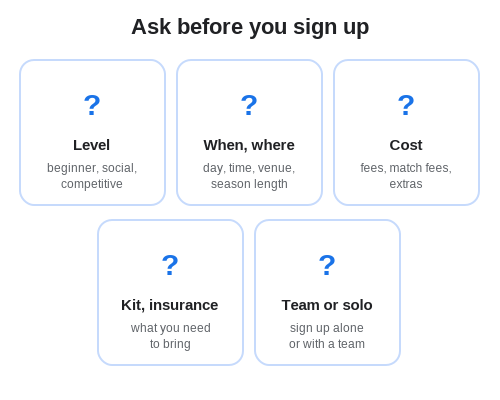
Clear answers help you choose the right fit
- What level is the league or team, and are beginners welcome?
- When and where are matches and training, and how long is the season?
- What does it cost: membership, match fees, registration, and kit?
- What equipment do I need, and is any provided?
- Is insurance included, and are there any medical or age requirements?
- Can I try a session before joining?
Step 4: Try a Session and Get Ready
- Attend a taster or training session to meet people and see whether the level and atmosphere suit you.
- Arrive early, introduce yourself to the coach or captain, and mention your experience honestly.
- Bring the basics: suitable footwear, comfortable clothing, water, and any safety gear the sport requires.
- Build fitness beforehand if you've been inactive; our guides on starting running and training at home can help.
Step 5: Settle In and Be a Good Teammate
- Be reliable: reply to availability messages, turn up on time, and let the captain know early if you can't make it.
- Pay fees on time and help with small tasks like setting up equipment.
- Be positive and respectful to teammates, opponents, and referees.
- Join social events; they're where friendships form.
- Be patient: it can take a few weeks to feel part of the group.
Stay Safe and Choose Well-Run Clubs
Good clubs have clear organisers, proper insurance, sensible safety practices, and, for children and young people, safeguarding policies and checked coaches. Check that venues and equipment are in good condition, warm up before playing, and don't play through injury. If something about a club or league doesn't feel right, such as poor organisation, unsafe facilities, or disrespectful behaviour, it's fine to look elsewhere. Many areas have several options.
Pay safely
Pay fees only to verified clubs and league organisers, ideally through official websites or booking systems. Be cautious of social media posts asking for upfront payments to "secure a team place" from organisers you can't verify.
Tips If You Are a Complete Beginner
Many adults never join a team because they think they're not good enough. In reality, social and beginner leagues exist precisely for people who want to play for fun, learn, and meet others. Look for words like "social", "recreational", "beginner-friendly", "back to" (as in back-to-netball or back-to-football), or "walking" sports, which are designed for people returning to sport or new to it.
Before your first game, learn the basic rules and spend a little time practising key skills on your own or with a friend. It's also worth building some general fitness; a few weeks of brisk walking, light jogging, and simple strength exercises will make your first matches much more enjoyable and reduce the risk of injury.
Above all, remember that every experienced player was once a beginner. Most teams value commitment, a positive attitude, and reliability far more than raw talent. Turn up regularly, ask for advice, and you'll improve faster than you expect.
If you can't find a suitable league nearby, consider starting your own small group. Book a court or pitch at a leisure centre, invite friends and colleagues, and use a group chat to organise weekly games. Many established leagues began exactly this way, with a handful of people who simply wanted to play. Over time, you can join a larger league as a ready-made team, or keep it informal and social. Either way, regular play with familiar faces is one of the most enjoyable ways to stay active.
Whichever route you choose, the hardest step is usually the first message or first session. Once you've taken it, most people wonder why they waited so long.
Final Thoughts
Joining a local league starts with knowing what you want, then searching governing body websites, community centres, social leagues, and apps. Ask clear questions, try a session, and be a reliable, positive teammate. Within a season, you'll likely have improved your fitness, your skills, and your social circle.