
Competitive cyclists in vibrant gear race through city streets
Starting can feel daunting, especially if you haven't ridden for years or are nervous about traffic. This guide covers choosing a bike, essential equipment, basic checks, road safety, and how to build your confidence and fitness step by step.
Step 1: Choose the Right Bike
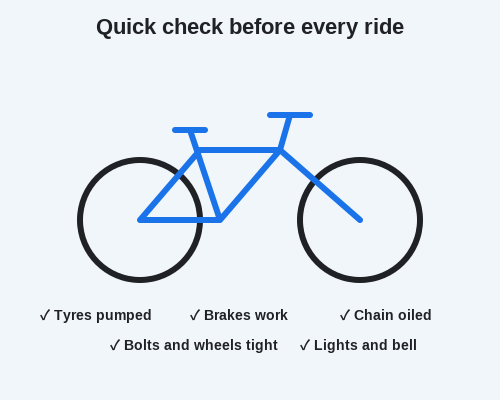
A one-minute check prevents most problems
- Hybrid bikes: a versatile choice for beginners, combining a comfortable upright position with efficient wheels. Great for commuting, paths, and leisure rides.
- Road bikes: light and fast with drop handlebars, best for longer rides on tarmac.
- Mountain bikes: sturdy with wide tyres and suspension for trails and rough ground, but slower on roads.
- Electric bikes (e-bikes): provide pedal assistance, making hills and longer distances easier. Check local rules on e-bike speeds and use.
- Folding bikes: handy for combining cycling with trains or buses and for small homes.
You don't need an expensive bike to start. A good-condition second-hand bike checked by a bike shop can be excellent value. Many employers and governments also run schemes that reduce the cost of buying a bike for commuting.
Step 2: Get the Right Size and Set-Up
- Frame size: when standing over the bike, you should have a few centimetres of clearance. Sizes vary by brand, so try before you buy if you can.
- Saddle height: with your heel on the pedal at its lowest point, your leg should be almost straight. When pedalling with the ball of your foot, your knee will then be slightly bent.
- Reach: you should reach the handlebars comfortably without locking your arms or stretching your back.
- Brakes: make sure you can reach and squeeze the brake levers easily.
Comfort matters
Some saddle soreness is normal for the first few rides and fades as you get used to cycling. Padded cycling shorts help on longer rides. If pain continues, a bike shop can help adjust your saddle position or suggest a different saddle.
Step 3: Get Essential Equipment
- A helmet that fits snugly and meets recognised safety standards. Helmet laws vary by country, but wearing one is widely recommended.
- Lights: a white front light and red rear light for dawn, dusk, night, and poor weather. Many countries require them by law after dark.
- A bell to warn pedestrians and other riders.
- A good lock: a sturdy D-lock or chain, and always lock your frame to something solid.
- A small repair kit: spare inner tube, tyre levers, a mini pump, and a multi-tool.
- Bright or reflective clothing to help drivers see you.
Step 4: Check Your Bike Before Riding
A quick check before each ride catches most problems. Squeeze the tyres to check they're firm, and pump them to the pressure written on the tyre wall. Test both brakes. Make sure the chain is clean and lightly oiled, and that wheels, handlebars, and seat are tight. Check your lights work. Many bike shops and community groups run basic maintenance courses, which are well worth taking.
Step 5: Ride Safely on the Road
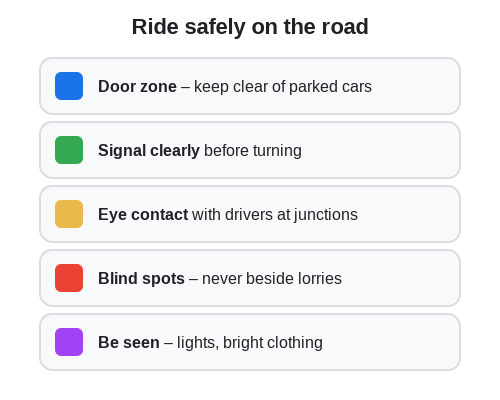
Confident, visible riding is safer riding
- Ride in a confident, predictable position, about a car door's width from parked cars.
- Signal clearly with your arm before turning, and look over your shoulder before moving out.
- Make eye contact with drivers at junctions when you can.
- Never ride alongside or just in front of lorries and buses at junctions, where drivers may not see you.
- Follow traffic laws, including stopping at red lights and riding with the flow of traffic.
- Watch for potholes, drains, and slippery surfaces, especially when wet.
Many cities and organisations offer free or low-cost cycle training for adults and children. A single lesson can make a big difference to your confidence.
Build Distance and Fitness Gradually
Start with short rides of 20 to 30 minutes on flat routes, two or three times a week. Increase the distance or time gradually, adding hills as you get stronger. Use your gears: shift to an easier gear before climbing and keep pedalling at a comfortable, steady pace. Plan routes with cycle-friendly mapping apps that show bike lanes and quiet roads. Bring water and a snack on longer rides, and let someone know where you're going. For a strength routine that supports cycling, see our guide on training at home.
Ride within your limits
Avoid riding in heavy traffic or bad weather until you're confident, and never use your phone while cycling. If you have a medical condition, or haven't exercised for a long time, speak to a doctor before starting a demanding cycling programme.
Cycling to Work or School
Cycling for everyday journeys is one of the easiest ways to fit exercise into a busy life. Start by trying your route at a quiet time, such as a weekend, to find the safest roads and paths. Allow extra time at first, and plan where you will lock your bike and change if needed. Panniers or a backpack can carry a change of clothes, a lock, and a small repair kit.
Check whether your workplace or school has bike storage, showers, or lockers, and whether your employer offers a cycle-to-work scheme. Even cycling one or two days a week can make a noticeable difference to your fitness and travel costs.
Finally, look after your bike between rides. Wipe off mud and grit after wet journeys, keep it stored indoors or under cover, and have it serviced by a bike shop once or twice a year. A well-maintained bike is safer, quieter, and far more pleasant to ride.
Final Thoughts
Starting cycling is easier than it seems: choose a bike that suits your riding, set it up to fit you, get a helmet, lights, and a lock, check your bike before each ride, and build confidence on quiet routes first. Ride predictably and visibly on the road, increase distance gradually, and cycling can quickly become a healthy, enjoyable part of everyday life.