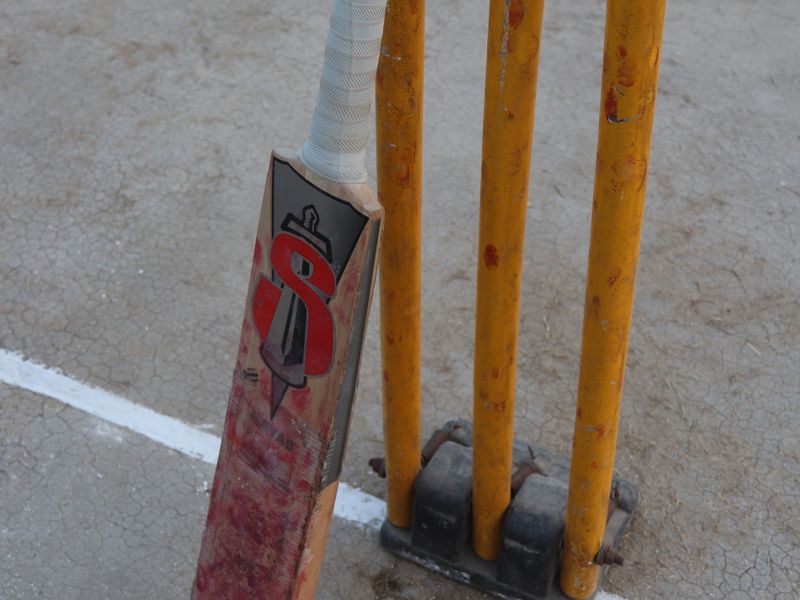
Still life of a cricket bat, red ball, and stumps on a cricket field
Playing at home is a great way to improve skills, stay active, and spend time with family and friends. This guide explains how to set up safely, which rules work in small spaces, and drills you can do alone or with others.
Step 1: Set Up a Safe Mini Pitch
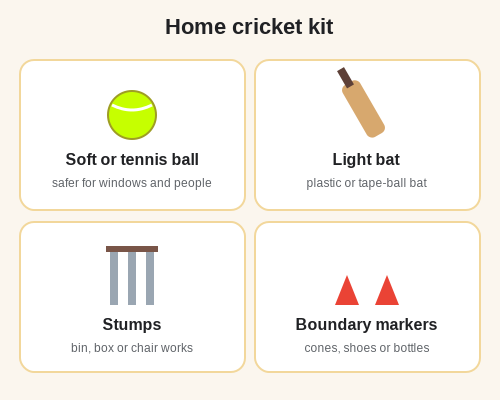
You don't need professional kit to play
- Choose your space: a garden, yard, driveway, or quiet park area. Avoid roads and areas next to windows, cars, or greenhouses where possible.
- Mark a pitch: a full pitch is about 20 metres between wickets, but at home 8 to 12 metres works well. Shorter pitches suit children.
- Set up stumps: use a set of plastic stumps, a cardboard box, a bin, or a chair. Mark the bowling crease with a line, shoe, or stick.
- Mark boundaries: use cones, shoes, or garden edges, and agree what counts as four or six.
- Think about direction: set up so most shots go towards open space rather than houses or neighbours' gardens.
Step 2: Use Safe Equipment
A hard leather cricket ball is dangerous in a small space without proper protective gear. For home games, use:
- A tennis ball, rubber ball, or soft cricket ball. Wrapping a tennis ball in electrical tape, known as a tape ball, makes it bounce and swing more like a real ball while staying fairly safe.
- A plastic or light wooden bat sized for the player. A bat that's too heavy makes good technique difficult.
- Trainers with grip for running between wickets on grass or paving.
Indoors? Go even softer
For practice in a hallway or garage, use a foam or sponge ball and focus on technique, such as shadow batting, bowling actions, and catching, rather than full games.
Step 3: Agree on Backyard Rules
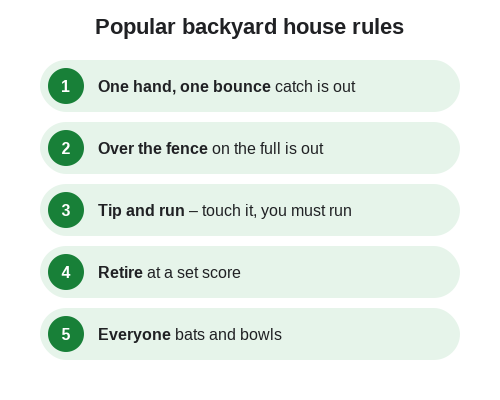
House rules keep the game fair and fast
- One hand, one bounce: a catch taken with one hand after one bounce is out, which gives fielders a chance in small teams.
- Over the fence is out: hitting the ball over the fence or into a neighbour's garden on the full is out, which protects windows and saves lost balls.
- Tip and run: if the batter touches the ball, they must run, keeping the game moving.
- Retire at a set score: batters retire after, say, 20 runs so everyone gets a turn.
- Overs per bowler: rotate bowlers every over of six balls.
- Automatic wicketkeeper: if you're short of players, a bin or wall behind the stumps catches edges.
Step 4: Practise Batting and Bowling
- Batting stance: stand side-on with feet shoulder-width apart, knees slightly bent, head still and eyes level, watching the ball.
- Straight bat: practise the forward defence and straight drive, playing with the bat coming down straight. These are the foundations of good batting.
- Bowling action: run up a few steps, turn side-on, and bowl with a straight arm over your shoulder. Bowling with a bent and straightening arm is not allowed in cricket.
- Accuracy first: place a target, like a cone or piece of paper, where you want the ball to pitch, and aim at it. Accuracy is more valuable than speed.
Step 5: Solo and Partner Drills
- Wall catches: throw a tennis ball against a wall and catch the rebound, using both hands, then one hand. Great for reflexes.
- Hanging ball: hang a ball in a sock or net from a branch or frame and practise straight drives.
- Throw-downs: a partner throws or underarm bowls from a short distance so the batter can repeat a particular shot.
- Target bowling: aim at stumps or a cone for a set number of balls and keep score.
- Fielding relay: roll balls along the ground and practise stopping, picking up, and throwing to the stumps.
Safety first
Keep young children, pets, and spectators well away from the batter's swing and the line of the ball. Agree a "no hitting towards windows or people" rule, and if a ball goes into a neighbour's property, ask before retrieving it. Warm up before bowling, as fast bowling can strain the back and shoulder.
Make It Fun for Everyone
Adapt the game so all ages can join in: let younger children bat with a bigger bat or bowl underarm, give beginners extra lives, and rotate positions often. Keep score with a simple notebook or app, and turn sessions into mini tournaments over a weekend. When you're ready for more, look for local clubs, junior sections, and community leagues; our guide on joining local leagues can help.
Track Progress and Build Skills
Set small goals for each practice session, such as hitting ten straight drives in a row, bowling six balls on a target, or taking twenty catches without a drop. Keep simple scores in a notebook and try to beat them over the following weeks. Short, focused sessions of 20 to 30 minutes are often more useful than long, unstructured games.
Watching how professional players bat, bowl, and field can also help. Pay attention to their head position, footwork, and balance, and try to copy one small detail at a time in your own practice. Many cricket boards and clubs publish free coaching videos for beginners and juniors.
Finally, rotate roles so everyone develops all-round skills. A player who can bat, bowl, and field well is valuable in any team, and switching roles keeps home games fresh and fair for all ages.
Final Thoughts
Playing cricket at home is simple and fun: set up a short pitch in a safe space, use a soft or tape ball, agree on house rules that suit your space and players, and mix games with practice drills for batting, bowling, and catching. You'll build skills, stay active, and enjoy the game with family and friends.