
Actors rehearsing on stage with director's guidance in a theater for a live performance
If you've never acted before, the idea of performing in front of others can feel intimidating. Good beginner classes are designed to make you comfortable step by step. This guide explains the types of classes available, how to choose a reputable teacher, what to expect, and how to keep developing your skills.
Step 1: Decide What You Want From Acting
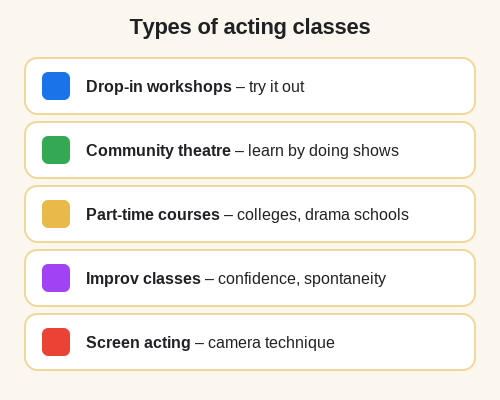
There's a class for every goal and budget
- Confidence and fun: drop-in workshops, improv classes, and community theatre are ideal.
- A serious hobby: part-time evening or weekend courses at colleges and drama schools build solid technique.
- A possible career: longer training, short courses at reputable drama schools, and eventually auditions for full-time programmes.
- Screen or stage: stage acting emphasises voice projection and physical presence; screen acting focuses on subtlety and camera technique.
- Children and teens: youth theatre groups and drama clubs offer age-appropriate training in a supportive setting.
Step 2: Find Classes Near You
- Community and amateur theatres: often run workshops and welcome new members for productions, both on stage and behind the scenes.
- Colleges and adult education centres: offer affordable part-time drama courses.
- Drama schools: many run short courses and summer schools for beginners alongside full-time training.
- Improv theatres and comedy clubs: run beginner improvisation courses.
- Online classes: useful for theory, monologue work, and screen technique, though in-person classes are better for building presence and working with others.
Try before you commit
Many schools offer taster sessions, open days, or a first class at a reduced price. Trying a class helps you judge the teacher's style and whether the group feels welcoming.
Step 3: Choose a Reputable Teacher
- Check the teacher's training and experience, such as drama school qualifications and professional or teaching credits.
- Read reviews and ask former students about their experience.
- Look for small class sizes, which give each student more attention.
- Make sure the class has a clear structure and goals.
- For young people, check that the organisation has safeguarding policies and appropriately vetted staff.
Watch out for acting scams
Be cautious of companies that promise fame, guaranteed agent representation, or roles in exchange for large upfront fees for "talent showcases," photoshoots, or courses. Legitimate agents usually earn commission from work they find you rather than charging large joining fees. Research any company carefully before paying.
Step 4: Know What to Expect in Class
Beginner classes usually start with warm-ups and games that help everyone relax, followed by exercises and scene work. You can expect:
- Physical and vocal warm-ups to prepare your body and voice.
- Trust and ensemble games that build confidence and connection with the group.
- Improvisation exercises that teach you to listen and respond in the moment.
- Script and scene work with a partner, often from published plays.
- Monologues: short solo speeches you'll prepare and perform.
- Constructive feedback from the teacher, focused on specific improvements.
Wear comfortable clothes you can move in, bring water and a notebook, and arrive with an open mind. Being willing to try things and look a little silly is the most important skill of all.
Step 5: Practise Core Skills Between Classes
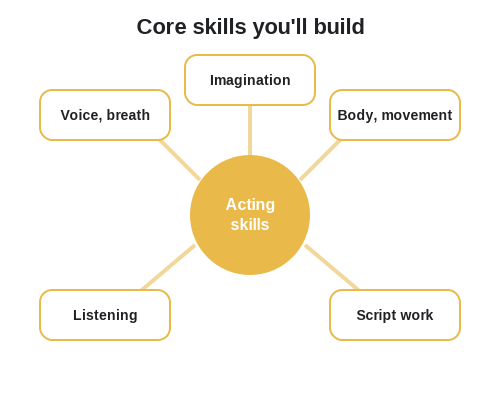
Acting combines voice, body, mind and imagination
- Voice: practise breathing from your diaphragm, reading aloud, and tongue twisters for clear speech.
- Body: notice how posture and movement show character and emotion.
- Listening: good acting is reacting; practise really listening in conversations.
- Script analysis: for each scene, ask what your character wants, what stops them, and how they try to get it.
- Watching and reading: see plays and films, and read scripts, noticing choices actors make.
Reading plays is also a great way to grow your reading habit; see our guide on starting a reading habit.
Get Involved Beyond Class
Once you're comfortable, audition for community theatre productions, student films, or local showcases. Even small roles or backstage work teach you how productions run and connect you with other performers. Keep a record of what you've learned and performed. If you're considering acting as a career, research reputable drama schools and speak to working actors about training routes and the realities of the profession.
Handling Nerves and Stage Fright
Almost every actor feels nervous, including experienced professionals. Nerves are a sign that you care, and with practice they become manageable and even useful, adding energy to a performance.
Before a class or performance, try slow breathing, breathing out for longer than you breathe in, and gentle physical warm-ups to release tension in your shoulders, jaw, and hands. Focus on your scene partner and what your character wants, rather than on the audience or on yourself. Preparation also helps: knowing your lines thoroughly frees your attention for the moment.
Remember that mistakes happen to everyone. In class, they are part of learning, and good teachers create an environment where it is safe to try and fail. Each time you perform, even in a small exercise, your confidence grows a little more.
Outside of class, low-pressure opportunities to practise speaking in front of others, such as reading aloud at a book club, giving a toast, or joining a public speaking group, help build the same confidence. Over time, the nervous energy you feel before stepping into a scene becomes familiar, and many actors find they actually miss it when it is gone.
Record a short monologue on your phone every few months. Watching your progress over time is a powerful reminder of how far you have come, and helps you notice habits to work on, such as speaking too quickly or fidgeting with your hands.
Final Thoughts
Starting acting classes is a rewarding step, whatever your goals. Decide what you want from acting, find a reputable class through theatres, colleges, or drama schools, try a taster session, and practise voice, body, and listening skills between classes. Avoid companies promising fame for a fee, and above all, enjoy the creativity and confidence acting brings.