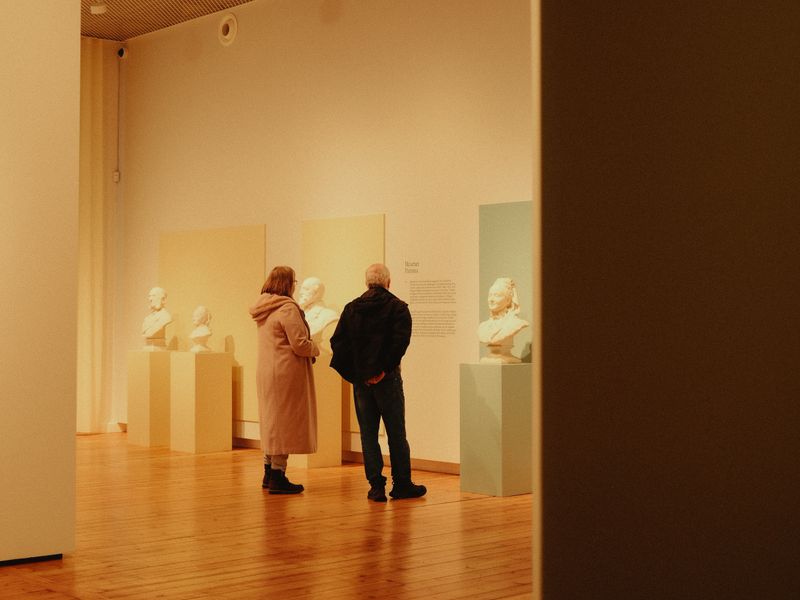
A quiet scene of two adults viewing sculptures in a modern museum setting
Many people feel unsure the first time: Do I need to know about art? How long should I stay? Am I allowed to take photos? This guide answers those questions and shares practical ways to find exhibitions, plan a visit, and get more enjoyment from the art you see.
Step 1: Find Exhibitions Near You
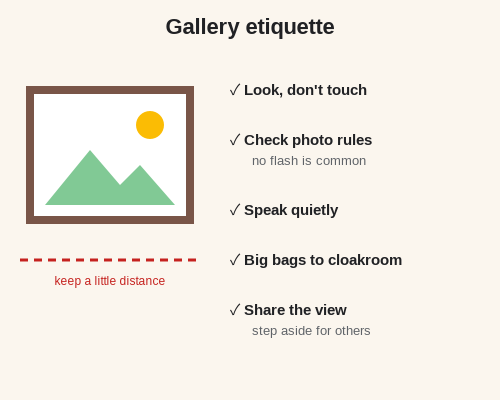
Simple courtesies make visits better for everyone
- Museum and gallery websites: list current and upcoming exhibitions, with dates, prices, and opening hours.
- Local listings: city guides, newspapers, and cultural event apps list exhibitions, often including smaller venues.
- Commercial galleries: usually free to visit, showing work by living artists that's often for sale. Many hold opening evenings.
- Universities and art schools: end-of-year degree shows are free and full of fresh talent.
- Libraries, community centres, and cafés: often host small local exhibitions.
- Newsletters and social media: follow your favourite venues to hear about new shows and events first.
Step 2: Plan Your Visit
- Check opening times and booking: popular exhibitions often need timed tickets booked in advance. See our guide on booking museum tickets.
- Choose a quieter time: weekday mornings and late openings are usually calmer than weekends.
- Allow enough time: an hour or two for a major exhibition, less for a small gallery.
- Check accessibility: step-free access, seating, quiet hours, large-print guides, and audio description are available at many venues.
- Read a little beforehand: a short introduction on the venue's website gives useful context, but you don't need to be an expert.
Step 3: Follow Gallery Etiquette
- Don't touch the art unless a sign invites you to; oils from skin can damage surfaces over time.
- Keep a little distance and watch for floor lines or barriers.
- Check photography rules: many venues allow photos without flash, but some exhibitions prohibit photography, especially for loaned works.
- Speak quietly and keep phones on silent.
- Leave large bags and umbrellas in the cloakroom if asked; they can accidentally knock artworks.
- Share the view: step aside after a while at popular works so others can see.
Visiting with children
Many museums offer family trails, activity sheets, and children's audio guides. Keep visits short, let children choose what to look at, and ask questions like "What do you think is happening here?" to spark conversation.
Step 4: Look at Art in a Rewarding Way
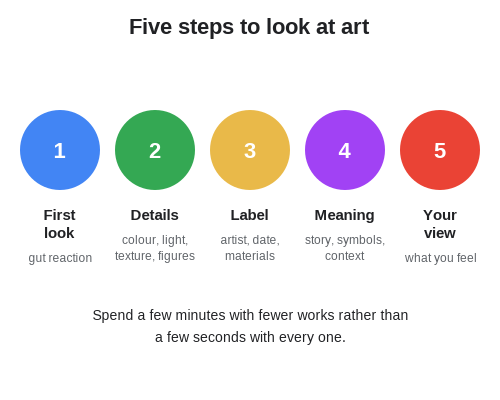
Slow looking reveals far more
- First look: notice your immediate reaction. Are you drawn in, puzzled, or uncomfortable?
- Look closely: colours, light, textures, brushstrokes, materials, and small details.
- Read the label: the artist, date, materials, and a short explanation add context.
- Think about meaning: what story, idea, or emotion might the artist be exploring?
- Decide what you think: you don't have to like everything. Ask yourself why a piece works, or doesn't, for you.
Spending several minutes with a handful of pieces usually leaves a deeper impression than glancing at everything. It's fine to skip rooms that don't interest you.
Step 5: Use Guides, Talks and Openings
- Audio guides and apps offer commentary from curators and sometimes the artists themselves.
- Guided tours and gallery talks bring the works to life and let you ask questions.
- Exhibition openings at commercial galleries are usually free and a great way to meet artists and other art lovers.
- Catalogues and books let you revisit the exhibition at home.
- Workshops and late events combine art with music, drawing, or discussion.
After Your Visit
Take a break in the café or a nearby park and talk about what you saw. Which work will you remember? Jotting down a few thoughts or sketching a favourite piece helps it stay with you. Following the artists you discovered online, or exploring related works in museum online collections, extends the experience. Our guide on visiting museums online shows how. If you feel inspired to make something yourself, try our guide on creating wall art.
Buying art at exhibitions
If you buy art, buy from reputable galleries or directly from artists, ask for a receipt and any certificate of authenticity, and be cautious of high-pressure sales or online "investment art" offers that promise guaranteed returns.
Explore Local and Free Art
Not every great exhibition is in a famous museum. Local galleries, artist-run spaces, open studio events, and art fairs let you see work by artists in your area, often for free, and sometimes meet the artists themselves. Public art, such as murals, sculptures, and installations in parks and city centres, can be enjoyed on a self-guided walk; many cities publish public art maps.
Seasonal events like late-night museum openings, gallery weekends, and heritage open days are excellent opportunities to explore several venues in one go, often with special talks and activities. Signing up for newsletters from a few local venues is the easiest way to hear about them.
Exploring a mix of large museums and small local spaces gives you a much richer picture of art, from historic masterpieces to the newest ideas from emerging artists.
If you can, keep a small notebook or a notes app list of exhibitions you have seen and works that stayed with you. Over time, it becomes a personal record of your art journey and helps you notice the styles and artists you enjoy most.
Most importantly, go often and stay curious. The more exhibitions you see, the more connections you notice between artists, periods, and ideas.
Final Thoughts
Attending art exhibitions is easy and rewarding: find shows through venues and listings, plan your visit for a quieter time, follow simple gallery etiquette, and take your time with a few works that speak to you. Use guides and talks to go deeper, and you'll discover that art is something everyone can enjoy, no expertise required.