
The Taj Mahal is one of the world's most famous monuments
Visiting both in one day is very achievable with a little planning. This guide explains the best times to go, how tickets and security work, what to bring, and how to enjoy the monuments without being rushed or hassled.
Step 1: Choose the Best Time
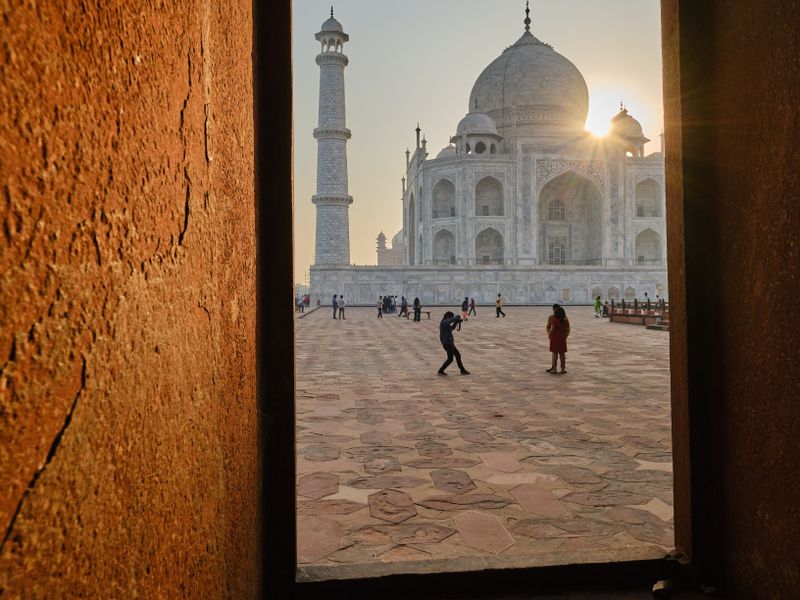
The Taj Mahal at sunrise
- Season: October to March is usually the most comfortable, with cooler temperatures. April to June is very hot, and the monsoon arrives around July to September.
- Time of day: sunrise brings soft light, cooler air, and smaller crowds. The Taj Mahal opens around 30 minutes before sunrise.
- Closed on Fridays: the Taj Mahal is closed to general visitors every Friday for prayers, so plan your trip around this.
- Winter fog: in December and January, early-morning fog can hide the Taj; it often lifts by mid-morning.
Step 2: Buy Tickets and Prepare for Security
- Buy tickets online through the official Archaeological Survey of India booking website to save time, or at official ticket counters.
- Ticket prices differ for Indian citizens, visitors from neighbouring countries, and other foreign visitors; entry to the main mausoleum may require an additional ticket. Check current prices on the official site.
- Security: bags are searched, and many items are not allowed, including food, tobacco, large bags, tripods, drones, and some electronics. Travel light, as storage can be limited.
- Bring ID: carry your passport or ID, which may be needed for ticket checks.
Use official guides only
If you'd like a guide, choose one approved by the government tourism authorities or booked through a reputable company, and agree the fee in advance. Official audio guides are also available.
Step 3: Plan a One-Day Route
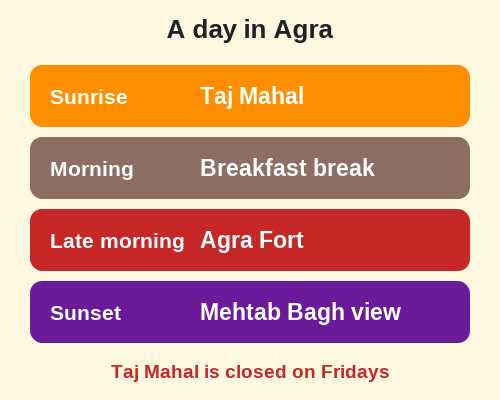
A simple plan that avoids the midday heat
- Sunrise: enter the Taj Mahal early and spend two to three hours exploring the gardens, mausoleum, mosque, and riverside terrace.
- Breakfast break: rest at your hotel during the morning heat.
- Late morning: visit Agra Fort, allowing two hours or more.
- Sunset: head to Mehtab Bagh, a garden across the river with peaceful views of the Taj Mahal.
Step 4: Explore Agra Fort
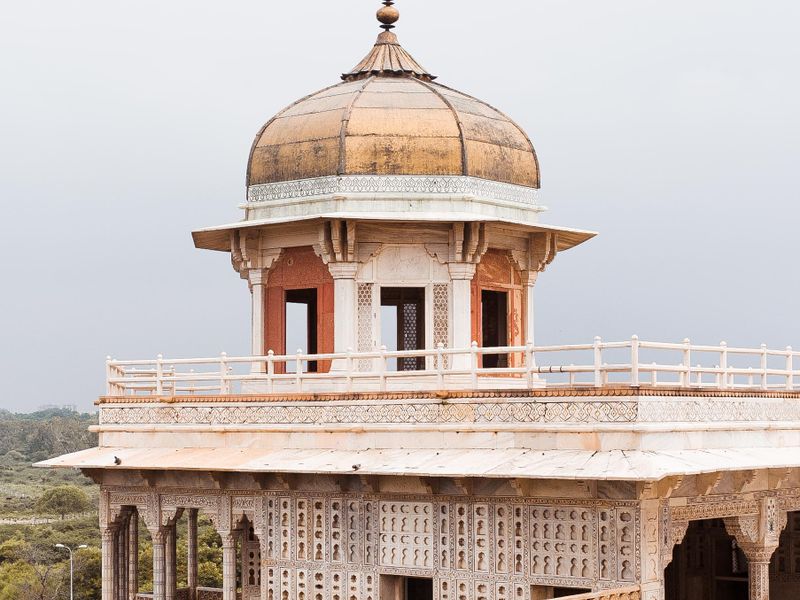
The Musamman Burj tower inside Agra Fort
Step 5: Get There and Around
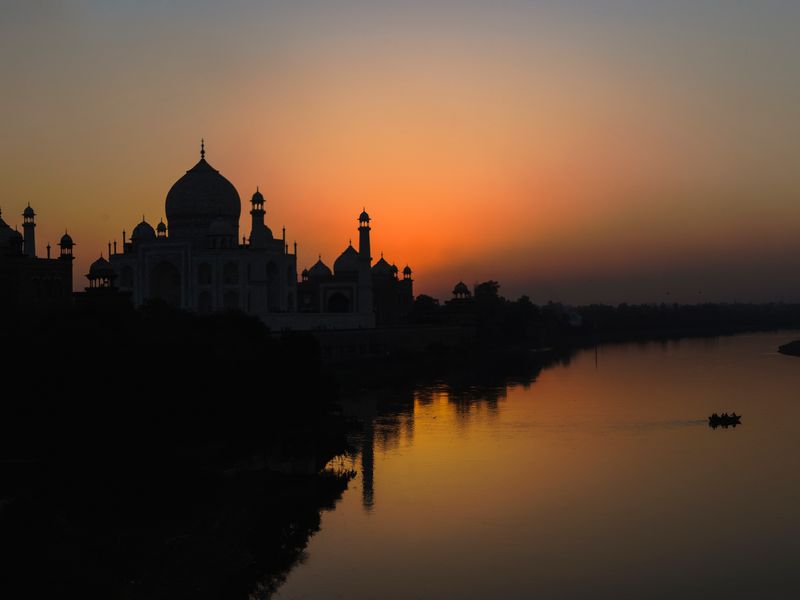
The Taj Mahal silhouetted at sunset
- From Delhi by train: fast trains connect Delhi and Agra in around two hours; book through official railway channels.
- By road: the Yamuna Expressway links Delhi and Agra; hire a car with a driver through a reputable company.
- Near the Taj: vehicles that burn fuel can't go right up to the gates; electric buses, golf carts, or walking cover the final stretch.
- Day trip or overnight: staying overnight lets you see sunrise without a very early departure from Delhi.
Avoid touts and scams
Be wary of people offering "special tickets", unofficial guides, or shop visits, and of drivers taking you to commission-based shops. Buy tickets only from official sources and use reputable transport. A polite but firm "no, thank you" is usually enough.
Visit Respectfully and Comfortably
The Taj Mahal is a tomb and a place of deep cultural significance. Dress modestly, keep voices low inside the mausoleum, and follow staff instructions; shoe covers are provided or shoes removed before stepping on the marble platform. Carry water, sunscreen, and a hat for the gardens, and wear comfortable shoes. If you have more time, nearby Fatehpur Sikri, an abandoned Mughal city, makes an excellent addition. For more of North India's highlights, see our guide on planning a visit to Jaipur.
The Story Behind the Taj Mahal
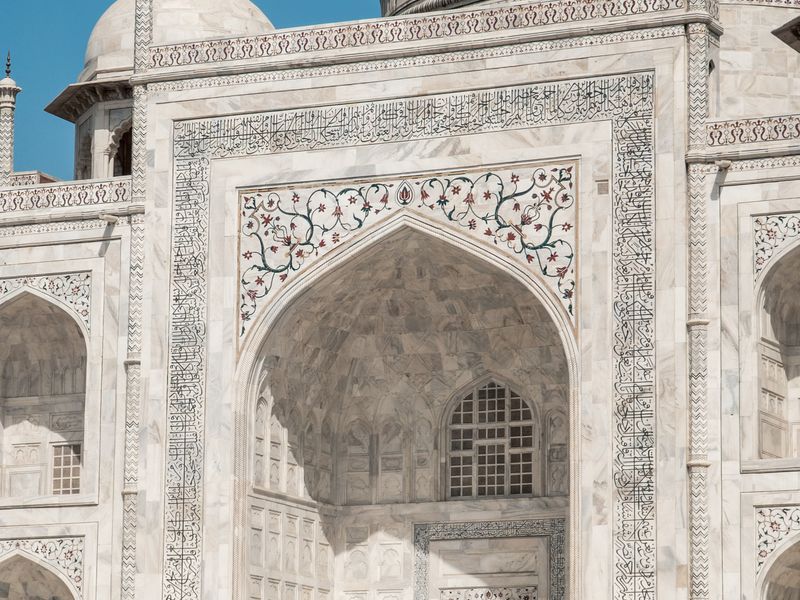
Inlaid marble detail on the Taj Mahal
The complex is designed with remarkable symmetry: the main gateway, the formal charbagh garden divided by water channels, the mausoleum flanked by four minarets, and a mosque and matching guest house on either side. The minarets lean very slightly outward, which is often said to protect the tomb in case of an earthquake.
Learning these details before you visit, or hiring an official guide or audio guide on site, helps you notice the craftsmanship, from the changing colour of the marble at different times of day to the optical effects of the calligraphy, which appears uniform in size from the ground.
Taking a little time to sit quietly in the gardens and simply look is often the most moving part of a visit.
Bring a small, clear water bottle where allowed, and keep your ticket handy, as it may be checked at several points inside the complex.
Plan to stay at least three hours to enjoy it fully.
Final Thoughts
To explore the Taj Mahal and Agra Fort, visit between October and March if you can, arrive at sunrise on any day except Friday, buy tickets from official sources, travel light through security, and explore Agra Fort later in the morning. End with a sunset view from Mehtab Bagh, and you'll experience two of the world's great monuments at their most beautiful.