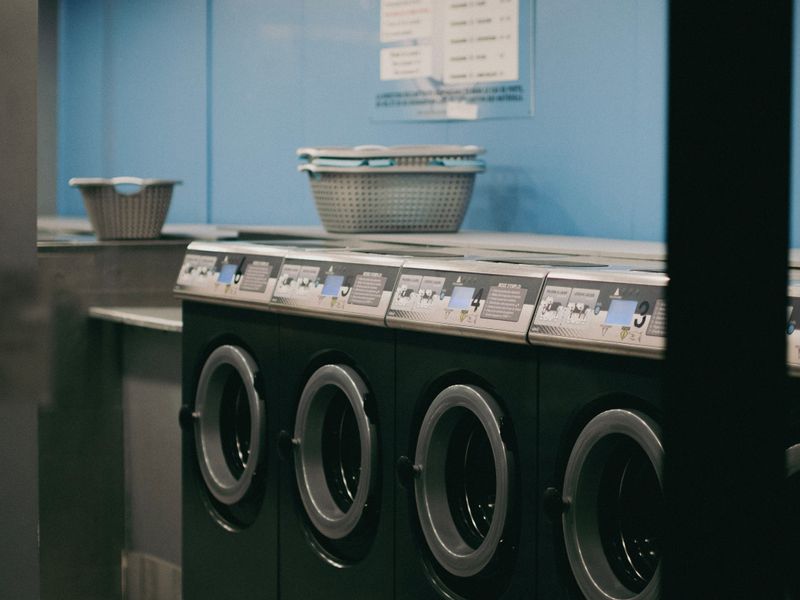
Interior view of a modern laundromat with multiple washing machines lined up
This guide goes through the main household appliances one by one, with simple tasks and how often to do them. Always check your appliance's manual too, since models differ.
Unplug first
Always unplug an appliance or switch it off at the isolator before cleaning inside it, removing panels, or reaching behind it. Never open sealed electrical or gas parts; leave those to qualified technicians.
Fridge and Freezer
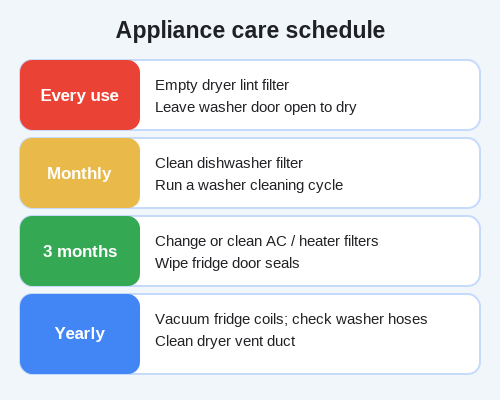
A simple care schedule
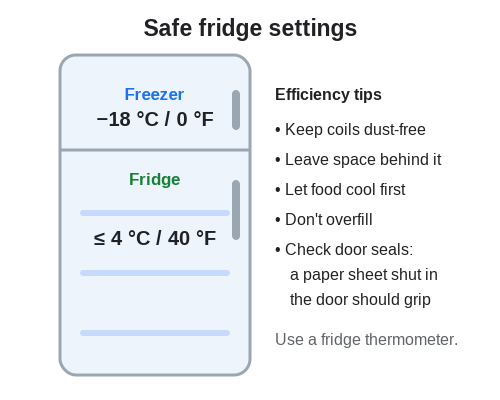
Keep food cold and safe
- Set the right temperatures: food safety agencies generally recommend a fridge at or below 4 °C (40 °F) and a freezer at −18 °C (0 °F). A cheap fridge thermometer helps you check.
- Clean the condenser coils once or twice a year. They're usually at the back or behind a grille at the bottom. Dusty coils make the compressor work harder. Unplug and use a vacuum brush attachment.
- Check door seals: close the door on a sheet of paper. If it slides out easily, the seal may be worn. Wipe seals monthly with warm soapy water.
- Defrost manual freezers when ice is about 5 mm (a quarter of an inch) thick.
- Leave space around the fridge for air to circulate, and don't put hot food straight in.
Washing Machine and Dryer
1
Washing Machine
- Leave the door and detergent drawer open after use so the drum can dry and doesn't smell.
- Wipe the rubber door seal, checking folds for hair, coins, and mould.
- Run an empty hot cleaning cycle monthly, with a washing machine cleaner or as your manual recommends.
- Clean the drain pump filter every few months; it's usually behind a small panel at the front bottom. Keep a towel and shallow tray ready for water.
- Check inlet hoses yearly for bulges or cracks, and replace them every few years.
- Use the right amount of detergent; too much leaves residue and causes odours.
2
Tumble Dryer
Empty the lint filter after every load. Lint is highly flammable, and fire services in many countries warn that blocked filters and vents are a common cause of dryer fires. Clean the vent duct and outside vent flap at least once a year, and empty the water container on condenser dryers after each use. Don't leave a dryer running when you're out or asleep.
Dishwasher, Oven, and Microwave
- Dishwasher filter: remove and rinse it under the tap every month or so (more often with heavy use). A blocked filter leaves food on dishes and causes smells.
- Dishwasher spray arms: check the holes aren't blocked with food or limescale; clear them with a toothpick.
- Salt and rinse aid: keep them topped up if your machine uses them, especially in hard-water areas.
- Oven: wipe spills once the oven has cooled, before they bake on. For built-up grease, a paste of baking soda and water left overnight works on many ovens; check your manual if you have a self-cleaning or coated oven.
- Microwave: heat a bowl of water with lemon slices for a few minutes, then wipe the softened splatters away.
- Extractor hood: clean or replace grease filters every one to three months; greasy filters are a fire risk.
Air Conditioners, Heaters, and Water Heaters
- Air conditioner filters: clean or replace every one to three months during heavy use. Dirty filters reduce cooling and raise running costs.
- Outdoor AC units: keep leaves and debris clear, with space around the unit.
- Heating systems and boilers: have them serviced by a qualified engineer as recommended, typically yearly. Gas appliances must only be worked on by registered professionals.
- Water heaters: follow the manufacturer's guidance; some tank heaters benefit from periodic flushing to remove sediment.
- Carbon monoxide alarms: fit them near fuel-burning appliances and test them regularly.
Warning Signs That Need a Professional
- Burning smells, sparks, or scorch marks
- Tripping the circuit breaker or blowing fuses
- Water leaking from underneath an appliance
- Loud grinding, banging, or new vibrations
- A fridge that runs constantly but doesn't stay cold
- Any smell of gas: leave the property and call your gas emergency number
Before calling for a repair, check the manual's troubleshooting section and the warranty. Many problems have simple fixes, and repairs under warranty may be free.
Use Appliances More Efficiently
- Run full loads in washing machines and dishwashers; half loads use nearly as much energy and water.
- Wash clothes at lower temperatures: modern detergents clean well at 30 °C for most everyday loads, and heating water is the biggest part of a washer's energy use.
- Use eco programmes: they take longer but generally use less energy and water.
- Air-dry when you can and spin clothes well before tumble drying.
- Keep the fridge away from heat sources like ovens and sunny windows.
- Match pans to hob size and use lids to boil water faster.
- Switch off at the wall devices that stay on standby, where safe to do so.
When replacing an appliance, compare energy labels. A more efficient model can cost more upfront but save money over its lifetime.
Keep Manuals and Records
Keep appliance manuals, receipts, and warranty details together in one folder or scanned on your phone. Note the model numbers and the dates of filter changes or services. This makes ordering parts easy and helps with warranty claims if something goes wrong.
Final Thoughts
Appliance care doesn't take much time: empty lint filters, clean dishwasher and AC filters, dust fridge coils, and check hoses and seals on a simple schedule. These small habits save energy, prevent breakdowns, and reduce fire risks, helping your appliances work well for years.