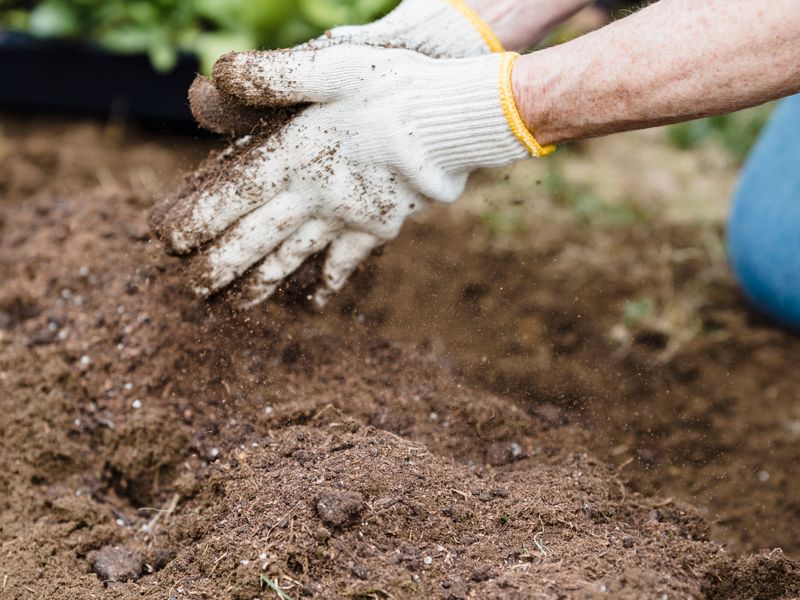
Close-up of a gardener's hands in gloves preparing soil for planting outdoors
This guide explains what plants actually need, the best natural sources, how to make your own compost, and how to avoid common feeding mistakes.
What Plants Need: N, P, and K
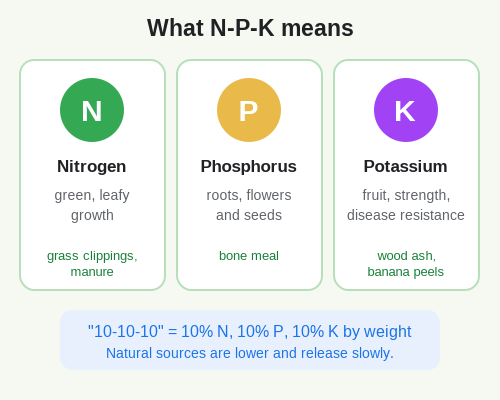
The three main plant nutrients
Fertiliser packs show three numbers, such as 10-10-10. These are the percentages of the three main nutrients:
- Nitrogen (N): supports green, leafy growth. Leafy greens and lawns need plenty.
- Phosphorus (P): supports roots, flowers, and seeds.
- Potassium (K): supports fruiting, flowering, and overall plant strength.
Plants also need smaller amounts of calcium, magnesium, and trace elements. Natural materials usually contain a broad mix of these. Their nutrient levels are lower than synthetic fertilisers, but they release slowly and rarely burn plants.
Compost: The Best All-Round Natural Feed
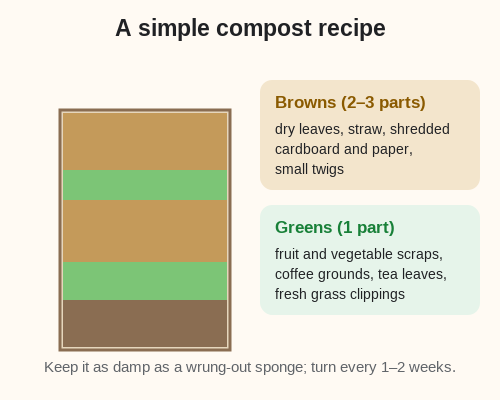
Balance browns and greens
1
Choose a Bin or Spot
A compost bin, a simple wooden enclosure, or a covered heap in a shady corner works. Place it on bare soil if possible so worms can move in.
2
Mix Browns and Greens
Add roughly two to three parts "browns" (dry leaves, shredded cardboard, paper, straw) to one part "greens" (vegetable peelings, fruit scraps, coffee grounds, fresh grass clippings). Too many greens make a smelly, slimy heap; too many browns make it slow.
3
Keep It Moist and Aerated
It should feel as damp as a wrung-out sponge. Turn it with a fork every week or two to add air, which speeds up decomposition.
4
Use It When Ready
Finished compost is dark, crumbly, and smells earthy. Depending on conditions it can take a few months to a year. Spread a layer a few centimetres deep around plants or mix it into beds.
Keep out of home compost
Meat, fish, dairy, cooked food with oils, pet waste, diseased plants, and weeds with seeds. These can attract pests, spread disease, or carry harmful germs, since home heaps rarely get hot enough to kill them.
Other Natural Fertilisers
- Well-rotted manure: rich in nutrients and organic matter. Use only manure that has aged for months; fresh manure can burn plants and carry pathogens.
- Leaf mould: made by bagging damp autumn leaves for a year or two. Excellent for soil structure.
- Grass clippings: a thin layer as mulch adds nitrogen; thick layers turn slimy.
- Worm castings: from a wormery, a gentle, nutrient-rich feed for pots and seedlings.
- Bone meal and blood, fish and bone: natural, slow-release products sold in garden centres; wear gloves and keep them away from pets, which may dig for them.
- Wood ash from untreated wood contains potassium, but it raises soil pH, so use only small amounts and never on acid-loving plants.
About kitchen "hacks"
Banana peels and coffee grounds are useful in compost, but burying them directly gives few nutrients quickly. Eggshells break down very slowly. Treat these as compost ingredients rather than instant plant food.
Homemade Liquid Feeds
Comfrey and nettle "teas" are traditional liquid feeds. Pack chopped leaves into a container with a lid, cover with water, and leave for three to four weeks. The liquid smells strong. Dilute it heavily, roughly one part feed to ten parts water, and use it on vegetables and flowers every week or two during the growing season. Comfrey is especially rich in potassium, making it popular for tomatoes. Wear gloves when handling nettles.
Common Feeding Mistakes
- Feeding too much; more isn't better and can harm roots and waterways
- Feeding plants in winter when they aren't growing
- Putting fertiliser on dry soil; water first
- Using fresh manure around young plants
- Blaming nutrients when the real problem is light, watering, or pests
If plants keep struggling, a simple home soil test kit can show your soil's pH and main nutrient levels, so you feed only what's actually missing.
A Simple Feeding Guide by Plant Type
- Vegetable beds: dig in or spread a few centimetres of compost or well-rotted manure each autumn or early spring. Hungry crops such as tomatoes, courgettes, and squash benefit from extra liquid feed every one to two weeks once they flower.
- Containers: potting compost runs out of nutrients after about six weeks, so begin regular liquid feeding after that during the growing season.
- Flower borders: a layer of compost mulch each spring is usually enough for established plants.
- Fruit trees and bushes: mulch around the base (keeping it away from the trunk) each spring.
- Houseplants: a diluted liquid feed about monthly in spring and summer only.
- Lawns: leave grass clippings on the lawn after mowing ("grasscycling") to return nutrients naturally.
Watch your plants: pale, yellowing older leaves often suggest a lack of nitrogen, while lots of leaves but few flowers or fruit can mean too much.
Test Your Soil Before Feeding
Adding fertiliser without knowing what your soil needs can waste money and even harm plants. A simple soil test tells you the pH and main nutrient levels. Home test kits are inexpensive and available at garden centres, while some local agricultural services or universities offer more detailed lab tests. Most vegetables and flowers prefer slightly acidic to neutral soil; if your soil is very acidic or alkaline, plants struggle to absorb nutrients even when they're present. Test every couple of years, or whenever plants show unexplained problems such as yellow leaves or poor growth.
Keep a simple garden notebook recording what you fed each bed or pot, when, and how the plants responded. Over a season or two, you will learn exactly what your soil and plants need, saving money and reducing waste. Natural feeding is about building healthy soil over time, so patience brings the best results.
Final Thoughts
Natural fertilising is about feeding the soil, not just the plant. Make compost from your kitchen and garden waste, add organic matter every year, and use gentle feeds when plants are actively growing. Healthier soil means healthier plants with fewer problems.