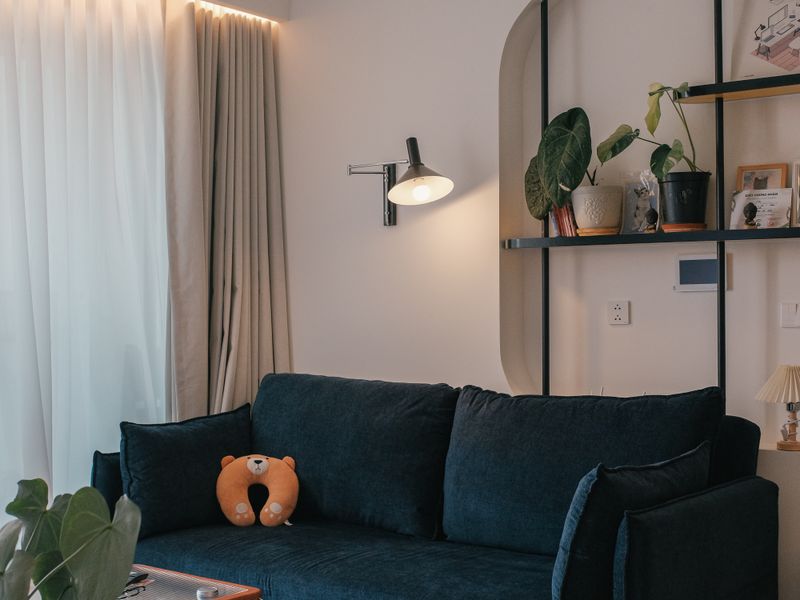
Stylish living room featuring a navy sofa, indoor plants, and contemporary decor
This guide gives you a simple system that works in any size of home, plus small daily habits that keep it organised long after the first big tidy.
Step 1: Divide Rooms Into Zones
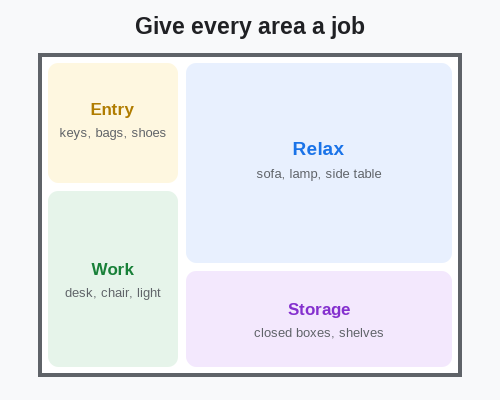
Every area has a clear purpose
Decide what activities happen in each room, then group the related items together. In a living room, for example:
- Entry zone: a hook, tray, or small shelf for keys, bags, and post.
- Relaxing zone: seating, a side table, remotes in a small box, and a reading lamp.
- Work or hobby zone: a desk or corner with everything for that task in reach.
- Storage zone: cabinets or shelves for things used less often.
Zones stop items from drifting around the house, because everything belongs near where it's used.
Step 2: Declutter Before You Organise
Organising clutter just creates neater clutter. Work through one area at a time and sort items into four groups: keep, donate or sell, recycle, and bin. Ask yourself whether you've used each item in the last year and whether you'd buy it again today. For a full method, see our guide on decluttering your home.
Step 3: Give Everything a Home
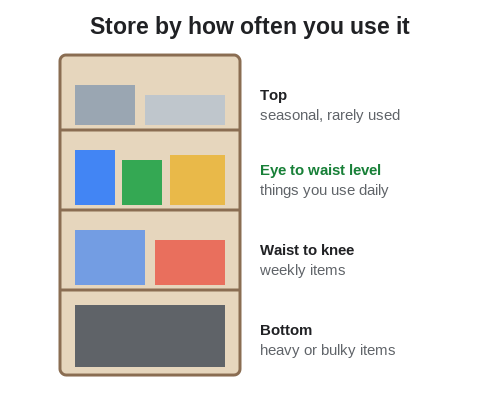
Daily items within easy reach
- Store by frequency: daily items between eye and waist level, weekly items lower, seasonal items high up or in less accessible storage.
- Store near the point of use: chargers near where you sit, cleaning cloths near the sink, scissors near the wrapping paper.
- Use containers to group small things: boxes, baskets, and drawer dividers stop small items from spreading.
- Label shared storage: simple labels help everyone in the household put things back.
- Leave some space: storage packed to 100% fills up immediately; aim for around 80% full.
Step 4: Smart Storage Ideas
Living room
- Storage ottoman or bench
- Baskets for throws and toys
- TV unit with closed doors
Bedroom
- Under-bed boxes
- Bedside table with a drawer
- Hooks for tomorrow's outfit
Hallway
- Wall hooks at two heights for adults and children
- Shoe rack
- Small tray for keys and post
Before buying storage products, declutter and measure. Many people buy containers first and end up with storage that doesn't fit.
Step 5: Daily Habits That Keep It Organised
- The 10-minute reset: each evening, set a timer and put things back in their homes. Everyone in the household helps.
- Don't put it down, put it away: if something takes less than a minute to put back, do it now.
- One in, one out: when something new comes in, let something similar go.
- Deal with paper immediately: sort post as soon as it arrives into recycle, action, or file.
- Clear one "hot spot" a day: kitchen counters, the dining table, and chairs tend to collect clutter first.
- Seasonal check-in: every few months, review storage areas and remove what you no longer use.
Living with others
Organisation works best when systems are simple enough for everyone. Open baskets are easier for children than lidded boxes, and clear labels help guests and partners alike. Agree together where shared items live.
Example: Organise One Room in a Weekend
1
Saturday Morning: Clear and Sort (2–3 hours)
Work around the room clockwise, sorting everything into keep, donate, recycle, and rubbish. Take rubbish and recycling out immediately.
2
Saturday Afternoon: Clean and Plan (1–2 hours)
Clean empty shelves and surfaces. Decide on zones and measure any spaces where you'll need storage. Make a short list of what you actually need to buy.
3
Sunday: Set Up and Finish (2–3 hours)
Put "keep" items into their new homes using the frequency rule, add labels where useful, drop donations off, and take a photo of the finished room. The photo becomes your reference when tidying in future.
Organising a Shared Family Home
An organised home is easier to keep when everyone in the household helps. The key is making systems simple enough for every member of the family to follow.
- Label storage: use words or pictures on boxes and shelves so children and guests know where things go.
- Store items at the right height: put children's toys, books, and coats where they can reach them easily.
- Give everyone a landing spot: a hook, basket, or tray near the door for each person's keys, bags, and shoes.
- Agree a few house rules: such as "shoes off at the door" or "toys back in boxes before dinner".
- Use a family calendar: a shared wall or digital calendar keeps schedules, appointments, and chores in one place.
- Make tidying a routine: a 10-minute reset before bed, with everyone helping, keeps clutter under control.
- Rotate toys: store some toys away and swap them every few weeks; children play more with fewer choices.
Be realistic. A family home is meant to be lived in, and it will never look like a show home all the time. Aim for systems that make it quick to restore order, rather than perfection. Praise and encouragement work better than criticism when helping children learn to tidy up.
Review your systems every few months. As children grow, hobbies change, and new items arrive, your storage needs change too. Small adjustments keep everything working smoothly.
Remember that organisation is a habit, not a one-time project. Spending a few minutes each day returning items to their homes protects all the work you have done and keeps your living space calm and easy to enjoy. Start small, stay consistent, and let the system grow with your household.
Final Thoughts
An organised home comes from three things: owning a manageable amount of stuff, giving every item a clear home, and a few minutes of daily tidying. Start with one room or even one drawer, get it working well, and build from there.