
A cozy Scandinavian living room with modern gray couch and wooden elements
Decluttering doesn't mean living with almost nothing. It means keeping what you use and love, and letting go of the rest. This guide gives you a calm, step-by-step method that works even if the task feels overwhelming.
Step 1: Start Small and Build Momentum
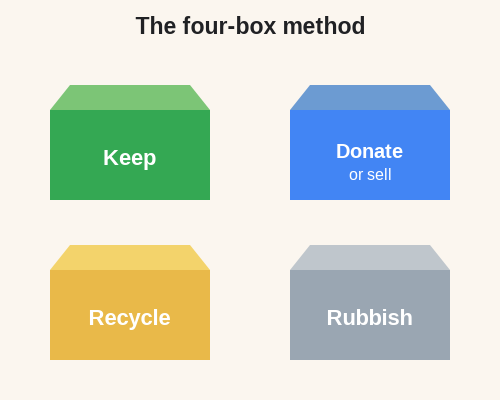
Every item gets one decision
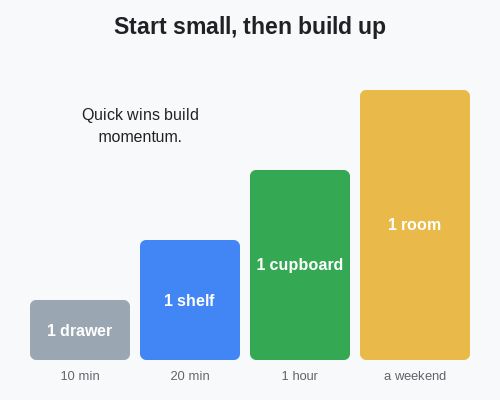
Small wins keep you going
Set a timer for 15–30 minutes, and stop when it rings. Short, regular sessions are more sustainable than marathon clear-outs.
Step 2: Use the Four-Box Method
Take everything out of the area you're working on and put each item into one of four boxes or bags:
- Keep: things you use regularly or genuinely love.
- Donate or sell: good-condition items someone else could use.
- Recycle: paper, cardboard, and items your local services accept.
- Rubbish: broken, expired, or worn-out items.
Only put "keep" items back, cleaning the space first. Take the donate box to your car or a charity drop-off the same day, before items creep back into the house.
Step 3: Ask the Right Questions
When you're stuck on an item, these questions help:
- Have I used this in the last year?
- If I saw this in a shop today, would I buy it again?
- Do I have another item that does the same job?
- Am I keeping this out of guilt or "just in case"?
- If I needed it again, could I borrow or replace it easily and cheaply?
The "maybe" box
If you can't decide, put items in a sealed box with today's date. If you haven't needed anything from it in three to six months, donate the box without opening it.
Step 4: Handle the Hard Categories
- Paper: recycle junk mail immediately, shred old documents containing personal information, and keep only what you need. Many bills and statements are available online. Keep important documents, like identification, property papers, and tax records, in one labelled folder; how long to keep records depends on local rules.
- Sentimental items: leave these until last, when you're more practised. Keep the most meaningful items and display them. Take photos of others before letting them go; the memory stays even when the object doesn't.
- Gifts: a gift has done its job once it was given with care. You don't have to keep it forever.
- Children's items: involve children in choosing which toys to donate, and keep a small "memory box" for special artwork and keepsakes.
- Other people's things: declutter only your own belongings, and encourage others gently rather than clearing their things for them.
Step 5: Work Through the House
A helpful order is to start with areas with fewer emotional attachments and progress to harder ones:
- Bathroom: expired medicines (return them to a pharmacy where possible), old toiletries, and samples.
- Kitchen: duplicate utensils, chipped mugs, and out-of-date food.
- Wardrobe: clothes that don't fit or haven't been worn in a year. See our guide on organising your closet.
- Living areas: old magazines, cables for devices you no longer own, and broken items.
- Storage areas: lofts, garages, and spare rooms.
- Sentimental items last.
Step 6: Stop Clutter Coming Back
- One in, one out: when something new arrives, let one similar item go.
- Pause before buying: wait 24–48 hours before non-essential purchases.
- Unsubscribe from marketing emails and catalogues that tempt you to shop.
- Keep a donation bag in a cupboard and add to it whenever you spot something you don't need.
- Do a 10-minute tidy every evening so things return to their homes.
Where to Take Things You No Longer Need
- Charity shops and donation banks: clean, good-condition clothes, books, toys, and homeware. Check what each one accepts.
- Online marketplaces: sell higher-value items like furniture, electronics, and branded clothing. Meet buyers in safe, public places where possible.
- Free giveaway groups: local community groups let you give items away quickly to people who'll use them.
- Electronics recycling: many retailers and recycling centres accept old phones, cables, and appliances. Back up and wipe phones and computers before passing them on.
- Textile recycling: worn-out clothes and linens can often be recycled rather than binned.
- Hazardous items: paint, batteries, and chemicals need special disposal; check your local authority's guidance.
Dealing With Emotional Attachment
The hardest part of decluttering is often emotional rather than practical. Gifts, inherited items, children's things, and objects linked to past plans can be difficult to let go.
- Keep the memory, not every item: photograph sentimental items before passing them on, or keep one meaningful piece from a larger collection.
- Use a memory box: give yourself one box for keepsakes. When it's full, choose what matters most.
- Let go of guilt about gifts: the giver's intention was to make you happy, not to burden you.
- Give items a new life: donating to someone who will use them can feel better than storing them unused.
- Go slowly with grief: if you're sorting belongings after a loss, take your time and ask family for support.
Be patient with yourself. Decluttering a whole home can take weeks or months, especially if you are working around family life or a job. Celebrate each cleared drawer, shelf, or room, and enjoy the extra space and calm it brings. Every item you let go of makes your home easier to clean, organise, and enjoy.
Final Thoughts
Decluttering is a skill, not a one-time event. Start with something small, make one clear decision per item, get donations out of the house quickly, and protect your progress with simple habits. A calmer, easier-to-clean home is built one drawer at a time.