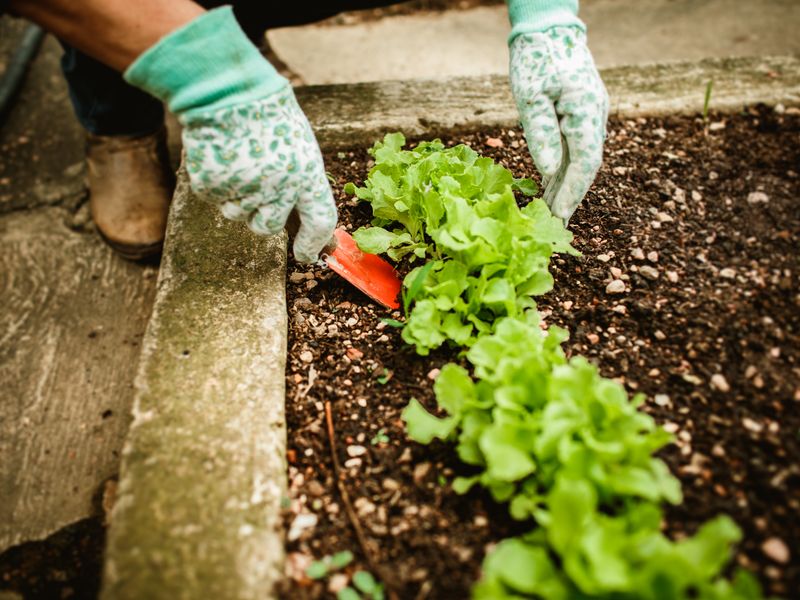
A gardener wearing gloves tending to lettuce plants in an outdoor garden bed
Gardeners and agricultural experts often use an approach called integrated pest management: prevent problems first, check plants regularly, use physical and natural controls, and only use targeted treatments as a last resort. This guide shows how to apply it at home.
Step 1: Grow Healthy, Resilient Plants
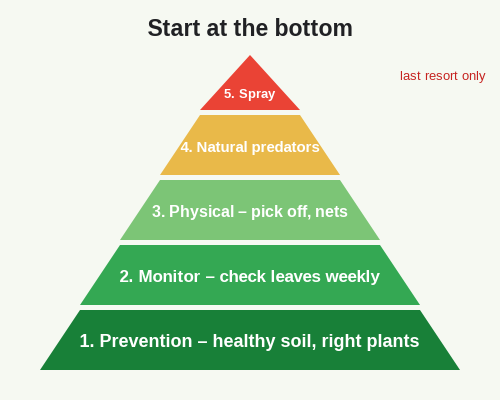
Prevention first, sprays last
Pests target weak and stressed plants first. Healthy plants recover from minor damage more easily.
- Improve the soil with compost every year.
- Right plant, right place: sun-loving plants in shade, or thirsty plants in dry spots, become easy targets.
- Don't overcrowd: good airflow reduces fungal diseases and some pests.
- Avoid too much nitrogen fertiliser, which produces soft, lush growth that aphids love.
- Choose resistant varieties where available; seed packets often mention resistance.
- Rotate crops: don't grow the same vegetable family in the same spot every year, as soil pests build up.
- Keep it tidy: remove diseased leaves and plant debris where pests overwinter.
Step 2: Check Plants Regularly
A five-minute walk around the garden once or twice a week catches problems early, when they're easy to handle. Look under leaves, at new shoots, and around stems. Signs to watch for include sticky leaves (aphids), silvery trails (slugs and snails), ragged holes (caterpillars), and fine webbing or speckled leaves (spider mites). Going out with a torch after dark is the best way to find slugs and snails.
Step 3: Use Physical Controls
- Hand-picking: remove caterpillars, slugs, and snails by hand, ideally in the evening.
- Water spray: a strong jet of water knocks aphids off stems; repeat every few days.
- Squash small colonies: rub aphids off with gloved fingers.
- Netting: fine mesh keeps butterflies off cabbages and birds off fruit. Make sure nets are taut and secured so birds and hedgehogs can't get tangled.
- Barriers: copper tape around pots and collars around young plants can deter slugs, though results vary.
- Traps: yellow sticky traps catch flying pests in greenhouses; shallow beer traps attract slugs.
Step 4: Invite Natural Predators
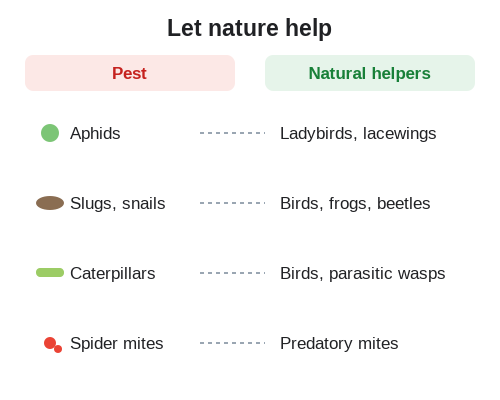
A balanced garden controls itself
- Planting flowers such as marigolds, calendula, alyssum, and herbs like dill and fennel to attract hoverflies and lacewings, whose larvae eat aphids.
- Providing water, even a shallow dish or small pond, for birds, frogs, and beneficial insects.
- Leaving a wild corner with log piles and long grass where beetles and other predators live.
- Being patient: predators arrive a little after pests. Spraying early kills them before they can help.
Companion planting
Some gardeners grow "sacrificial" or distracting plants. Nasturtiums, for example, often attract aphids and caterpillars away from crops. Evidence for many companion pairings is mixed, but adding flowers among vegetables reliably supports beneficial insects.
Step 5: Targeted Treatments as a Last Resort
If a pest is seriously damaging plants despite the steps above, choose the least harmful option:
- Insecticidal soap: works on soft-bodied pests like aphids, whitefly, and mealybugs by contact. Spray directly on the pests.
- Horticultural oils such as neem-based products can help with some pests; follow the label carefully.
- Biological controls: some garden suppliers sell beneficial nematodes for slugs and vine weevils, which are safe for people and pets.
Use products safely
Always follow the label, wear gloves, and keep products away from children and pets. Spray in the evening when bees aren't active, and never spray open flowers. Avoid homemade mixtures with strong chemicals, which can damage plants or harm wildlife. Some products may be restricted in your country.
A Seasonal Pest Calendar
- Spring: slugs and snails attack young seedlings, and aphids appear on new shoots. Protect seedlings, check plants at dusk, and wipe off early aphid colonies.
- Early summer: caterpillars on cabbages and other brassicas, and blackfly on beans. Net brassicas and pinch out bean tips where blackfly gather.
- Mid to late summer: whitefly and spider mites thrive in hot, dry conditions, especially in greenhouses. Keep plants well watered and increase humidity.
- Autumn: clear diseased plant debris, but leave some seed heads and leaf piles where beneficial insects and hedgehogs can shelter.
- Winter: clean pots, tools, and greenhouses, and plan crop rotation for the next year.
Pest timing varies by climate, so note when problems appear in your own garden each year. Your records will become the most useful pest guide you have.
Use Companion Planting
Some plants help protect their neighbours. Companion planting is a simple, natural way to reduce pest problems.
- Marigolds: often planted near tomatoes and other vegetables to help deter some pests and attract beneficial insects.
- Nasturtiums: act as a "trap crop", attracting aphids and caterpillars away from more valuable plants.
- Strong-smelling herbs: rosemary, sage, mint, and chives can confuse pests that find plants by scent. Grow mint in pots, as it spreads quickly.
- Flowers for pollinators and predators: plants such as calendula, cosmos, and sweet alyssum attract hoverflies and ladybirds that eat aphids.
- Onions and carrots together: a traditional pairing thought to confuse carrot fly.
Results vary between gardens and climates, so treat companion planting as one part of a wider approach. Keep notes of what works in your garden from year to year.
Accept a little damage. A healthy garden is an ecosystem, and a few nibbled leaves are a sign that wildlife, including the predators that keep pests under control, is present. Aim for balance rather than perfection, and you will need far fewer interventions over time. Check plants regularly and act early while problems are still small and easy to manage.
Final Thoughts
A pest-free garden isn't realistic, but a balanced one is. Focus on healthy soil and plants, check them often, remove pests by hand, and welcome the birds and insects that do the work for you. Keep sprays for real emergencies, and your garden will become more resilient every year.