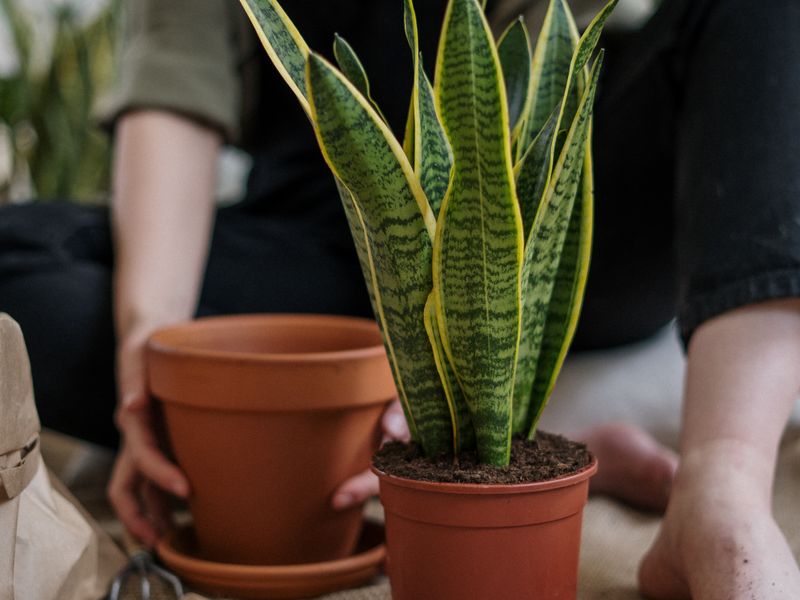
A person potting a snake plant with soil and tools on a burlap mat
This guide explains how to choose plants that suit your home, water them properly, and spot problems early, so your plants grow instead of slowly fading.
Step 1: Understand Your Light
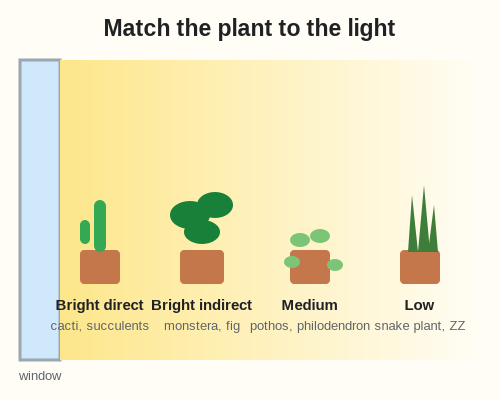
Light is the first thing to get right
Light is a plant's food source, and indoor light is much weaker than it looks to our eyes. Check how much light each spot gets before buying:
- Bright direct light: in or right next to a sunny window (often south-facing in the Northern Hemisphere, north-facing in the Southern). Best for cacti, succulents, and herbs.
- Bright indirect light: a bright room a little away from the window, or behind a sheer curtain. Suits most popular plants, such as monstera, fiddle-leaf fig, and peace lily.
- Medium light: a few metres from a window. Pothos, philodendron, and spider plants cope well.
- Low light: far from windows or in north-facing rooms. Snake plants and ZZ plants tolerate it, though growth will be slow.
Quick light test
At midday, hold your hand about 30 cm above the spot. A sharp, dark shadow means bright light; a soft, fuzzy shadow means medium light; barely any shadow means low light.
Step 2: Start With Forgiving Plants
These plants are known for tolerating beginner mistakes:
- Pothos: trailing, fast-growing, and droops visibly when thirsty, so it tells you when to water.
- Snake plant: handles low light and infrequent watering.
- ZZ plant: stores water in its roots and survives neglect.
- Spider plant: easy, fast, and produces baby plants you can share.
- Peace lily: also droops when dry and recovers quickly after watering.
Pets and children
Several common houseplants, including pothos, peace lily, and ZZ plant, can be harmful if chewed or swallowed by pets or small children. Check a plant's toxicity before buying and place it out of reach if needed.
Step 3: Water the Right Way
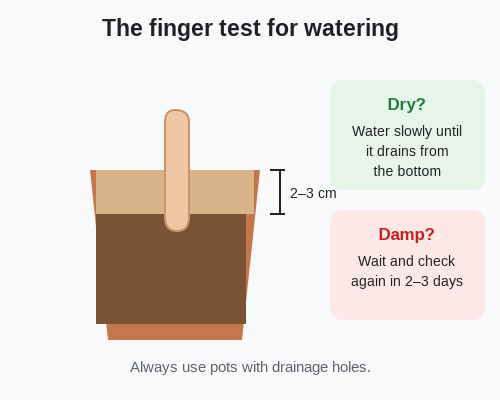
Check the soil before watering
- Push a finger into the soil to the second knuckle, about 2–3 cm.
- Dry: water slowly and thoroughly until water runs from the drainage holes, then empty the saucer after 15 minutes.
- Still damp: wait a few days and check again.
- Succulents and cacti should dry out almost completely between waterings.
- Most plants need much less water in winter, when growth slows.
Room-temperature tap water is fine for most plants. If your water is very hard, letting it stand overnight or occasionally using rainwater can help sensitive plants.
Step 4: Pots, Soil, Feeding, and Repotting
- Drainage is essential: use pots with holes. Decorative pots without holes can hold a plastic nursery pot inside.
- Use the right mix: a general houseplant compost for most plants, and a gritty cactus mix for succulents.
- Feed in spring and summer: a balanced liquid houseplant fertiliser about once a month, diluted as the label says. Don't feed in winter.
- Repot when roots outgrow the pot: roots circling the bottom or growing out of the holes are the sign. Move up just one pot size (about 2–5 cm wider), usually in spring.
- Clean leaves: wipe dust off large leaves with a damp cloth so they can absorb light.
Step 5: Fix Common Problems
- Yellow lower leaves and soggy soil: overwatering. Let the soil dry out and check the roots; trim any brown, mushy ones.
- Crispy brown leaf tips: often dry air, underwatering, or fertiliser build-up. Water thoroughly and keep plants away from radiators.
- Long, stretched stems with small leaves: not enough light. Move closer to a window.
- Pale or scorched patches: too much direct sun. Move back slightly or diffuse with a curtain.
- Tiny flies around the soil: fungus gnats, usually from constantly damp soil. Let the top layer dry out and use yellow sticky traps.
- White fluffy spots or fine webbing: mealybugs or spider mites. Isolate the plant, wipe pests away, and treat with insecticidal soap if needed.
Check new plants
Inspect new plants under leaves and around stems before bringing them home, and keep them apart from your other plants for a couple of weeks. This stops pests spreading.
Grow More Plants for Free: Easy Propagation
Many houseplants can be multiplied from cuttings, giving you new plants to keep or share.
- Pothos and philodendron: cut a stem just below a node (the small bump where a leaf joins), place it in a glass of water, and change the water weekly. Roots usually appear within a few weeks; pot it up once they're a few centimetres long.
- Spider plant: pin a baby plantlet onto a small pot of compost while it's still attached, then cut it free once rooted.
- Snake plant: divide a crowded plant at the roots when repotting, keeping several leaves on each section.
- Succulents: gently twist off a healthy leaf, let it dry for a few days, then lay it on gritty compost and mist lightly until roots and a tiny rosette form.
Spring and early summer are the best times, when plants are actively growing. Use clean, sharp scissors to avoid spreading disease.
Choose Pet-Safe Plants
Some popular houseplants can be harmful if pets or small children chew them. Check a plant's safety before buying, and place risky plants out of reach.
Finally, be patient. Indoor plants grow slowly, especially in winter, and new owners often overwater out of enthusiasm. Observe your plants regularly, adjust care to the seasons, and enjoy watching them settle in.
Final Thoughts
Healthy houseplants come down to the right plant in the right light, watering only when the soil tells you to, and pots that drain well. Start with one or two forgiving plants, watch how they respond, and build your collection as your confidence grows.