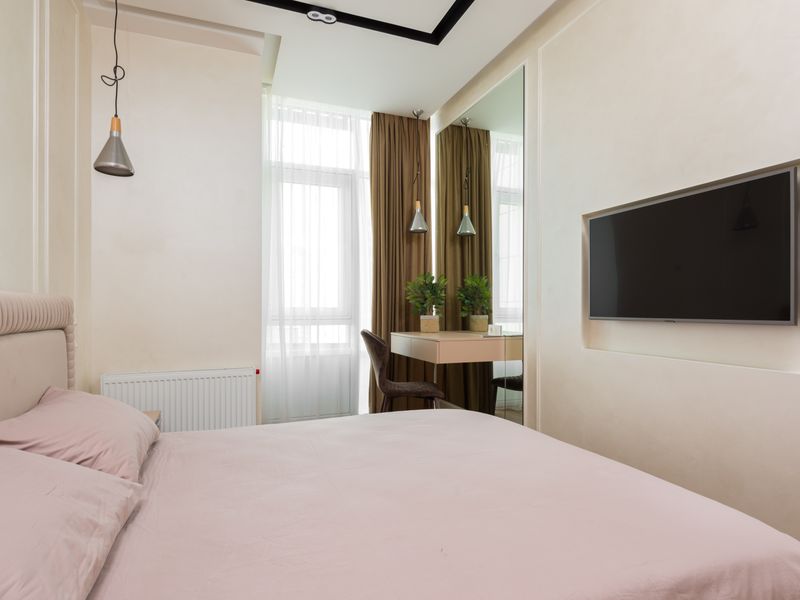
Comfortable compact bedroom with big mirror near small window with curtains and TV placed
This guide gives you a practical plan, from measuring the room to choosing furniture and finishing touches, with ideas that work in bedrooms, living rooms, and home offices alike.
Step 1: Measure and Plan Before Buying
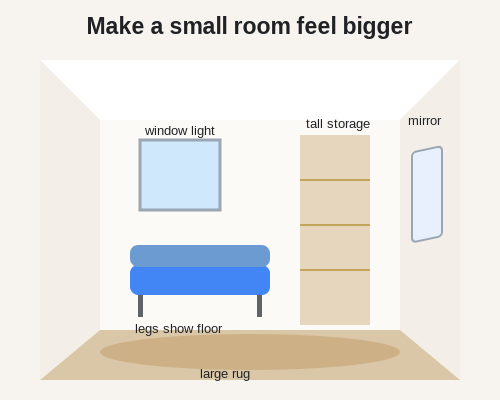
Light, legs, mirrors and height
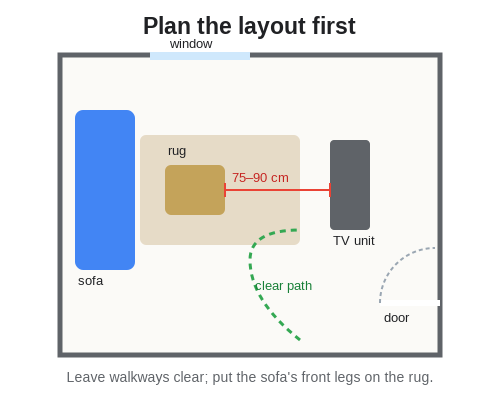
Plan walkways before furniture
- Measure the room, including window positions, door swings, radiators, and sockets.
- Sketch a simple floor plan on paper or a free room-planning app.
- Mark out furniture sizes on the floor with masking tape to check how it feels.
- Keep main walkways around 75–90 cm wide so people can move easily.
- Decide the room's main purpose. A small room that tries to be an office, gym, guest room, and storage room at once will always feel crowded.
Step 2: Use Colour and Light to Open It Up
- Light, soft wall colours such as warm white, pale grey, or soft sage reflect more light and make walls feel further away.
- Paint walls and trim the same colour, or close shades, so edges blur and the room feels less chopped up.
- Don't be afraid of a dark colour in a room used mainly at night, like a snug or bedroom. Deep colours can make edges recede and feel cosy rather than small, especially with good lighting.
- Keep window treatments light: sheer curtains or blinds that sit above and beyond the window frame make windows look bigger.
- Layer lighting: combine a ceiling light with a floor lamp, table lamp, or wall lights. Lighting corners makes the whole room feel larger.
Step 3: Choose Furniture That Works Hard
- Raised legs: sofas, chairs, and cabinets on visible legs show more floor, which tricks the eye into reading more space.
- Multi-purpose pieces: ottomans with storage, beds with drawers, extendable tables, sofa beds, and nesting tables.
- Right scale, fewer pieces: one comfortable, appropriately sized sofa beats a bulky suite. A few larger pieces often look calmer than many small ones.
- See-through and reflective materials: glass or acrylic tables and slim metal frames take up less visual space.
- Wall-mounted options: floating shelves, wall-mounted desks, and bedside shelves free up floor area.
Step 4: Go Vertical With Storage
When floor space is limited, use height. Tall, narrow bookcases, shelves above doors, hooks on the back of doors, and over-the-door organisers add storage without crowding the floor. Closed storage, such as cabinets or matching boxes, keeps visual clutter down; leave open shelves for a few chosen items with space around them. Our guide on organising your living space covers storage in more detail.
Step 5: Finishing Touches That Add Space
- Mirrors: a large mirror opposite or beside a window bounces daylight around and creates a sense of depth.
- Bigger rugs: a rug large enough for at least the front legs of furniture to sit on makes the room feel unified; a tiny rug makes it feel smaller.
- Hang curtains high: mount the rail near the ceiling to make walls look taller.
- Fewer, larger decorations: one large piece of art feels calmer than many small frames scattered around.
- Keep surfaces clear: limit each surface to a few items.
Quick test
Stand in the doorway and take a photo of the room. Photos show clutter and awkward furniture placement more clearly than your eyes do, because you're used to seeing the room every day.
Mistakes to Avoid
- Pushing every piece of furniture against the walls, which can leave an awkward empty middle
- Blocking windows or radiators with large furniture
- Too many small accessories competing for attention
- Heavy, dark curtains that cut out daylight
- Buying furniture without measuring doorways and stairs first
Ideas for Specific Small Rooms
- Small bedroom: centre the bed on the main wall with a little space on each side, use wall-mounted lights or narrow bedside shelves instead of bulky tables, and choose a bed with drawers underneath.
- Small living room: a compact sofa without heavy arms, a round coffee table (easier to walk around), and a wall-mounted TV free up floor space.
- Home office corner: a narrow desk against a wall, a floating shelf above it, and a chair that tucks fully under the desk. A folding wall desk can disappear completely when not in use.
- Small dining area: a drop-leaf or extendable table with stackable or folding chairs, or a bench that slides underneath.
- Tiny hallway: a slim console or wall shelf, a mirror to reflect light, and hooks rather than a coat stand.
Layer Your Lighting
One ceiling light can make a small room feel flat and smaller than it is. Use several light sources at different heights instead.
- Ambient light: the main overhead light, ideally with a dimmer.
- Task light: a desk lamp, reading light, or under-cabinet strip where you need it.
- Accent light: a small lamp on a shelf or LED strip behind a headboard adds warmth and depth.
- Wall lights: plug-in wall lamps save floor and table space.
Choose warm white bulbs for living spaces and bedrooms, and brighter, cooler light for work areas.
Finally, edit regularly. Small rooms feel cramped quickly when extra items creep in. Every few months, remove anything you no longer use or love, and the room will keep its open, calm feeling. Rotating decorative items seasonally also keeps the space fresh without adding clutter.
Final Thoughts
A small room feels bigger when it's well planned, well lit, and calm to look at. Measure before you buy, choose furniture that earns its place, use height for storage, and let light and mirrors do the rest. Small spaces can be both practical and beautiful.