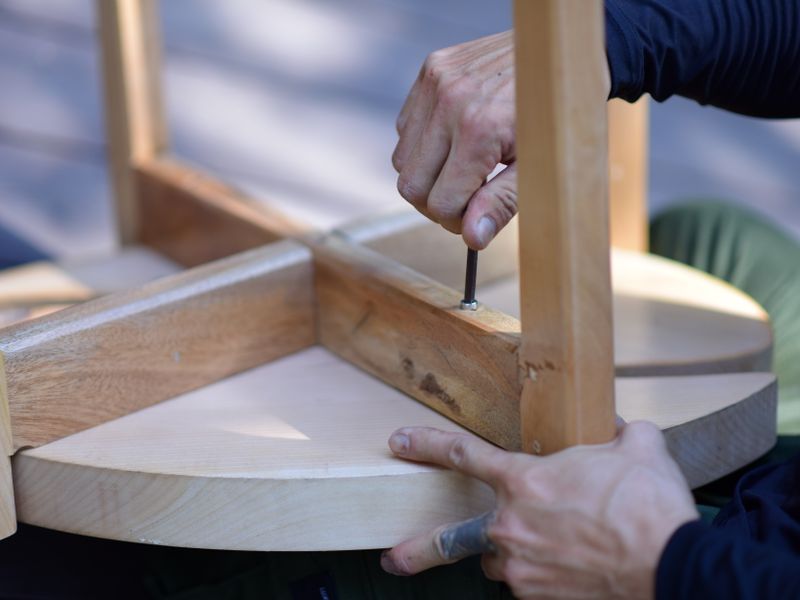
Hands assembling a wooden stool
This guide covers the most common problems in wooden and flat-pack furniture, with clear steps for each and tips on when a repair isn't worth attempting.
Build a Basic Repair Kit
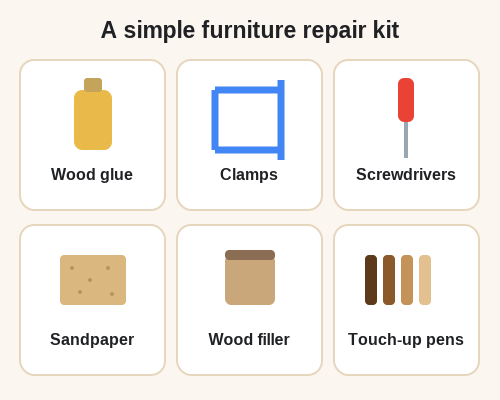
Six items cover most home repairs
- PVA wood glue: strong, easy to clean up with a damp cloth, and ideal for most wooden joints.
- Clamps: two or three bar or spring clamps; a tight ratchet strap works for chairs.
- Screwdrivers and Allen keys: many flat-pack problems are just loose fixings.
- Sandpaper: medium (120 grit) and fine (220 grit).
- Wood filler and touch-up markers or wax sticks in shades that match your furniture.
- Wooden toothpicks or dowels for repairing screw holes.
Fixing Wobbly Chairs and Tables
Wobbling usually comes from loose joints, loose screws, or uneven legs. Check which before you start.
1
Tighten Any Fixings
Turn the piece over and tighten every screw, bolt, and corner bracket. On flat-pack furniture, this alone often solves the problem. Don't overtighten into chipboard, as it strips easily.
2
Re-Glue Loose Joints
If a leg or rail moves in its joint, gently work it apart if possible. Scrape or sand away old, hardened glue, because new glue doesn't bond well to old glue. Apply fresh wood glue to both surfaces, push the joint together, wipe off excess with a damp cloth, and clamp it firmly. Leave it clamped for the time on the glue bottle, usually several hours, and ideally overnight before use.
3
Level Uneven Legs
Check the floor first by moving the piece to another spot. If one leg is genuinely shorter, add a felt pad or adjustable glide rather than cutting the other legs, which often makes the problem worse.
Repairing Stripped Screw Holes
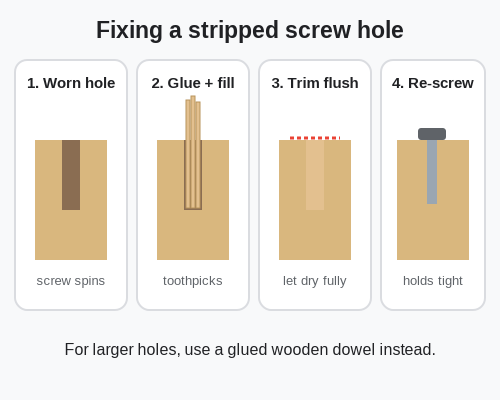
The toothpick method
- Remove the screw and dip three or four wooden toothpicks or matchsticks (without heads) in wood glue.
- Push them firmly into the hole until it's packed tight.
- Let the glue dry completely, then snap or cut the sticks flush with the surface.
- Drill a small pilot hole and drive the screw back in. It will now grip solid wood.
For larger or heavily damaged holes, drill out the hole, glue in a wooden dowel of the same size, and re-drill once dry. For chipboard, special chipboard repair plugs or slightly larger screws often work better.
Fixing Drawers That Stick or Sag
- Wooden runners that stick: rub a candle or bar of soap along the runners to reduce friction, and sand any rough or swollen areas lightly.
- Metal runners: clean out dust, tighten the screws holding the runner, and check it isn't bent.
- Drawer bottom sagging: remove the drawer, push the base back into its groove, and add a few small glue blocks or brads underneath.
- Loose drawer front: tighten the screws from inside the drawer, using the toothpick fix if they spin.
Fixing Scratches, Dents, and Water Rings
- Light scratches: use a matching furniture touch-up marker or wax stick, then buff with a soft cloth. Always test on a hidden spot first.
- Deeper gouges: fill with coloured wood filler or wax, let it set, then sand smooth and touch up the colour.
- Small dents in solid wood: lay a damp cloth over the dent and press briefly with a warm iron. The steam can swell the wood fibres back up. Avoid this on veneer or painted surfaces.
- White water rings: these are trapped moisture in the finish. Placing a dry cotton cloth over the mark and pressing briefly with a warm (not hot) iron, without steam, often lifts them. Check frequently and stop if the finish changes.
- Dark water stains: these have reached the wood itself and usually need sanding and refinishing.
Be careful with antiques
Valuable or antique furniture can lose much of its value if repaired with the wrong products. If a piece might be valuable, ask a professional restorer before sanding, gluing, or refinishing it.
Is It Worth Repairing?
Solid wood furniture is almost always worth repairing; it can be glued, sanded, and refinished many times. Cheap chipboard furniture with swollen, crumbling panels after water damage is often not worth the effort. Upholstered pieces with broken frames or springs may need a professional upholsterer, which is worthwhile for good-quality sofas and chairs.
How to Prevent Furniture Damage
- Use coasters and placemats to stop heat marks and water rings.
- Keep wood out of strong sunlight, which fades and dries finishes, and away from radiators and heaters, which cause cracking and loose joints.
- Lift, don't drag: dragging furniture stresses joints and legs. Add felt pads under legs to protect floors and reduce strain.
- Dust with a soft, slightly damp cloth rather than spraying polish every time; frequent silicone polish can build up a cloudy layer.
- Check fixings every few months, especially on flat-pack furniture and chairs that get daily use. A quarter-turn now prevents a broken joint later.
- Don't stand on chairs or lean back on two legs; both are common causes of broken joints.
Work Safely
Wear safety glasses when drilling or sanding, use a dust mask when sanding old finishes, and work in a well-ventilated area with glues, stains, and varnishes. Keep sharp tools and chemicals away from children and pets.
Final Thoughts
Most furniture problems are small and fixable: loose fixings, tired glue joints, worn screw holes, and surface marks. Keep a simple repair kit at home, take your time, and let glue dry properly before using the piece. A careful repair can add years to furniture you already own.