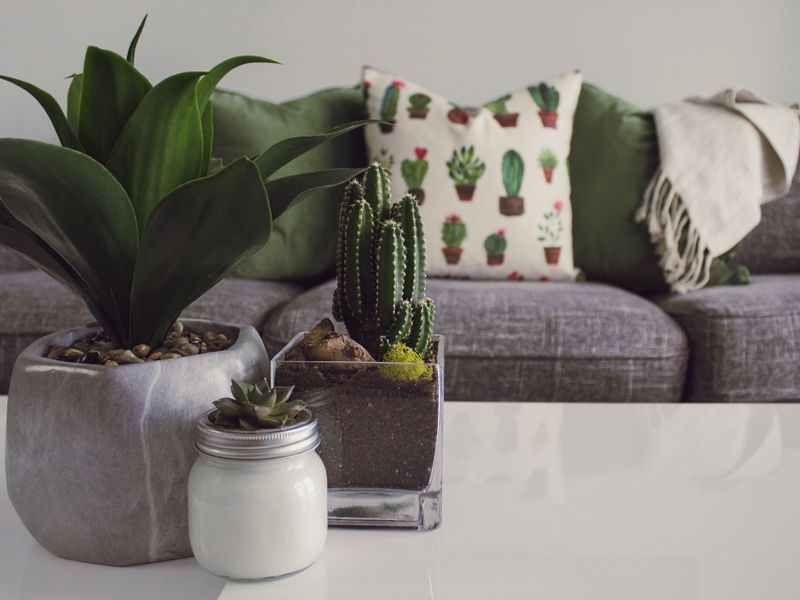
Modern living room featuring potted plants, cactus decor, and a cozy sofa
This guide is organised from free to low-cost ideas, so you can start today and build up gradually as your budget allows.
Free Changes With Big Impact
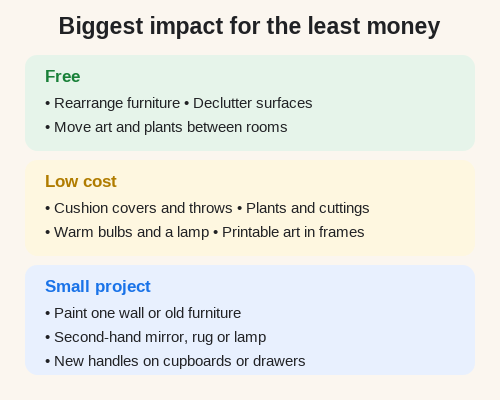
Start with the free changes
- Declutter surfaces: clear tables, shelves, and counters, then add back only a few favourite pieces. Space itself looks stylish.
- Rearrange furniture: pull sofas slightly away from walls, create a conversation area, or angle a chair toward the window.
- "Shop" your own home: move lamps, cushions, art, and plants between rooms. Items often look fresh in a new setting.
- Group accessories in odd numbers: sets of three items of different heights look more natural than pairs or lines.
- Let in light: clean windows, tie back curtains, and move anything blocking daylight.
Choose a Simple Colour Plan
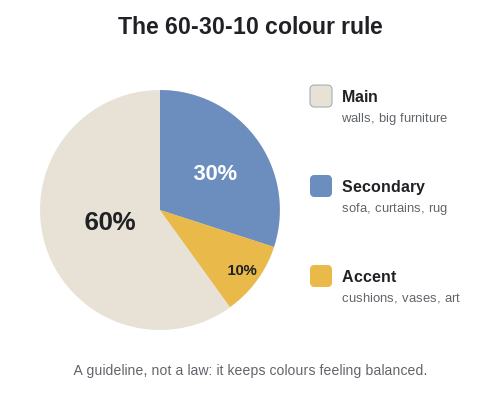
A simple way to balance colour
Choosing your accent colour first, then buying cushions, prints, and small accessories to match, is the cheapest way to make a room look designed rather than random.
Low-Cost Updates
- Textiles: new cushion covers (keep the old inserts), a throw, or a rug instantly change a room's colour and feel.
- Lighting: warm-white bulbs and one extra lamp make evenings far cosier than a single bright ceiling light.
- Plants: greenery adds life to any room. Grow cuttings from friends' plants for free, or choose hardy, inexpensive plants. See our guide to growing indoor plants.
- Art: frame postcards, calendar pages, children's drawings, fabric samples, or free public-domain artwork printed at a local print shop.
- Hardware: new handles and knobs give old cupboards and drawers a fresh look.
- Mirrors: brighten dark rooms by reflecting light.
Shop Second-Hand Smartly
Charity shops, flea markets, online marketplaces, and local swap groups are full of solid, well-made furniture and décor at a fraction of new prices.
- Look for solid wood: it's sturdy and easy to sand, paint, or refinish.
- Check carefully: open drawers, wobble legs, and look for water damage, pests, or strong smells.
- Focus on shape, not colour: paint and new fabric can change colour; a good shape is harder to find.
- Measure first and bring a tape measure.
- Be cautious with upholstered items and mattresses from unknown sources, which can carry pests.
Simple DIY Projects
1
Paint an Accent Wall or Old Furniture
A single tin of paint can transform a wall, a tired bookcase, or a set of mismatched chairs into a matching set. Our guide on painting walls perfectly covers preparation and technique.
2
Create a Gallery Wall
Arrange frames on the floor first, then trace each on paper and tape the templates to the wall to test the layout before drilling.
3
Upcycle Everyday Items
Glass jars become vases or storage, wooden crates become shelves, and leftover fabric becomes cushion covers or table runners.
Plan before you shop
Make a short list for each room: one colour palette, two or three things to change, and a budget. Impulse buys are the main reason décor budgets disappear without making rooms look better.
Decorating a Rented Home
Renting doesn't mean living with bare walls. Check your tenancy agreement first, and ask your landlord in writing before painting or drilling. Then focus on changes you can take with you:
- Removable hooks and strips for lightweight frames and mirrors.
- Lean large art or mirrors against walls or on shelves instead of hanging them.
- Rugs to cover dated flooring and add warmth.
- Lamps instead of changing ceiling fixtures; plug-in wall lights add style without wiring.
- Curtains on tension rods or your own curtains on the existing rails.
- Swap cupboard handles, keeping the originals safe to refit when you leave.
- Plants and textiles, which bring colour and personality with no permanent changes.
Plan and Budget Your Makeover
The easiest way to overspend on decorating is to buy items one at a time without a plan. A simple approach keeps your budget under control and helps the room look cohesive.
- Set a total budget for each room, and keep a small amount aside for unexpected costs.
- Make a mood board: collect photos, colour swatches, and fabric samples so you know what you're aiming for.
- List what you already have: furniture, textiles, and accessories from other rooms can be moved, repainted, or restyled.
- Prioritise impact: paint, lighting, and textiles usually make the biggest difference for the lowest cost.
- Buy in stages: start with essentials, live with the room for a few weeks, then add finishing touches.
- Track spending: keep receipts and a simple list of what you've spent against your budget.
Patience is a budget decorator's best tool. Waiting for seasonal sales, checking second-hand listings regularly, and swapping items with friends often brings far better finds than buying everything at once.
Remember that good decor reflects the people who live there. Displaying family photos, travel souvenirs, children's artwork, books, and plants costs nothing extra and makes a home feel personal and welcoming in a way shop-bought items rarely can.
Finally, look after what you buy. Clean fabrics regularly, protect wooden surfaces, and repair small damage promptly. Well-maintained items last for years, which is the best saving of all.
Above all, decorate for how you live. A comfortable, practical home you enjoy is worth more than a perfectly styled one that feels stressful to keep tidy.
Final Thoughts
Beautiful rooms come from good choices, not big budgets. Start with free changes like decluttering and rearranging, pick a clear colour plan, then add textiles, lighting, plants, and second-hand finds over time. Small, thoughtful updates add up to a home that feels truly yours.