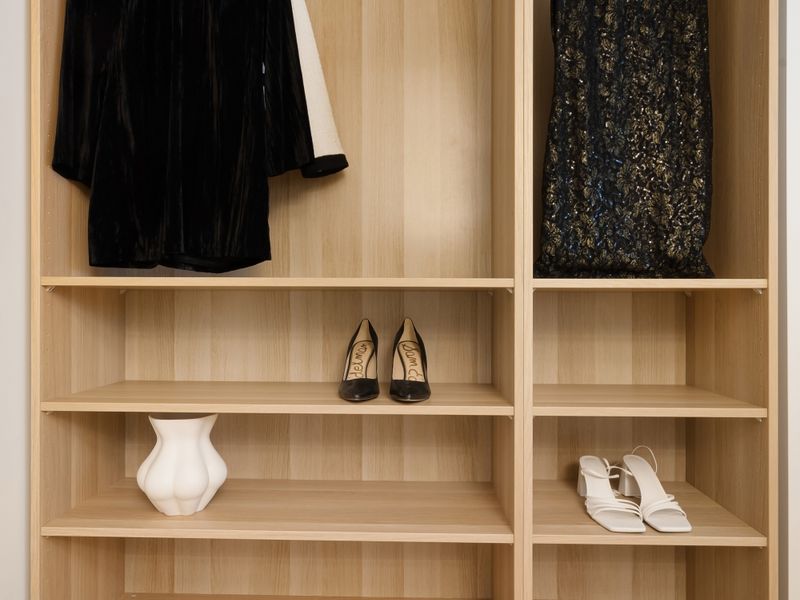
A minimalist wardrobe
An organised closet lets you see everything at a glance, keeps clothes in better condition, and makes it easy to put things away. This step-by-step system works for small wardrobes and walk-in closets alike.
Step 1: Empty It and Sort by Category
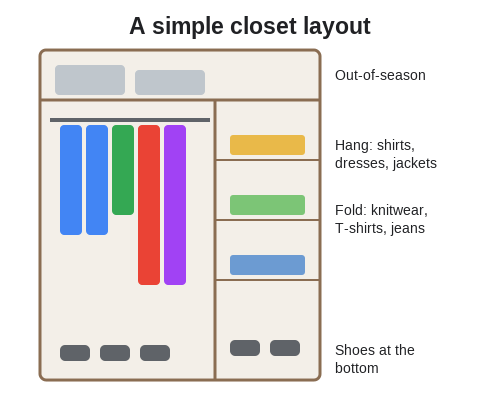
Hanging, folding, shoes and seasonal storage
Take everything out and lay it on the bed. Seeing your whole collection at once is often eye-opening. Group items into categories: tops, trousers, dresses, knitwear, outerwear, workwear, sportswear, shoes, bags, and accessories. Clean the empty closet, wipe shelves, and vacuum the floor before putting anything back.
Step 2: Decide What to Keep
Go through each category and ask:
- Does it fit me well right now?
- Have I worn it in the past year?
- Is it in good condition, without stains, holes, or stretched shapes?
- Does it go with other things I own?
- Do I feel good wearing it?
Donate or sell items in good condition, repair what's worth repairing, and recycle worn-out textiles where textile recycling is available. Our guide on decluttering your home has more tips for making decisions.
Step 3: Plan the Space
- Prime space: the area between eye and waist level is for clothes you wear most.
- Top shelf: out-of-season clothes, spare bedding, and items used rarely, stored in labelled boxes or vacuum bags.
- Hanging space: shirts, blouses, dresses, jackets, and anything that creases easily. Group by type, then by colour from light to dark, so you can find things quickly.
- Shelves and drawers: knitwear, T-shirts, jeans, and sportswear.
- Bottom: shoes on a rack or in clear boxes, and heavy items.
- Doors and walls: over-door hooks or organisers for bags, belts, scarves, and jewellery.
Hanger tip
Use matching slim hangers. They take up noticeably less rail space than bulky mixed ones and make a closet look instantly tidier. Velvet or flocked hangers stop clothes from slipping off.
Step 4: Hang or Fold? Store Clothes the Right Way
- Hang: shirts, blouses, dresses, suits, coats, and delicate fabrics like silk.
- Fold: knitwear and jumpers (hanging stretches the shoulders), T-shirts, jeans, and sportswear.
- File-fold in drawers: fold T-shirts into small rectangles and stand them upright like files. You can see every item at once instead of digging through a stack.
- Small items: use drawer dividers or small boxes for socks, underwear, and accessories.
- Protect seasonal storage: wash clothes before storing them, keep them dry, and use breathable bags or boxes; moth deterrents help for wool.
Step 5: Keep It Organised
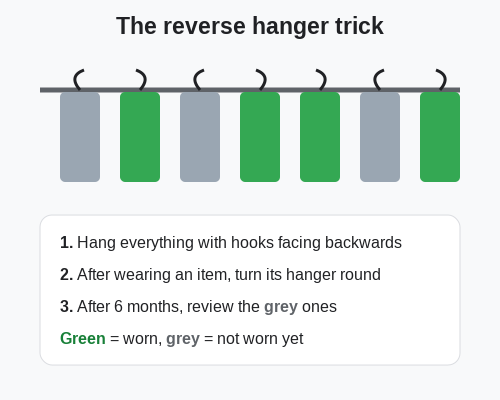
See what you actually wear
- Try the reverse hanger trick: turn all hangers backwards, and turn each one round after you wear the item. After six months, the clothes still on backwards hangers are strong candidates to let go.
- One in, one out: when you buy a new item, donate one.
- Keep a donation bag in the closet for items that no longer work.
- Swap seasonal clothes twice a year and review them as you do.
- Put clothes away daily, or use one hook or valet stand for items you'll wear again soon instead of the "chair pile."
Small Closet Solutions
- Add a second rail below the first for short items like shirts and skirts, doubling hanging space.
- Shelf dividers keep folded stacks neat and stop them toppling.
- Over-the-door organisers hold shoes, scarves, belts, or bags.
- Under-bed storage boxes are ideal for out-of-season clothes and spare bedding.
- Vacuum storage bags shrink bulky items like duvets and winter coats, though avoid them for wool and down long-term, which can lose shape.
- Hooks on the closet wall or door for tomorrow's outfit, dressing gowns, and bags.
- A capsule approach: keep a smaller set of versatile, mix-and-match clothes in the closet each season and store the rest.
Rotate Clothes With the Seasons
If your closet is small, rotating seasonal clothes frees a surprising amount of space. Twice a year, swap off-season items into storage and bring the current season's clothes to the front.
- Clean before storing: wash or dry-clean clothes first, as stains and body oils attract moths and set over time.
- Use breathable storage: cotton bags or lidded boxes protect clothes. Avoid sealing natural fibres in plastic for long periods without ventilation.
- Vacuum bags for bulky items: duvets, coats, and jumpers shrink dramatically, but avoid using them for leather or down that needs to breathe.
- Label boxes clearly: list the contents on the outside so you can find items quickly.
- Use hidden spaces: under the bed, high shelves, or the top of the wardrobe work well for storage boxes.
- Protect against moths: cedar blocks or lavender sachets help deter them, and regular checks catch problems early.
Each rotation is also the perfect moment for a quick declutter. As you pack away clothes, ask whether you actually wore each item this season. If not, consider donating or selling it. Our guide on decluttering your home has more tips for deciding what to keep.
A simple capsule wardrobe can also make daily dressing easier. Choose a set of versatile pieces in colours that work together, so most tops match most bottoms. You'll own fewer clothes, but get dressed faster and feel more put-together. Building a capsule takes time: start by noting which items you reach for most, and use those as your foundation.
Finally, follow a simple one-in, one-out rule: whenever you buy a new piece of clothing, donate or sell an old one. This keeps your closet from slowly filling up again and encourages you to think carefully before buying.
Final Thoughts
An organised closet starts with keeping only clothes that fit and get worn, then giving everything a logical place. Use prime space for everyday items, hang what creases and fold what stretches, and review your wardrobe regularly. Getting dressed becomes faster, and you'll rediscover clothes you forgot you had.