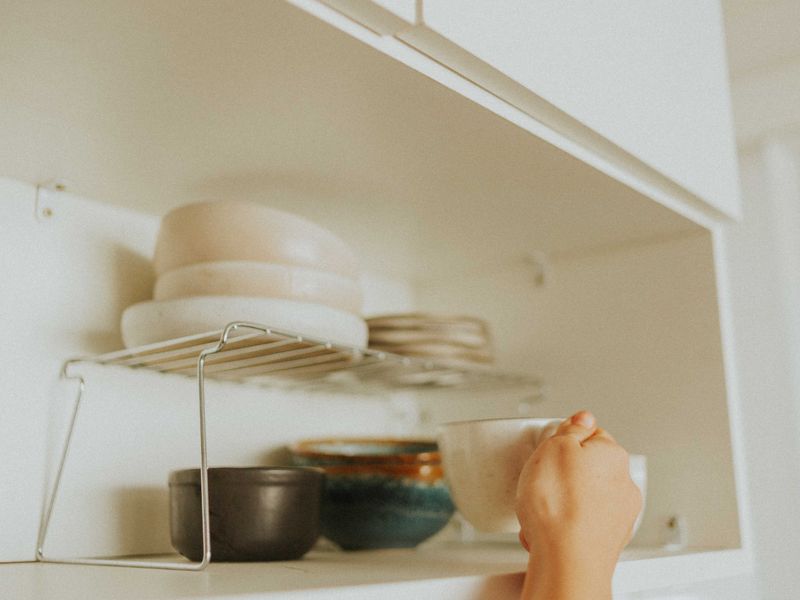
A person reaches into a kitchen cabinet to grab a mug, surrounded by neatly stacked dishes
An efficient kitchen is organised around how you actually cook. This guide shows you how to clear out, set up work zones, make the most of cupboards and drawers, and organise your pantry and fridge for both convenience and food safety.
Step 1: Empty, Clean, and Edit
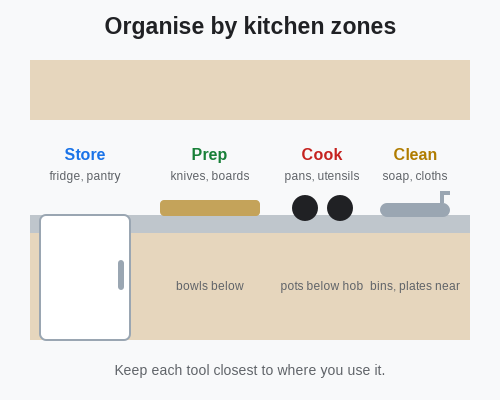
Organise around how you cook
Work one cupboard or drawer at a time. Take everything out, wipe the shelf, and sort items before putting anything back:
- Check dates: throw away expired food and spices that have lost their smell.
- Remove duplicates: do you really need four spatulas and three can openers?
- Find lost lids and orphaned containers: match them or recycle them.
- Relocate rarely used items: the roasting tin used once a year and party platters can move to higher shelves or another room.
- Donate working gadgets you never use.
Step 2: Set Up Kitchen Zones
Group items by task and store them close to where that task happens:
- Food storage zone: fridge, pantry, and food cupboards.
- Prep zone: the largest stretch of counter, with knives, chopping boards, mixing bowls, measuring cups, and scales nearby.
- Cooking zone: near the hob and oven, with pans, utensils, oils, salt, pepper, and oven gloves.
- Cleaning zone: by the sink and dishwasher, with dish soap, cloths, and the bin. Store everyday plates and glasses close by so unloading is quick.
- Drinks zone (optional): kettle, mugs, tea, and coffee together.
Step 3: Make Cupboards and Drawers Work Harder
- Prime space for daily items: the easiest-to-reach shelves and drawers should hold what you use every day.
- Store pans and baking trays vertically using a rack or file organiser, so you can slide one out without lifting others.
- Add shelf risers in tall cupboards to double usable space for plates and mugs.
- Use drawer dividers for cutlery, utensils, and foil and wrap.
- Use the inside of cupboard doors for hooks or slim racks holding lids, measuring spoons, or cloths.
- Under the sink: a small two-tier rack and a caddy for cleaning products. Use a child lock if you have young children.
Small kitchen tip
Use wall space: a magnetic knife strip, a rail with hooks for utensils, and a shelf above the counter free up drawers and counters. Keep counters clear except for appliances you use daily.
Step 4: Organise the Pantry and Fridge
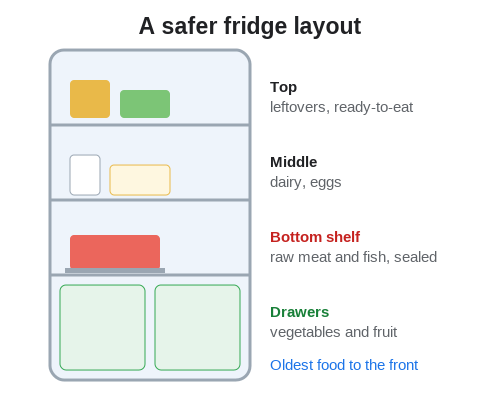
Raw meat always goes at the bottom
- Group by category: breakfast items, baking, grains and pasta, tins, snacks, and sauces.
- Use clear, airtight containers for flour, rice, cereal, and pasta. They keep food fresh, deter pests, and show you when stocks are low. Label them, including the use-by date.
- First in, first out: put new items behind older ones so older food gets used first.
- Turntables make sauces and spices in deep corners easy to reach.
- Fridge for safety: store raw meat and fish sealed on the bottom shelf so juices can't drip onto other food; ready-to-eat foods and leftovers on upper shelves; vegetables in the drawers.
- Keep a running shopping list on the fridge or your phone and add items as they run low.
Step 5: Keep It Organised
- Clear and wipe counters every night before bed.
- Empty the dishwasher first thing in the morning so dirty dishes can go straight in all day.
- Do a quick fridge check before each food shop and use up leftovers.
- Re-sort one cupboard each month instead of doing a huge overhaul twice a year.
- Put things back in their zone every time, so everyone in the house knows where things live.
Solving Awkward Kitchen Spaces
- Deep corner cupboards: use turntables or pull-out baskets so nothing gets lost at the back, and store rarely used items in the deepest part.
- Spices: a tiered shelf, drawer insert, or wall rack with labels facing out. Arrange alphabetically or by cuisine so you can find them quickly.
- Plastic containers: keep only matching sets, nest them by size, and store lids upright in a file organiser.
- Tall cupboards: shelf risers or stackable baskets turn wasted vertical space into storage.
- Gap beside the fridge: a slim rolling trolley holds tins, oils, or cleaning supplies.
- Top of cupboards: baskets for rarely used items, kept tidy so they don't collect grease and dust.
Tips for Small Kitchens
Small kitchens need every centimetre to work hard. These ideas help:
- Use the walls: magnetic knife strips, rails with hooks for utensils, and wall-mounted shelves free up counter space.
- Use the inside of cupboard doors: slim racks hold spices, lids, foil, and cleaning cloths.
- Choose multi-use tools: a good chef's knife, one large pan, and a stick blender replace many single-purpose gadgets.
- Store rarely used items elsewhere: holiday platters or large roasting tins can go in a hall cupboard or on a high shelf.
- Keep counters as clear as possible: only daily-use appliances should live on the worktop.
- Add a rolling cart: narrow trolleys fit gaps beside the fridge and provide extra storage and prep space.
Good lighting makes a small kitchen feel bigger and safer to work in. Stick-on LED strips under wall cupboards are cheap, easy to fit, and brighten your work surfaces.
Finally, clean as you cook. Washing up or loading the dishwasher while food simmers keeps a small kitchen usable and makes the end of the meal far less daunting.
Final Thoughts
An efficient kitchen puts everything within reach of where you use it. Clear out what you don't need, organise into zones, store everyday items in prime spots, and keep the pantry and fridge visible and food-safe. Cooking becomes quicker, calmer, and less wasteful.