
Professional discussion among lawyers in a modern office
The internet makes it easier than ever to find lawyers and free legal information. This guide explains where to look, how to check that someone is qualified, and how to keep costs under control, wherever you live.
Step 1: Understand What Kind of Help You Need
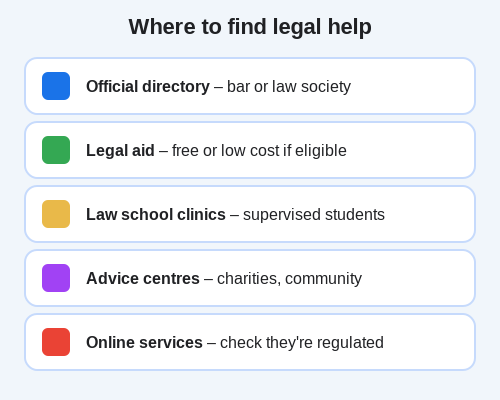
Start with official and non-profit sources
- General legal information: official government guidance and reputable legal information sites explain your rights in many everyday situations.
- One-off advice: a short consultation to understand your position or options.
- Document help: drafting or reviewing a contract, will, or letter.
- Representation: a lawyer acting for you in negotiations, a tribunal, or court.
Lawyers usually specialise, so identify your area of law first, such as family, employment, housing, immigration, criminal, business, or property. Write a short summary of your situation and key dates; it will help any adviser understand your case quickly.
Step 2: Look in the Right Places
- Official lawyer directories: most countries' bar associations, law societies, or legal regulators publish searchable lists of licensed lawyers.
- Legal aid: government-funded legal help for people on low incomes or in certain types of cases. Check your government's official legal aid website.
- Law school clinics: many universities run free clinics where supervised students help the public.
- Advice centres and charities: community legal centres, consumer advice services, and specialist charities often give free advice on housing, debt, employment, and immigration.
- Courts and tribunals: many have help desks or guides for people representing themselves.
- Online legal services: some offer fixed-fee advice or documents, but check who provides the advice and whether they're regulated.
Step 3: Check Credentials Before You Hire
Anyone can build a professional-looking website. Before sharing personal details or paying:
- Confirm the lawyer is listed with the official regulator or bar where they say they practise.
- Check that they're licensed in the country or region whose law applies to your issue.
- Look for any public disciplinary records, which many regulators publish.
- For immigration or tax help from non-lawyers, check whether your country requires advisers to be registered.
- Read reviews from several sources, but don't rely on reviews alone.
Red flags
Be cautious of anyone who guarantees a result, demands large payments in cash or cryptocurrency, refuses to give a written fee agreement, can't show where they're licensed, or contacts you unasked after you've posted about your problem online.
Step 4: Understand and Compare Fees
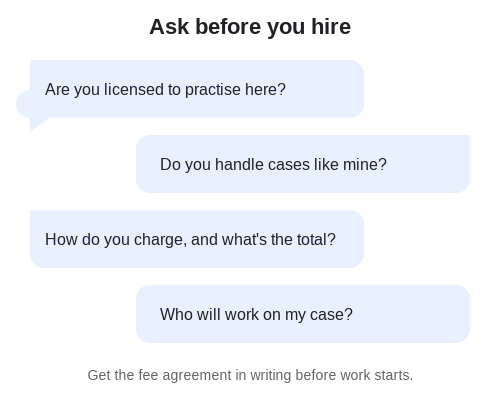
Clear answers now prevent surprises later
- Ask for a written estimate of the total cost, including expenses, court fees, and taxes.
- Ask what happens if the case takes longer or costs more than expected.
- Compare at least two or three options for larger matters.
- Get a signed engagement letter or fee agreement before work starts.
Getting the Most From Your First Meeting
- Bring your written summary, a timeline of events, and copies of key documents, letters, and contracts.
- Prepare a list of questions, and write down the answers.
- Be completely honest; your lawyer can only help with the full picture, and communications are usually confidential.
- Ask about deadlines. Many legal claims have strict time limits.
- Ask what you can do yourself to reduce costs.
If you're preparing a contract yourself before getting it checked, our guide on drafting agreements safely covers the basics.
Free and Low-Cost Legal Help
Legal advice can be expensive, but many people qualify for free or reduced-cost help. Explore these options before assuming you can't afford support:
- Legal aid: many countries fund legal help for people on low incomes in certain types of cases, such as family, housing, or criminal matters. Check eligibility on your government's official website.
- Law centres and legal clinics: community organisations and university law schools often provide free advice supervised by qualified lawyers.
- Advice charities: general advice services help with consumer, debt, employment, benefits, and housing issues.
- Pro bono schemes: some law firms and bar associations offer free help for people who can't afford it.
- Free first consultations: some lawyers offer a short free or fixed-fee first meeting to assess your case.
- Legal expenses insurance: check your home, car, or other insurance policies; some include legal cover.
- Trade unions and professional bodies: members may have access to free legal advice on employment issues.
Be wary of websites that promise guaranteed outcomes, pressure you to pay quickly, or can't show a verifiable registration with a recognised legal regulator.
Keep good records whatever service you use: dates, names, letters, emails, and receipts. Well-organised documents save your adviser time, which often saves you money.
Finally, act promptly. Many legal matters have strict time limits for making claims, responding to letters, or appealing decisions. Even if you are unsure whether you have a case, getting early advice helps you understand your options and avoid missing important deadlines. Keep any letters or court papers safe and bring them to your first meeting.
Final Thoughts
Finding legal help online works best when you start from official and non-profit sources, identify the area of law you need, verify credentials with the regulator, and get fees in writing. Act early, because legal time limits can be short, and don't be afraid to ask questions before you commit.
Disclaimer
Waysily is an independent information website. We are not a government agency, we are not affiliated with any government, and we do not process applications or charge fees for any service. This guide gives general information only and is not legal, immigration, or tax advice. Rules, fees, and processing times differ between countries and change often, so always confirm requirements on your government's official website or with a qualified professional before you apply.