
A worried senior couple reviews important documents at their kitchen table
Whether you're approaching retirement age yourself or helping a parent or relative, this guide explains the common types of senior support and the general steps to claim them. Names, ages, and rules vary by country, so always check the official details where you live.
Common Types of Senior Support
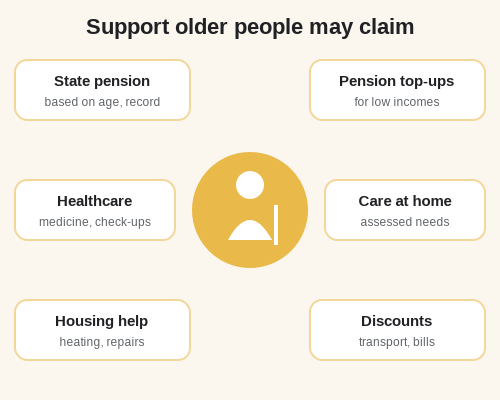
Support for older people often comes from several sources
- State or public pension: regular payments from a set age, usually based on your work or contribution record, residency, or both.
- Pension top-ups or minimum income support for older people with low incomes.
- Healthcare help, such as free or reduced-cost check-ups, medicines, insurance, or eye and dental care.
- Care and support at home, such as help with daily tasks or adaptations like grab rails, after a needs assessment.
- Housing and heating help, including winter fuel payments or repair grants in some places.
- Discounts and concessions on public transport, utilities, local taxes, or leisure services.
- Carer support for family members who look after an older person.
Step 1: Check Your Pension Age and Record
Your country's official pension service can tell you when you'll reach pension age and roughly how much you'll receive. Many offer an online forecast once you log in.
- Check your forecast a few years before pension age, so you have time to fill gaps where your country allows it.
- Check whether you need to apply or whether payments start automatically; in many countries you must claim.
- If you've worked in more than one country, ask whether those periods can count, as some countries have agreements to combine records.
- Find out whether delaying your claim increases your payments.
Step 2: Look for Other Support You Qualify For
Beyond the pension, check for low-income top-ups, healthcare help, and local discounts. Some of these unlock others: receiving one benefit can make you eligible for reduced bills or extra payments.
Use an official benefits checker
Many governments and senior charities provide free online calculators that show which benefits you may be entitled to. They take a few minutes and often reveal support people didn't know about.
If daily tasks are becoming harder, contact your local council, municipality, or social services to ask for a care needs assessment. This is often the first step to getting care at home or equipment.
Step 3: Prepare and Apply
- Identity documents and your national ID, social security, or pension number
- Proof of age and address
- Work and residence history, including time abroad
- Income and savings details, for means-tested support
- Bank details for payments
- Medical information, for health or care-related support
Apply through the official website, by phone, by post, or at a local office. Most pension services accept phone and paper applications for people who don't use the internet. Keep copies of everything and note reference numbers. Use our guide on checking application documents before you submit.
Step 4: Get Free Help and Stay Safe
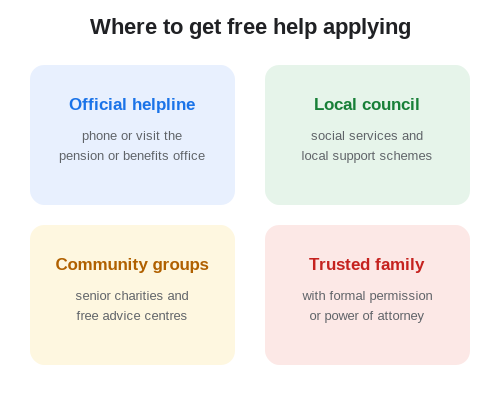
Free help is available in most areas
- A family member can help, but for ongoing help with money matters, set up formal permission such as an appointee arrangement or power of attorney, as your country allows.
- Never give anyone your PIN, passwords, or bank cards, even if they say they're from the pension office.
- Be wary of calls or visits offering to "upgrade" your pension or claim benefits for a fee.
Older people are targeted by scams
Pension and benefit offices don't charge to apply and won't ask you to move money to a "safe account". If in doubt, hang up and call the official number yourself. Our guide on avoiding government service scams explains the warning signs.
Helping an Older Relative Apply
Many older people find online applications and long forms difficult. Family members and friends can help, as long as the person stays in control of their own decisions and information.
- Ask permission: agree what help they want and which organisations you can speak to on their behalf.
- Set up formal authority if needed: some agencies require written consent, and in some countries a legal power of attorney is needed to manage someone's finances.
- Gather documents together: ID, pension details, bank statements, medical letters, and housing costs.
- Keep a log: record dates of calls, reference numbers, and names of staff.
- Look for carer support: if you provide regular care, you may be entitled to carer's benefits, respite services, or training.
Watch for signs of financial abuse or scams, such as unexplained withdrawals or new "friends" asking for money, and report concerns to the relevant authorities.
Review entitlements every year, or whenever circumstances change, such as a change in health, income, housing, or the loss of a partner. Many older people miss out on support simply because they did not realise they had become eligible. Free advice services can carry out a full benefits check at no cost.
Final Thoughts
Senior support can make a real difference to comfort and independence in later life. Check your pension age and record early, look for every type of help you might qualify for, apply through official channels, and use free help when you need it. If you're helping a relative, a short benefits check today could mean meaningful support for years.
Disclaimer
Waysily is an independent information website. We are not a government agency, we are not affiliated with any government, and we do not process applications or charge fees for any service. This guide gives general information only and is not legal, immigration, or tax advice. Rules, fees, and processing times differ between countries and change often, so always confirm requirements on your government's official website or with a qualified professional before you apply.