
Close-up of a person marking job listings in a newspaper indoors
Every country runs its own system with different rules and amounts, and some have regional differences too. But the core steps are similar almost everywhere. Acting quickly and following the rules carefully are the two things that make the biggest difference.
Step 1: Understand Who Is Usually Eligible
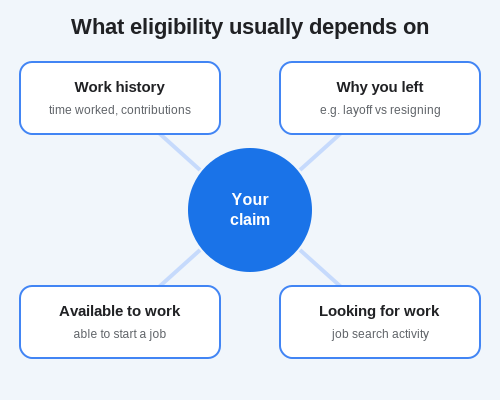
Four factors that matter in most countries
- Work history: many systems require you to have worked, or paid contributions, for a minimum period.
- Reason for leaving: redundancy or layoffs usually qualify; resigning without good reason or dismissal for misconduct may delay or reduce benefits.
- Availability: you normally need to be able to start work and not be prevented by other commitments.
- Job searching: you usually must actively look for work and show evidence of it.
- Residency and status: some programmes depend on residency or the right to work.
Some countries also offer means-tested support for people who don't qualify for contribution-based benefits, so check both if you're unsure. Our guide on applying for government aid explains other support you might claim.
Step 2: Apply as Soon as Possible
Apply on the official government or employment agency website as soon as your job ends, or even when you receive notice, if allowed. Many systems only pay from the date you apply, and some have strict deadlines.
- Search for your country's official employment service or labour department, and apply through that site only.
- If you worked in another region or country recently, ask how that affects your claim.
- Some systems have a short waiting period before payments start; apply anyway so the clock starts.
Step 3: Prepare Your Employment Records
- Your national ID, social security, or tax number
- Employer names, addresses, and dates of employment for the period they ask about
- Your termination letter, notice, or separation document showing why your job ended
- Recent payslips and details of any final pay, holiday pay, or severance
- Bank details for payments
- Your CV or details of your qualifications, if required for a job search plan
Ask your employer for paperwork
If you didn't receive a written reason for your job ending, ask your former employer for one. In many countries employers must provide a separation or termination document, and it can speed up your claim.
Step 4: Meet Job Search Requirements
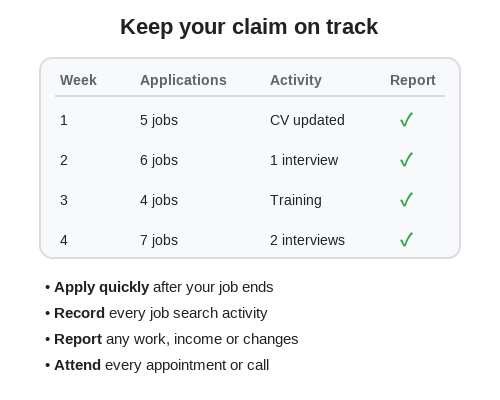
A simple weekly log keeps your claim safe
- Keep a weekly log of jobs applied for, dates, employer names, and outcomes.
- Save copies of applications and emails from employers.
- Attend every appointment or call. If you can't, tell the office in advance.
- Use free training, CV help, and job matching services; they often count as activity.
Our guide on writing a resume can help your applications stand out.
Step 5: Report Changes and Keep Payments Going
- Report any work or income, including part-time, temporary, or freelance work. Some systems let you earn a little and still receive reduced benefits.
- Submit regular claims or check-ins on time if your system requires weekly or fortnightly reporting.
- Tell the office about changes, such as moving, travelling abroad, illness, or starting a course.
- Know when benefits end, and check what other support may be available after that.
Avoid overpayments and penalties
Not reporting work or income, even by mistake, can lead to repaying benefits, fines, or losing your claim. If you're unsure whether something counts, ask the office before you act. And if you're refused, read the decision and check how to appeal within the deadline.
Use This Time to Prepare for Your Next Job
Unemployment benefits are designed to support you while you find work. Using the time well can help you return to work sooner and in a role that suits you.
- Update your CV: add recent achievements and tailor it to the jobs you're applying for. Our guide on writing a good resume can help.
- Use public employment services: they often offer free job matching, career advice, interview coaching, and access to training.
- Learn new skills: free online courses and government-funded training can strengthen your applications. Check whether training affects your benefit conditions first.
- Network: tell former colleagues, friends, and professional contacts you're looking for work. Many jobs are filled through recommendations.
- Volunteer: volunteering keeps your skills active, builds confidence, and adds recent experience to your CV.
- Keep a routine: regular hours for job searching, exercise, and rest help you stay motivated.
Keep records of every job you apply for, including dates, employers, and outcomes. These are often required to show you're meeting job search requirements, and they help you track what works.
If you're offered work, tell the benefits office promptly and ask about any support available when you start, such as help with travel costs or work clothing.
Looking for work can be stressful, so look after your wellbeing too. Keep in touch with friends and family, stay active, and seek support if you feel low.
Final Thoughts
Unemployment benefits can ease the pressure while you find your next job. Apply quickly through the official service, prepare your employment records, keep a clear job search log, attend appointments, and report every change. Doing these things consistently keeps your payments safe and lets you focus on moving forward.
Disclaimer
Waysily is an independent information website. We are not a government agency, we are not affiliated with any government, and we do not process applications or charge fees for any service. This guide gives general information only and is not legal, immigration, or tax advice. Rules, fees, and processing times differ between countries and change often, so always confirm requirements on your government's official website or with a qualified professional before you apply.