
A man looks frustrated while checking his smartphone, possibly experiencing a banking
The good news is that these scams follow predictable patterns. Once you know what genuine agencies do and don't do, most fakes are easy to spot.
Common Types of Government Service Scams
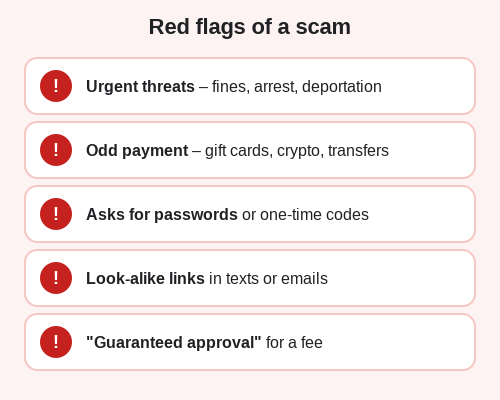
Five warning signs that appear in most scams
- Impersonation calls: someone claims to be from the tax office, police, immigration, or a benefits agency and says you owe money or face arrest.
- Phishing texts and emails: messages about a refund, an unpaid fine, a parcel held at customs, or a benefit payment, with a link to a fake login page.
- Copycat websites: sites that look official and charge large fees for passports, driving licences, travel authorisations, or certificates that are free or cheaper on the real site.
- Visa and immigration fraud: "agents" who guarantee visas or jobs abroad for an upfront fee, sometimes with forged documents.
- Grant and benefit scams: offers of government grants or extra payments that require a "processing fee" first.
- Fake appointment sellers: people who book scarce official appointments and resell them.
What Genuine Government Agencies Don't Do
Practices differ between countries, but genuine agencies almost never:
- Demand immediate payment by phone, or threaten arrest or deportation if you don't pay right now
- Ask for payment by gift cards, cryptocurrency, money transfer services, or into a personal bank account
- Ask for your full password, PIN, or one-time verification code
- Guarantee approval of a visa, benefit, or licence in exchange for a fee
- Contact you through social media direct messages about your case
Caller ID can be faked
Scammers can make a call or text appear to come from an official number or name. A familiar number on your screen isn't proof that the caller is genuine.
How to Check If a Website or Message Is Real
- Go to the service yourself. Type your government's main portal address into your browser or use a saved bookmark, rather than clicking links in messages.
- Check the web address. Look for your country's official government domain and watch for small spelling changes or extra words.
- Skip the adverts. Paid search results at the top of the page are sometimes look-alike sites.
- Call back on an official number found on the agency's website or official letters, never the number the caller gives you.
- Log in to your official account to check whether you really owe money or have a message waiting.
- Check that agents or advisers are registered, where your country licenses immigration advisers, tax preparers, or lawyers.
Our guide on filling government forms online explains how to find and use official sites safely.
Simple Habits That Protect You
- Use strong, unique passwords and two-step verification on government and email accounts.
- Never share one-time codes. A real agency won't ask you to read one out.
- Take your time. Urgency is a scammer's main tool, so pause and check before acting.
- Be careful what you post online, such as photos of passports, boarding passes, or ID cards.
- Talk to older relatives about these scams; they're often targeted.
Many scams also target people who are already applying for something, such as a visa or benefits, because they're expecting contact. If a message arrives while your application is in progress, verify it through your official account before replying.
What to Do If You've Been Targeted
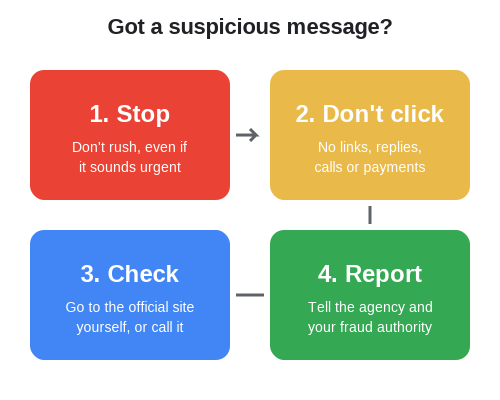
Stop, don't click, check, report
If you've already paid or shared details, act quickly:
- Contact your bank or card provider immediately to stop or dispute payments.
- Change passwords on any account you may have exposed, starting with email and government accounts.
- Report the fraud to the police or your national fraud reporting centre, and keep the reference number.
- Tell the real agency if your ID number or account may be misused.
- Watch your accounts and credit reports, where available, for unusual activity.
Beware of "recovery" scams
After a scam, victims are sometimes contacted by people offering to recover the lost money for a fee. These are usually the same criminals or others targeting victims. Genuine police and agencies don't charge to investigate.
Help Protect Family and Friends
Scammers often target older relatives, people new to a country, and anyone unfamiliar with online services. Share simple rules: official agencies don't demand payment by gift card or cryptocurrency, and it's always fine to hang up and call back on an official number. Offer to help with online forms, and encourage people to ask before paying any unexpected fee.
If you are ever unsure whether a message, website, or caller is genuine, pause before acting. Contact the government agency directly using contact details from its official website or from letters you already hold, not from the suspicious message. Taking a few minutes to check can save you from losing money or personal information that is very hard to recover.
Final Thoughts
Government service scams rely on fear, urgency, and convincing copies of official websites. Go to services directly, check web addresses, never pay with gift cards or cryptocurrency, never share codes, and verify any contact through official channels. If something feels wrong, stop and check. A genuine agency will still be there tomorrow.
Disclaimer
Waysily is an independent information website. We are not a government agency, we are not affiliated with any government, and we do not process applications or charge fees for any service. This guide gives general information only and is not legal, immigration, or tax advice. Rules, fees, and processing times differ between countries and change often, so always confirm requirements on your government's official website or with a qualified professional before you apply.