
High angle of opened briefcase for documents with sorted documents in different
Each country has its own registry, structures, and tax rules, and some have regional requirements too. This guide explains the steps that apply almost everywhere. If you're still shaping your idea, start with our guide on how to start a small business.
Step 1: Choose a Legal Structure
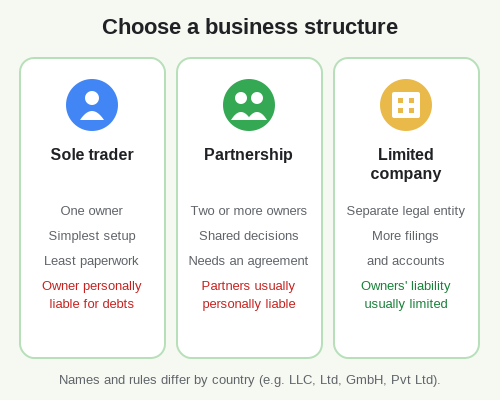
Your structure affects liability, tax and paperwork
The names differ by country, but most offer versions of these:
- Sole trader or sole proprietor: one person runs the business. It's the simplest and cheapest option, but you're usually personally responsible for business debts.
- Partnership: two or more people share ownership. A written partnership agreement is strongly recommended, and partners are often personally liable.
- Limited company or LLC: a separate legal entity. Owners' liability is usually limited to what they invest, but there are more filings, accounts, and rules.
- Other forms: such as cooperatives, non-profits, or social enterprises, for specific purposes.
Your choice affects personal risk, how you're taxed, what you must file each year, and how easy it is to raise money. An accountant or business adviser can help you compare options for your situation.
Step 2: Choose and Check Your Business Name
- Search the official business registry to make sure the name isn't already registered or too similar to an existing one.
- Check trademark databases to avoid infringing someone else's brand.
- Check whether the website domain and social media handles are available.
- Follow naming rules: many countries restrict words like "bank" or "national" and require company names to end with a suffix such as Ltd, LLC, or Inc.
- Some countries let you reserve a name for a short period before registering.
Step 3: Register With the Official Registry
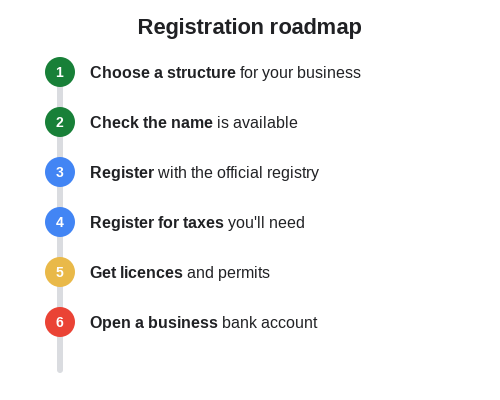
Six steps from idea to a registered business
You'll typically need:
- The business name and structure
- A registered business address
- Owners' and directors' identity details and addresses
- A description of business activities, sometimes using official activity codes
- For companies, founding documents such as articles of association, and details of shares and shareholders
- The registration fee, if any
Watch out for fake registry letters
After registering, new businesses often receive official-looking letters or emails asking for fees to be listed in "business directories" or "trademark registers". These are usually not from the government. Check any request against the official registry before paying.
Step 4: Register for Taxes and Get Licences
- Tax registration: you may need a business tax number and to register for income or corporate tax.
- Sales tax or VAT: registration is often required once turnover passes a threshold, and sometimes voluntary below it.
- Employer registration: if you hire staff, you'll usually need to register for payroll taxes and social contributions.
- Licences and permits: many activities need them, such as food businesses, childcare, construction, transport, alcohol sales, or professional services. Local authorities may also require trading permits or zoning approval.
- Insurance: some types, such as employer's liability, may be legally required.
Our guide on submitting tax forms explains how to stay on top of tax filings once you're running.
Step 5: Set Up Banking and Stay Compliant
- Open a business bank account to keep business and personal money separate; it's required for companies in many countries.
- Keep proper records of income, expenses, and invoices from day one.
- Note annual deadlines for accounts, tax returns, and registry confirmations in your calendar.
- Update the registry when your address, directors, or ownership changes.
- Keep your documents safe: registration certificate, tax numbers, licences, and agreements.
Common Registration Mistakes to Avoid
Small errors during registration can cause delays, fines, or problems later. Watch out for these:
- Using a name that's already taken or trademarked: check official registers and trademark databases before you commit to branding.
- Choosing the wrong structure: consider liability, tax, and future plans. A short consultation with an accountant can prevent costly changes later.
- Missing tax registrations: some taxes, such as sales tax or VAT, apply once you pass certain thresholds. Track your turnover.
- Forgetting licences: food, alcohol, childcare, transport, and many other activities need specific permits.
- Mixing personal and business money: open a separate business account from day one.
- Using unofficial registration websites: some sites charge high fees for services available directly and cheaply from the official registry.
- Missing annual filings: many registered businesses must submit yearly returns or accounts, even if they haven't traded.
Set calendar reminders for all deadlines, keep your registration documents together, and update the official register whenever your address, directors, or ownership changes.
Our guide on starting a small business covers the wider steps beyond registration.
Registration rules and fees change from time to time, so always check the latest information on your official government business registry before you apply. Many registries offer free guides, helplines, and online tools that explain each step clearly. Using official sources is the safest and usually the cheapest way to register.
Final Thoughts
Registering a business is a series of clear steps: choose a structure, check your name, register with the official registry, set up taxes and licences, and open a business account. Use official government sources, keep good records from the start, and get advice from an accountant or lawyer when your situation is complex.
Disclaimer
Waysily is an independent information website. We are not a government agency, we are not affiliated with any government, and we do not process applications or charge fees for any service. This guide gives general information only and is not legal, immigration, or tax advice. Rules, fees, and processing times differ between countries and change often, so always confirm requirements on your government's official website or with a qualified professional before you apply.