
A man in an apron opens a grocery store door in Portugal
This guide walks you through the practical steps in order, from testing an idea to registering, setting up your finances, and finding your first customers. Rules differ by country, so use it as a roadmap and check local requirements at each stage.
Step 1: Choose an Idea That Solves a Real Problem
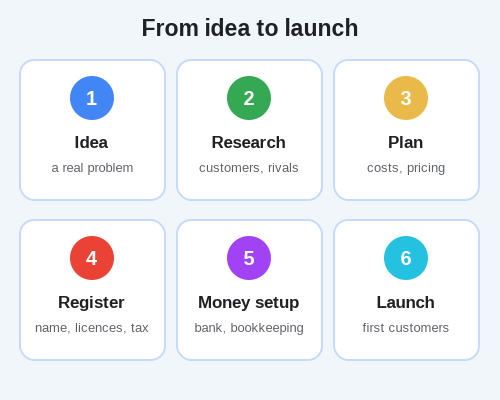
The path from idea to first sale
Strong small-business ideas usually sit where three things overlap: something you're good at, something people need, and something they'll pay for. Start by listing:
- Skills you already have, from bookkeeping to baking, coding, or repairs
- Problems you notice in your community or industry that aren't solved well
- Services people around you already pay for, which proves demand exists
Low-cost starting points include service businesses (tutoring, cleaning, design, consulting), small online shops, and local trades. These often need little upfront investment compared with opening premises. Before investing, test demand using our guide on validating a business idea.
Step 2: Research Customers and Competitors
- Define your ideal customer: age, location, problem, budget, and where they spend time online and offline.
- Talk to at least 10 potential customers about how they solve the problem today.
- Study three to five competitors: prices, reviews (especially complaints), and what they do well.
- Find your edge: faster service, a specific niche, better quality, a convenient location, or a more personal approach.
Step 3: Work Out Costs, Prices, and Funding
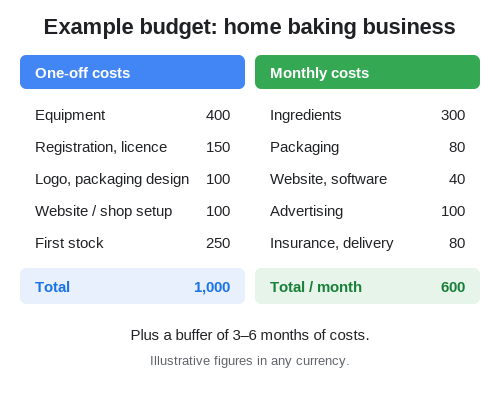
Separate one-off and monthly costs
- One-off costs: equipment, registration and licences, branding, website, and first stock.
- Monthly costs: materials, software, rent, insurance, marketing, and transport.
- Pricing: make sure each sale covers its direct costs plus a share of overheads and a profit. Don't simply undercut competitors; low prices are hard to raise later.
- A cash buffer: many advisers suggest having enough to cover several months of costs, because income often grows more slowly than expected.
A short written plan helps you see whether the numbers work. Our guide to creating a business plan includes a simple break-even calculation.
Step 4: Register the Business and Understand Tax
1
Choose a Business Structure
Common options include sole trader or sole proprietorship (simplest, but you're personally responsible for debts), partnership, and limited company or LLC (more paperwork, but usually separates personal and business liability). Names and rules vary by country.
2
Register With the Right Authorities
Use your government's official business or tax website to register and get any tax identification number you need. Avoid paid third-party sites that charge for free government registrations.
3
Check Licences, Permits, and Insurance
Food businesses, childcare, trades, and home-based businesses often need specific licences, inspections, or permission. Public liability or professional indemnity insurance may be required or strongly advisable.
4
Learn Your Tax Obligations
Find out how income tax works for your structure, whether you need to register for sales tax, VAT, or GST, and the deadlines for returns. Set aside a percentage of each payment for tax so you're not caught short. See our guide on accounting for small business.
Step 5: Set Up Banking and Bookkeeping
- Open a separate business account so business and personal money never mix. This makes tax and record-keeping far easier.
- Choose a simple bookkeeping system: a spreadsheet works at the start; accounting software helps as you grow.
- Keep every receipt and invoice, digitally if possible, and record transactions weekly.
- Decide how customers will pay: bank transfer, card reader, or online payments, and check the fees.
Step 6: Launch and Win Your First Customers
- Start with people who already know you: friends, former colleagues, and local community groups. Ask for honest feedback and referrals.
- Create a simple online presence: a free business listing on major map and search services, plus one or two social media accounts where your customers spend time.
- Offer a reason to try you: a launch offer, a free consultation, or a satisfaction guarantee.
- Collect reviews from every happy customer; they build trust quickly.
- Track results: note where each customer heard about you, and do more of what works. Our guide on promoting your business online goes deeper.
Start small, keep your job if you can
Many successful owners started part-time alongside a job, testing demand and building savings before going full-time. It reduces risk while you learn.
Common First-Year Mistakes
- Underpricing: charging too little to win customers, then struggling to cover costs.
- Mixing personal and business money, which makes tax time painful and hides whether you are profitable.
- Spending before validating: buying stock, equipment, or a big website before proving people will buy.
- Ignoring cash flow: even profitable businesses fail when customers pay late and bills are due.
- Trying to serve everyone: a clear niche is easier to market and remember.
- Doing everything alone: free advice from local business support services, mentors, and other owners can save costly errors.
Keep a simple monthly check-in with yourself: income, costs, cash in the bank, number of customers, and one lesson learned. Small, regular reviews catch problems early.
Free Support for New Business Owners
You don't have to do everything alone. Many countries offer free or low-cost support for new businesses through government enterprise agencies, local councils, chambers of commerce, and libraries. Services often include business planning workshops, mentoring from experienced owners, guidance on registration and tax, and information about grants or start-up loans. Business networking groups are also a good place to find suppliers, customers, and advice. Our guide on starting a business registration explains the official steps in more detail.
Final Thoughts
A successful small business is built step by step: a real problem, customers who'll pay, numbers that add up, the right registrations, clean finances, and steady marketing. Start small, learn fast, and adjust as you go. Your first year is mostly about learning what your customers really value.