Close-up of hands carefully opening a package, revealing cardboard inside
This guide walks you through each decision in order, so you can start small, learn quickly, and avoid the most common costly mistakes.
Step 1: Decide What to Sell
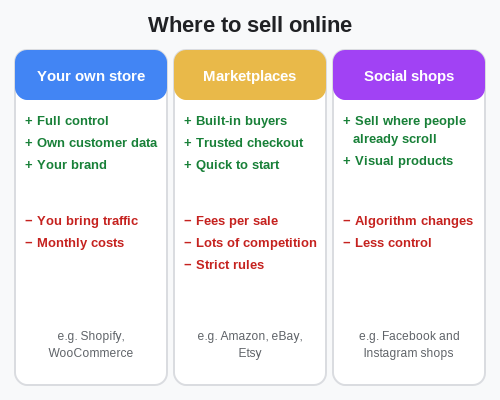
Each channel has trade-offs
- Make it yourself: crafts, art, food (check local food-safety rules), or digital products like templates and courses.
- Buy wholesale and resell: buy stock from manufacturers or wholesalers and sell at a mark-up.
- Print on demand or dropshipping: a supplier makes or ships products only when you get an order. See our guide on dropshipping.
Good products for beginners solve a clear problem or serve a specific passion, aren't too fragile or heavy to ship, and can sell at a price that leaves a healthy margin. Check you're allowed to sell them, since some categories need permits, and never sell counterfeit or trademarked designs you don't have rights to.
Step 2: Choose Where to Sell
- Online marketplaces such as Amazon, eBay, Etsy, or regional platforms come with ready-made buyers and trusted checkout, but charge fees per sale and have strong competition.
- Your own online store, built with platforms such as Shopify, WooCommerce, or Squarespace, gives full control of branding and customer relationships, but you need to bring your own visitors. See our guide on setting up a Shopify store.
- Social media shops let people buy where they already browse.
Many sellers start on one marketplace to test demand, then add their own store as they grow.
Step 3: Price for Real Profit
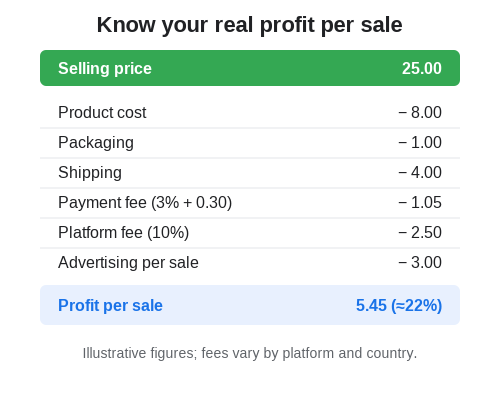
Fees add up quickly
- Product or materials cost and packaging
- Shipping (or the cost of offering "free" shipping)
- Payment processing fees
- Marketplace or platform fees
- Advertising cost per sale
- Returns, damaged items, and taxes
In the example, a product selling for 25 leaves about 5.45 profit after all costs, far less than the 17 it might seem at first glance. Knowing this number helps you decide on prices, bundles, and ad budgets.
Step 4: Create Listings That Sell
- Photos: clear, well-lit images on a plain background, plus photos showing the product in use and its size. Photos are often the biggest factor in online sales.
- Titles: include what the product is and its key detail, using words buyers search for, such as "Handmade Ceramic Coffee Mug, 350 ml, Blue Glaze."
- Descriptions: lead with benefits, then list dimensions, materials, care instructions, and what's included.
- Honesty: describe flaws and variations clearly to avoid returns and bad reviews.
- Reviews: politely ask happy customers to leave one.
Step 5: Handle Shipping, Returns, and Legal Basics
- Shipping: compare carriers, weigh packed items accurately, and state delivery times clearly. Pack well to avoid breakages.
- Returns policy: write a clear policy that meets consumer law where you sell; many countries give online buyers specific rights to cancel or return.
- Customer service: answer questions quickly and politely; good service turns problems into loyal customers.
- Tax and registration: register as a business where required, keep records, and check sales tax or VAT rules, including for overseas sales.
- Privacy: protect customer data and have a privacy policy on your store.
Then promote your products steadily through social media, email, and search. Our guides on promoting a business online and email marketing explain how.
How to Grow After Your First Sales
- Ask every customer for a review and showcase the best ones.
- Encourage repeat purchases with follow-up emails, refills, or bundles.
- Study your best-sellers and expand related products.
- Improve product pages with low sales but good traffic, since better photos or clearer descriptions often help.
- Add a second sales channel once the first is working well.
- Track the numbers monthly: revenue, profit per order, return rate, and repeat customer rate.
Steady improvements to products, pages, and service usually compound into strong growth over a year.
Deliver Customer Service People Remember
Online shoppers can't meet you in person, so every message, parcel, and reply shapes how they feel about your business. Good service turns first-time buyers into repeat customers who recommend you to others.
- Reply quickly: aim to answer questions within one working day. Set up automatic replies that tell customers when to expect a response.
- Be clear about delivery: send order confirmations and tracking numbers, and warn customers early if there's a delay.
- Package with care: sturdy packaging prevents damage, and a short thank-you note adds a personal touch.
- Make returns simple: a fair, easy returns process builds confidence and often increases sales overall.
- Ask for reviews: a polite follow-up email a few days after delivery encourages genuine reviews. Never write fake reviews or pay for positive ones.
- Handle complaints calmly: apologise, explain what you'll do, and fix the problem. A well-handled complaint can create a loyal customer.
Keep a simple record of common questions and add the answers to your product pages or an information page. This saves you time and helps customers decide faster.
Pay attention to what customers tell you. Repeated questions about sizing, for example, might mean your size guide needs improving. Repeated complaints about a product might mean it's time to change supplier. Your customers are your best source of business advice, and listening to them is free.
Protect customer data carefully. Only collect the information you need, use secure payment providers, and follow the data protection rules in the countries where you sell. Trust is easy to lose and hard to rebuild.
Final Thoughts
Selling online successfully comes down to a good product, the right channel, honest listings with great photos, prices that cover every cost, and reliable service. Start small, track your real profit per sale, listen to customer feedback, and grow what works.