
Close-up of two businessmen shaking hands
This guide explains the main funding options, how to tell if you're ready for investors, how to find and approach them, and what they'll expect to see.
Understand Your Funding Options
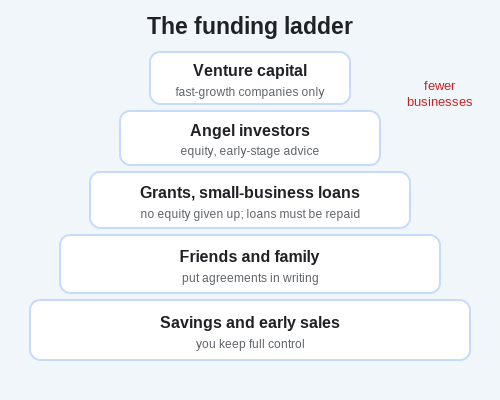
Different stages suit different funding
- Bootstrapping: funding growth from savings and sales. You keep full ownership and control, though growth may be slower.
- Friends and family: common for very early stages. Treat it professionally with a written agreement, and only accept money people can afford to lose.
- Loans: from banks, government-backed small-business schemes, or microfinance organisations. You keep ownership but must repay with interest.
- Grants and competitions: non-repayable money from governments, foundations, or programmes, often for specific sectors, regions, or groups.
- Crowdfunding: raising small amounts from many people, either as pre-sales (rewards) or, in some countries, regulated equity crowdfunding.
- Angel investors: individuals who invest their own money in early-stage companies in exchange for equity, often bringing advice and contacts.
- Venture capital (VC): funds that invest larger amounts in companies with potential for very rapid, large-scale growth, usually in exchange for significant equity and influence.
Are You Ready for Investors?
Equity investors usually want evidence before they commit. Check whether you have:
- Traction: paying customers, growing revenue, or strong user growth. This often matters more than the idea itself.
- A large, growing market with a clear path to scale.
- A capable team with relevant skills and commitment.
- A clear plan for the money: exactly how much you need, what it will achieve, and how long it will last.
- Clean records: registered company, organised finances, and clear ownership of any intellectual property.
Equity is expensive
Selling shares means giving up part of your future profits and some control, permanently. If your business can grow steadily on sales or a loan, that may be the better choice.
Where to Find Investors
- Your network: former colleagues, mentors, and industry contacts. Warm introductions are far more effective than cold emails.
- Angel networks and groups: many cities and regions have organised angel networks that review pitches regularly.
- Accelerators and incubators: programmes that offer mentoring, training, and sometimes small investments, often ending with a demo day.
- Startup events and pitch competitions: good for practice, feedback, and meeting investors.
- Online platforms: professional networks and regulated crowdfunding platforms.
- Government enterprise agencies: often list grants, loans, and investor programmes for local businesses.
Research each investor first: what stage, sector, and size of deal do they usually invest in? Approaching the wrong investors wastes everyone's time.
Prepare a Strong Pitch

A typical pitch deck structure
- Lead with the problem and your traction; these grab attention.
- Keep slides visual, with few words.
- Prepare a two-minute verbal summary of the whole business.
- Expect tough questions about competition, costs, and risks, and answer honestly.
- Have a simple financial model ready to share if asked.
Protect Yourself and Your Business
- Get professional advice from a lawyer or accountant before signing term sheets or shareholder agreements.
- Understand valuation and dilution: how much of the company you're selling and how future rounds affect your share.
- Do your own checks on investors: speak to founders they've backed before.
- Beware of scams: legitimate investors don't charge upfront "processing" or "due diligence" fees to consider your business. Be cautious with unsolicited offers that seem too easy.
What Investors Will Check
Before investing, serious investors carry out "due diligence," a careful check of your business. Prepare these in advance to speed things up and show professionalism:
- Company registration documents and a clear record of who owns what (a cap table)
- Financial statements, bank records, and a realistic financial forecast
- Key customer, supplier, and employment contracts
- Proof that the company owns its brand, code, designs, or other intellectual property
- Any legal disputes, debts, or licences required for your industry
- Evidence of traction, such as sales data, customer numbers, and growth over time
Keep these in an organised digital folder (often called a data room) and share it only with investors who are seriously interested, ideally after signing a confidentiality agreement where appropriate.
Working With Investors After the Deal
Raising money is the beginning of a long relationship. How you manage investors after funding affects future fundraising and how smoothly your business runs.
- Send regular updates: a short monthly or quarterly update covering key numbers, progress, challenges, and what help you need keeps investors informed and engaged.
- Be honest about problems: investors expect setbacks. Sharing bad news early, with a plan, builds trust.
- Use their experience: many investors offer introductions, advice, and expertise. Ask for specific help.
- Keep good records: maintain accurate accounts, a clear shareholder register, and copies of all agreements.
- Follow the agreement: understand investor rights, such as approval of major decisions or information rights, and respect them.
Plan ahead for the next round. Know how long your funding will last, often called your "runway", and start conversations for further investment well before money runs low.
Finally, take professional advice from a qualified lawyer and accountant on term sheets, shareholder agreements, and tax implications before you sign anything.
Keep in mind that not every business needs outside investment. Many successful small businesses grow steadily using their own profits, customer pre-payments, or modest loans. Before seeking investors, consider whether giving away part of your company is the right choice, and compare it carefully with alternatives such as grants, crowdfunding, or bank finance.
Final Thoughts
The right funding depends on your business, not on what's fashionable. Explore loans, grants, and early sales first, and approach investors when you have real traction and a clear plan for their money. Research carefully, pitch clearly, and always get professional advice before giving away equity.